SHE LAUGHED AT MY DISABILITY—THEN THE PRINCIPAL HANDED ME A STRADIVARIUS
“Can someone translate for him?”
Kelsey Vale—Student Council Queen, three-time club president, and the architect of my high school misery—snatched the signup clipboard out of my hands. She held it up like a trophy, the gym lights glinting off her perfectly manicured nails.
“Oh wait… he can’t READ it.”
The gym lights stuttered over the dance floor. The bass from the speakers hit my ribs, a hollow thud that matched the sudden drop in my stomach. The world seemed to pause. Everyone turned. Phones rose like a field of black poppies blooming in the strobe light. Laughter spread like spilled soda—sticky and impossible to clean up.
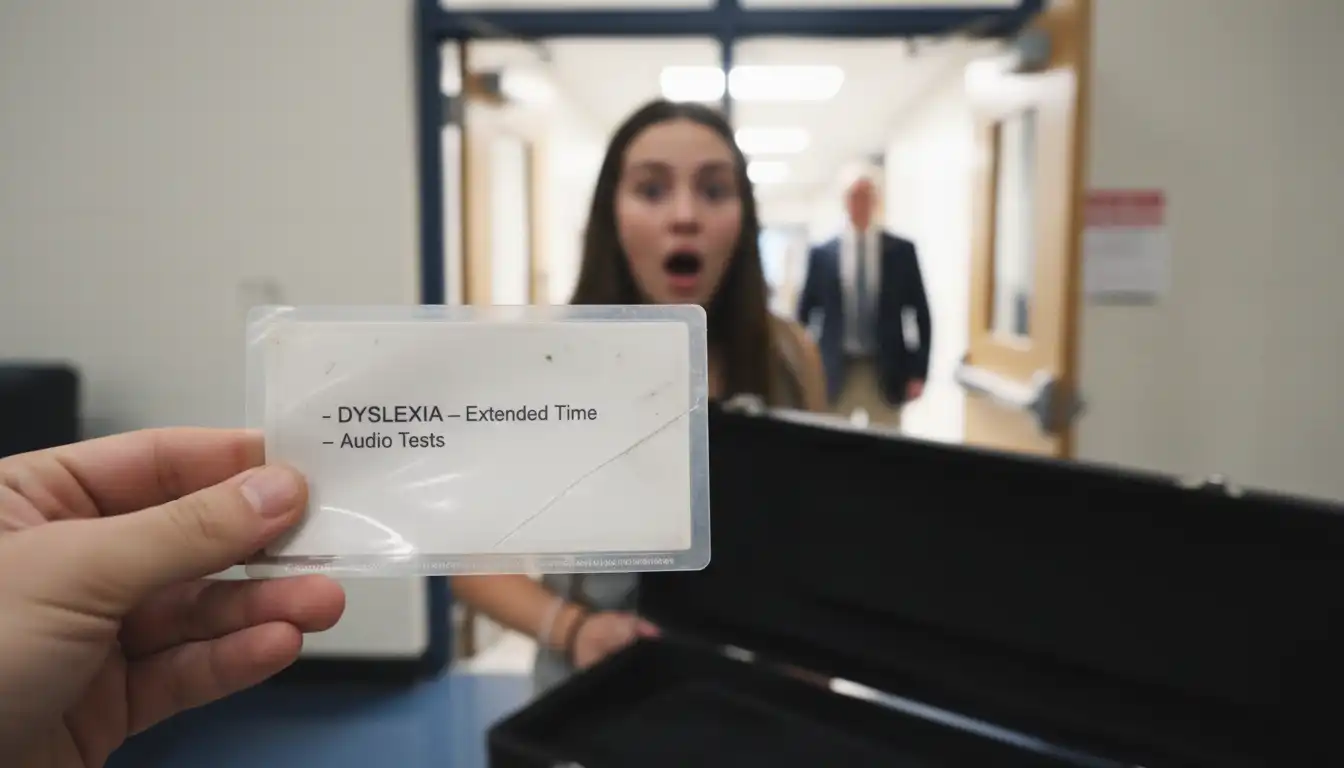
I stood there in my suit—thrift-store black, sleeves a little short, the fabric smelling faintly of mothballs and someone else’s history. In my left hand, I clutched the accommodation card the counselor, Mrs. Gable, made me carry.
DYSLEXIA. Extended time. Audio tests.
The same scrap of paper they’d all secretly used as a punchline since freshman year. To them, it wasn't a medical reality; it was a "Get Out of Jail Free" card for stupidity.
Kelsey leaned into her friends, projecting her voice with the practiced cadence of a future politician. She wanted the back row to hear this. “This is the Academic Showcase Club signup, Evan. Not ‘Coloring Book Hour.’ You don’t get in just because you show up.”
Behind her, the other presidents formed a wall—debate, honors, dance team. They were the pantheon of Northwood High, smiling like they’d rehearsed this humiliation in a group chat.
Brad, Mr. Perfect Hair from Debate, clapped once, slow and mocking. “Maybe we should start a club for… trying. Participation trophies for everyone.”
A circle tightened around me. The air grew hot, smelling of cheap cologne and floor wax.
Someone shouted from the safety of the crowd, “Read it, Evan!”
Another voice, sharper: “Spell ‘scholarship’!”
I didn’t flinch. Not because it didn’t hurt—my ears were burning so hot I thought they might melt—but because I’d learned something dyslexia teaches you fast:
When the letters fight you, you learn to listen to everything else.
I’d heard the way the music shifted when the student DJ got nervous, the beat losing its pocket. I’d seen the janitor pause with a trash bag by the exit, watching with sad, tired eyes. I’d caught the blur of Mrs. Gable at the bleachers, her face pale, already stepping forward to intervene.
But I didn't want her pity. I just wanted the clipboard back.
“Kelsey,” I said, my voice low. “I just wanted to sign up for the open talent slot.”
“Talent?” Kelsey laughed, a harsh sound that didn't reach her eyes. She jabbed a finger at the door to the club table. “Denied. We need people who can represent the school’s excellence. Go… dance. Or whatever you do. Try not to trip over your own feet.”
I nodded slowly, like she’d done me a favor. It was the only way to make them stop. Submission was the price of survival.
Then the gym doors opened—wide, deliberate—cutting the music in half.
The heavy double doors slammed against the walls with a crack that sounded like a gunshot. The silence that followed was absolute.
A man in a sharp navy blazer walked in. Beside him was a woman with silver hair, carrying a hard, carbon-fiber case—the kind musicians treat like a newborn baby. It was sleek, black, and radiated a quiet, expensive danger.
Behind them came Principal Hargrove, sweating slightly, scanning the crowd with an intensity that made the stoners near the exit swallow their gum. He looked like he was hunting.
Kelsey’s posture snapped straight. Her smile went syrupy, a terrifying transformation. “Principal Hargrove! We were just explaining the standards for the—”
“Not now, Ms. Vale,” Hargrove said, his voice clipping the air. He didn't even look at her. His eyes were locked past her shoulder. “Where is Evan Cole?”
The crowd parted without deciding to. It was instinctual. Like the air itself made room for the predator to find the prey.
Kelsey turned slowly toward me, the clipboard still in her hand. For the first time all night, her face didn’t know what expression to wear. Her brow furrowed, a glitch in her perfect programming.
Principal Hargrove stepped onto the dance floor, walking right into the spotlight and the circle of phones. He said it again—louder.
“Evan Cole. The Regional Arts Committee is here. They’re inviting you to perform as the featured act.”
Kelsey’s laugh came out wrong—a choked, nervous hiccup. “Him? Principal, with all due respect, Evan can’t even read the signup sheet. He’s… challenged.”
The woman with the hard case stepped forward. She didn't look at Kelsey. She looked at me. Her eyes were sharp, intelligent, and kind.
“Literacy comes in many forms, young lady,” the woman said, her voice carrying a slight European lilt. “Some read words. Others read the space between them.”
She clicked the case open on a nearby table.
Inside wasn’t a prop. It was proof.
Resting on crushed blue velvet was a violin. But not just a violin. The varnish was a deep, rich amber, worn in places by centuries of hands. The wood seemed to glow under the gym lights.
“The Guarneri,” the woman whispered to me. “We brought it for you to test before the gala.”
Kelsey’s mouth fell open. “A… fiddle? You’re interrupting the dance for a fiddle?”
I reached for the instrument. My hands, which usually felt clumsy when holding a pen, stopped shaking. As my fingers wrapped around the neck of the violin, the noise of the gym, the mockery, and the shame evaporated.
“It’s not a fiddle, Kelsey,” I said softly.
I lifted the bow.
The moment the horsehair touched the string, the atmosphere in the gym changed.
I didn't play a song they knew. I didn't play a pop cover. I played the opening bars of Bach’s Chaconne.
It began with a chord that sounded like a judgment. Dark, resonant, and impossibly heavy. The sound didn't just fill the room; it conquered it. It bounced off the metal rafters and the polished floor, stripping away the cheap veneer of the high school dance.
I closed my eyes.
DYSLEXIA.
I remembered the letters dancing on the page in second grade, the teacher sighing, the other kids giggling.
CRASH.
I drove the bow down. A cascade of notes, fast and aggressive.
ILLITERATE.
I remembered my father’s face when I couldn't read the birthday card he gave me. The disappointment.
SCREECH.
The music shifted, moving from anger into something sorrowful, a high, weeping melody that climbed up the E-string.
I wasn't reading music. I never could. The black dots on the staff were just ants to me. But sound? Sound was geometry. Sound was color. I could memorize a symphony after hearing it once. I could feel the architecture of a piece in my bones. While they were studying vocabulary, I was studying the vibration of the universe.
I opened my eyes.
Kelsey Vale was staring at me. The clipboard hung limp in her hand. Her friends—the debate captain, the cheerleaders—looked like they’d been slapped. They were witnessing something they couldn't bully, something they couldn't buy, and something they definitely couldn't fake.
I transitioned into a Paganini caprice—pure technical wizardry. My fingers flew over the fingerboard, a blur of motion. Left hand pizzicato, ricochet bowing, double stops. It was athletic, violent, and beautiful.
I saw the woman from the Arts Committee nodding, a fierce smile on her face. Principal Hargrove looked vindicated, like he’d just won a bet with God.
I finished on a high harmonic that hung in the air, a piercing, crystal-clear note that silenced even the ventilation system.
I lowered the bow.
For three seconds, there was no sound. No breathing.
Then, the janitor in the back started clapping. Slow, rhythmic.
Then Mrs. Gable.
Then the freshmen.
Then, the explosion. The gym erupted. It wasn't polite applause; it was a roar. Students were screaming. The phones that had been raised to mock me were now recording a legend.
“Evan! Evan! Evan!”
I carefully placed the violin back in its case and clicked the latches shut. I turned to Kelsey. She looked small now. Shrinking.
“I don’t need your clipboard, Kelsey,” I said, my voice steady over the cheering. “I’m already signed up.”
I turned to the woman. “I’m ready.”
We walked out of the gym, leaving the Student Council Queen standing alone in the spotlight, holding a clipboard that no one cared about anymore.
The next morning, Northwood High was a different planet.
Usually, I walked the halls like a ghost. Eyes down, headphones on, dodging shoulders and avoiding eye contact. Invisibility was my superpower.
Today, I was neon.
“Dude! That was insane!” A guy from the football team slapped my back hard enough to rattle my teeth.
“Evan, right? I’m Sarah. Did you really memorize that whole thing?” A girl from AP English—someone who had never looked at me before—was walking backward in front of me, batting her eyelashes.
I nodded, mumbled thanks, and kept moving. It felt fragile. Like a bubble that could pop the moment I couldn't read a lunch menu.
I made it to my locker, spun the combination (left 4, right 22, left 8—numbers were easier than words), and opened it.
A piece of paper fluttered out.
It was a printout of a meme. A picture of me from freshman year, looking confused at a textbook, with the caption: FOREST GUMP WITH A FIDDLE.
I stared at it. The bubble didn't pop, but it wobbled.
“Funny, isn’t it?”
Kelsey was leaning against the locker bank, her arms crossed. She wasn't defeated. People like Kelsey Vale didn't get defeated; they just regrouped. She was wearing her armor—designer jeans, silk blouse, perfect hair. But her eyes were tired.
“You think you’re special now, Evan?” she asked, her voice low and venomous. “Because you can scratch out a tune?”
“It’s called a concerto, Kelsey,” I said, crumbling the paper.
“It’s a circus trick,” she spat. “You’re still the kid who needs someone to read the SAT questions to him. You’re still broken.”
She stepped closer, invading my personal space. “The Regional Arts Showcase isn't a high school gym. It’s the elite. Judges, scouts, university deans. They care about grades. They care about articulation. They care about the interview.”
She smiled, a shark smelling blood. “I’m the student host for the Showcase, Evan. I control the microphone. I control the introductions. You think you’re going to walk out there and be a hero? I’m going to expose you for exactly what you are: a savant who can’t even spell his own future.”
She pushed off the locker. “Enjoy the fame, Forest. It expires on Friday.”
She walked away, her heels clicking a rhythm of war.
I looked at the crumbled paper in my hand. She was right about one thing. The music was easy. The world of words? That was the battlefield.
And she controlled the terrain.
Wednesday. Two days before the Showcase.
I was in the music room, practicing. The Arts Committee—specifically the woman, whose name was Madame Dubois—had arranged for me to use the school’s soundproof studio during lunch.
The door opened. It wasn't Madame Dubois.
It was Mr. Sterling, the guidance counselor for "High Achievers." He was Kelsey’s favorite staff member. He was the one who decided who got the recommendation letters for the Ivy Leagues.
“Evan,” he said, not smiling. “Sit down.”
I lowered the violin. “Am I in trouble?”
“Trouble? No. But we need to manage expectations.” He sat on the piano bench, smoothing his tie. “There’s been a lot of… excitement. But we have to be realistic. The Arts Committee is looking for a total package. Academic excellence alongside artistic merit.”
He placed a file on the table. My file.
“Your GPA is a 2.4, Evan. Your standardized test scores are in the bottom quartile. You have a documented learning disability that requires significant resources.”
“I have straight A’s in music theory,” I said defensively. “And math.”
“But you can’t read the instructions on the test without headphones,” Sterling countered smoothly. “Look, Kelsey Vale—who has a 4.2 GPA—raised a concern. She’s worried that if we push you into this spotlight, and you fail… it reflects poorly on the school. And on you.”
He leaned forward, his voice dropping to a conspiratorial whisper. “She suggested that maybe you perform as part of an ensemble. In the back. Less pressure. We don’t want you to freeze up when the judges ask you questions, do we?”
My grip on the violin neck tightened. “She sent you.”
“She’s the Student President, Evan. She cares about the student body.”
“She cares about being the only star in the sky,” I said.
I stood up and put the violin in the case. “Tell Kelsey I’m not playing in the back. And tell her if she wants to talk to me, she can do it herself. She doesn’t need to send her minions.”
Mr. Sterling’s face went red. “I am a faculty member, Mr. Cole.”
“Then act like one,” I said, and walked out.
My heart was hammering. I had never spoken to a teacher like that. But something had changed in the gym. I wasn't just defending myself anymore; I was defending the music.
Friday night. The Regional Arts Showcase.
The downtown theater was massive. Velvet curtains, gold leaf on the ceiling, a chandelier that cost more than my house. The air smelled of expensive perfume and anticipation.
I was backstage, tuning the Guarneri. My hands were sweating.
Madame Dubois was there, adjusting my tie. “You are nervous. Good. Use it.”
“Is the committee out there?” I asked.
“Everyone is out there. Juilliard. Curtis. The Royal Academy.” She patted my shoulder. “Just play, Evan. The wood knows the song.”
Suddenly, the stage manager ran past, looking frantic. “Where is the sheet music? The judges need the score for the featured soloist!”
I froze. The judges needed to see the sheet music to follow along—to check for accuracy. It was a standard requirement I had forgotten about.
“I… I didn’t bring printed copies,” I stammered. “I play from memory.”
“They need the score, kid! It’s in the regulations!” the manager barked.
Kelsey appeared from the shadows of the wings, holding a microphone. She was wearing a shimmering gold gown, looking like an Oscar statue come to life.
“Oh, don’t worry,” Kelsey said, her voice dripping with fake helpfulness. “I printed copies of his selected piece for the judges. I handed them out ten minutes ago.”
She smiled at me. A cold, dead smile.
“What did you give them?” I asked.
“The piece you wrote down on your application,” she said innocently. “Caprice No. 24.”
My blood ran cold. I hadn't prepared Caprice No. 24. I was playing Zigeunerweisen by Sarasate.
On the application form… I must have checked the wrong box. The words had swum together. Caprice… Concerto… Composition…
Kelsey knew. She had seen the application. She could have corrected it. Instead, she ensured the judges were expecting one piece, and I was about to play another.
If I played Zigeunerweisen, they would think I was incompetent—unable to follow my own program. If I tried to play Caprice No. 24 unprepared, I would crash and burn. It was one of the hardest pieces ever written.
“Five minutes to curtain!” the stage manager yelled.
Kelsey leaned in close to my ear. “Checkmate, illiterate trash. You can’t read the program, so you don’t know what you’re playing. Go out there and humiliate yourself.”
She turned and walked onto the stage. The spotlight hit her.
“Ladies and gentlemen,” her voice boomed over the speakers. “Welcome to Northwood High’s night of excellence. Our featured soloist is a… unique student. Please welcome Evan Cole, who will be attempting Paganini’s Caprice No. 24.”
Applause. Polite, expectant.
I stood in the wings. My breath was shallow.
Madame Dubois looked at me, confusion on her face. “Evan? You are playing Sarasate, yes?”
“She told them Paganini,” I whispered. “If I play Sarasate, I’m disqualified for changing the program without notice.”
“Do you know the Paganini?”
I looked at her. Did I? I had listened to it a thousand times. I had messed around with it in my bedroom. But on stage? In front of Juilliard?
“Evan,” Madame Dubois said sternly. “Stop thinking about the title. Stop thinking about the words. What is the sound?”
I closed my eyes. I heard the recording in my head. Itzhak Perlman, 1972. I heard the bounce of the bow. The aggression.
When the letters fight you, you learn to listen to everything else.
I didn't need the sheet music. I didn't need the title. I needed the feeling.
I walked onto the stage.
The light was blinding. I couldn't see the audience, but I could feel them. Hundreds of eyes. And in the front row, the judges, holding the sheet music for Paganini.
Kelsey stood at the podium, smirking. She stepped back to give me the floor, waiting for the train wreck.
I tucked the violin under my chin.
I looked at Kelsey. I didn't look angry. I looked… bored.
Then I looked at the judges.
I didn't start with the Paganini.
I leaned into the microphone. “There has been a change to the program.”
Gasps. Kelsey’s head snapped up.
“The program says Caprice No. 24,” I said, my voice steady. “But that piece is too simple for tonight.”
Murmurs of shock. Too simple? Paganini?
“I will be playing Caprice No. 24,” I continued. “But I will be playing it with my own variations. Improvisational jazz fusion in the style of Stephane Grappelli. Since… I can’t read the music anyway.”
I winked at Kelsey.
And then I attacked the strings.
It was a massacre. A beautiful, rhythmic massacre.
I took the skeleton of Paganini’s melody and dressed it in fire. I swung the rhythm. I added double stops that shouldn't have been physically possible. I turned the classical masterpiece into a growling, weeping, screaming blues storm.
I wasn't playing the violin anymore. I was fighting back.
Every note was a word I couldn't spell. Every run was a book I couldn't read. Every crescendo was for the kids who sat in the back of the class feeling stupid because their brains were wired differently.
I saw the judges put down their sheet music. They couldn't follow this. No one could. It was happening in real-time.
I looked at Kelsey. Her smirk was gone. Her mouth was slightly open. She looked terrified. She realized, in that moment, that she had pushed me into a corner, and I had just broken down the wall.
I reached the finale—a blistering sequence of left-hand pizzicato while bowing a melody simultaneously. It was a trick I’d invented in my basement to avoid doing homework.
I hit the final chord. I held it until the bow shook.
Silence.
Then, the theater exploded.
People didn't just clap. They stood up. The judges—stuffy men in suits—were on their feet. Madame Dubois was crying in the wings.
Kelsey stood frozen at the podium, clutching her microphone like a lifeline that had been cut.
The backstage area was a zoo.
“Evan! Evan! Over here!”
“Mr. Cole! A word from the Tribune!”
I was trying to put my violin away when a man in a tweed jacket pushed through the crowd. He had a thick beard and glasses that looked older than me.
“Evan Cole?” he asked.
“Yes, sir.”
“I’m Professor Halloway. Dean of Strings at the Curtis Institute of Music.”
The room went quiet. Curtis was the holy grail. It was harder to get into than Harvard.
“That was… unorthodox,” Halloway said.
“I’m sorry,” I said quickly. “I had to improvise because—”
“It was brilliant,” Halloway interrupted. “We have plenty of students who can play the notes on the page, Evan. We have machines that can do that. We are looking for artists who can speak. And you… you have a very loud voice.”
He handed me a card. “Full scholarship. Pending an audition, of course. But I think we both know how that will go.”
I took the card. The letters were small, swirling serif font. Hard to read.
“What does it say?” I asked, looking him in the eye. No shame this time.
Halloway smiled. “It says ‘Welcome Home.’”
I felt a hand on my arm. It was Kelsey.
She looked small. The gold dress looked like a costume now.
“Evan,” she said, her voice trembling. “I… I just wanted to say… that was really good. Maybe we could… take a picture? For the school website? Student Council President and the star?”
She held up her phone, forcing a smile. She was trying to pivot. Trying to attach her name to my victory.
I looked at her phone. Then I looked at the Dean of Curtis.
“Sorry, Kelsey,” I said. “I can’t.”
“Why not?” she snapped, her mask slipping.
“Because,” I said, closing my violin case with a satisfying click. “I don’t fit in your frame anymore.”
I turned my back on her and walked toward the exit, where my mom was waiting, crying happy tears.
Behind me, I heard Kelsey trying to talk to the Dean.
“Professor Halloway! I’m Kelsey Vale, Student President. I have a 4.2 GPA and—”
“Excuse me, miss,” Halloway’s voice drifted back to me. “I’m trying to listen to the music.”
I pushed open the stage doors and stepped out into the cool night air. The city sounded different tonight. The traffic, the wind, the distant sirens—it wasn't noise anymore.
It was a symphony. And for the first time in my life, I knew exactly how to play it.
Disclaimer: Mention of any brand or trademark is for identification only and does not imply partnership or endorsement
MY HUSBAND USED MY MONEY, GOT ENGAGED TO HIS MISTRESS, AND STOOD THERE WHILE SHE SLAPPED ME
THE MAID OF HONOR POURED WINE ON ME AT MY BRIDAL SHOWER AFTER STEALING MY FIANCÉ. SHE DIDN'T KNOW THE ROOM WAS ABOUT TO HEAR WHAT HE'D BEEN SAYING TO BOTH OF US.
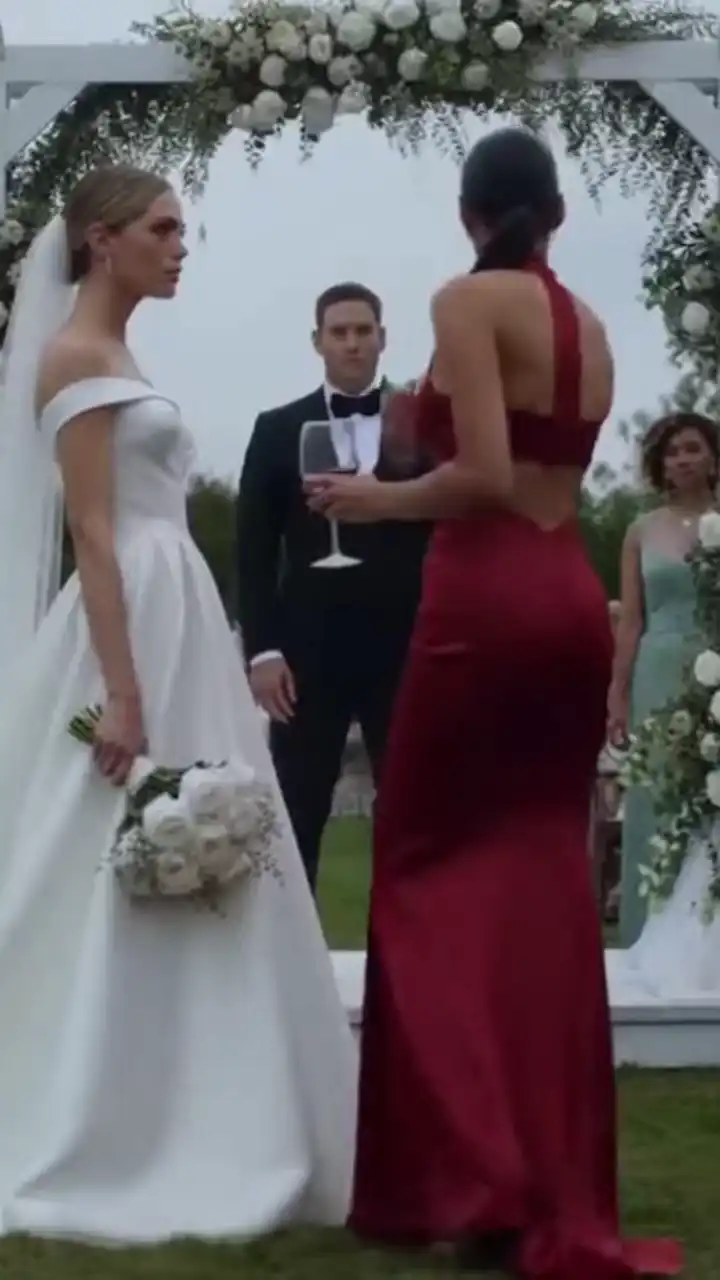
THE MAID OF HONOR POURED WINE ON ME AT MY WEDDING AND CALLED ME CRAZY. SHE FORGOT I STILL HAD THE VOICE NOTE SHE SENT MY FIANCÉ.