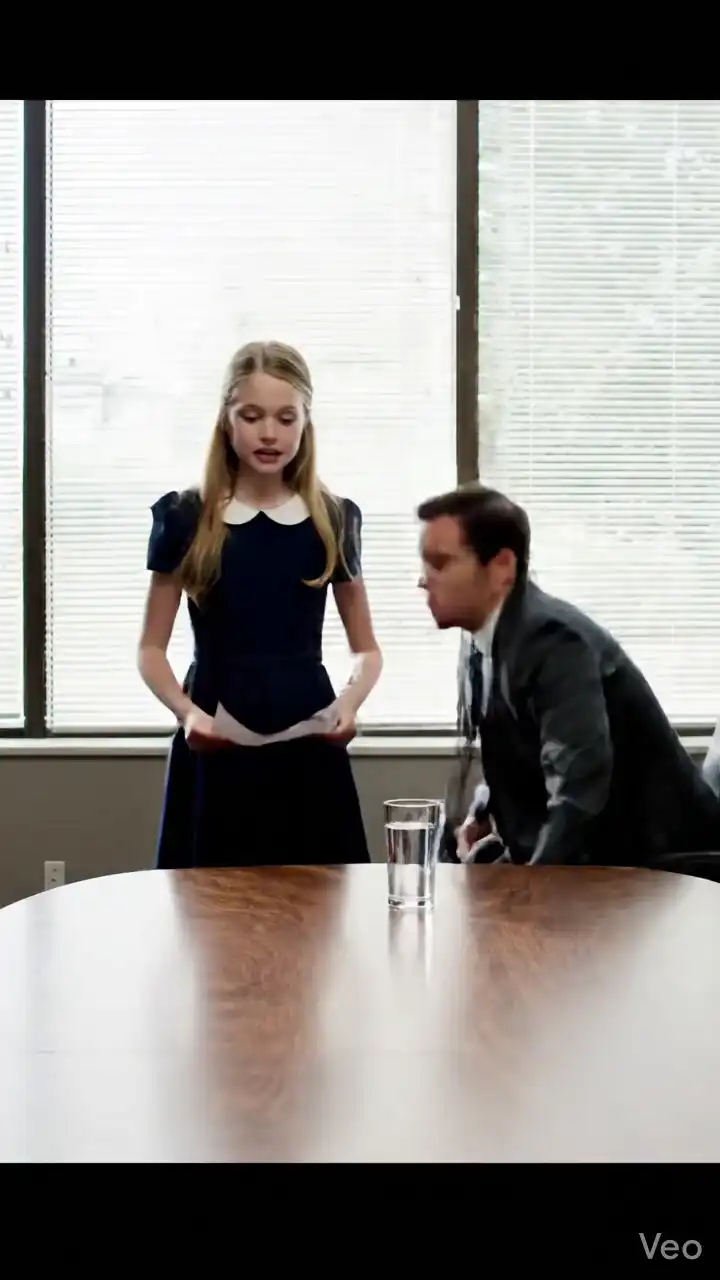
THEY LAUGHED WHEN MY FATHER LEFT ME OUT OF THE WILL UNTIL THE LAST SIGNATURE PAGE APPEARED
Chapter 1
The first thing I saw in the conference room was my own name written in blue ink on the bottom corner of a copied page.
Not in the list of heirs.
Not in the greeting.
Not in the official heading.
Just small, almost hidden, beside a clipped stack of legal papers no one had meant for me to notice.
I was still standing in the doorway when Aunt Trina took the page away.
“Those aren’t for you, Willa.”
She said it softly, but everyone heard her because the room had gone so quiet.
The conference room at Barlow Ridge Medical Plaza smelled like stale coffee and lemon cleaner. The windows were tinted dark against the bright afternoon, and the long walnut table reflected every face like it was judging us twice. At the far end sat Mr. Hollis Crane, my father’s estate attorney, his silver glasses low on his nose. Beside him were two binders, a brass letter opener, and a heavy white envelope that looked more important than anything else in the room.
My father, Dale Mercer, had died nine days earlier.
And now all his grown-up people had gathered around a table to decide what was left of him.
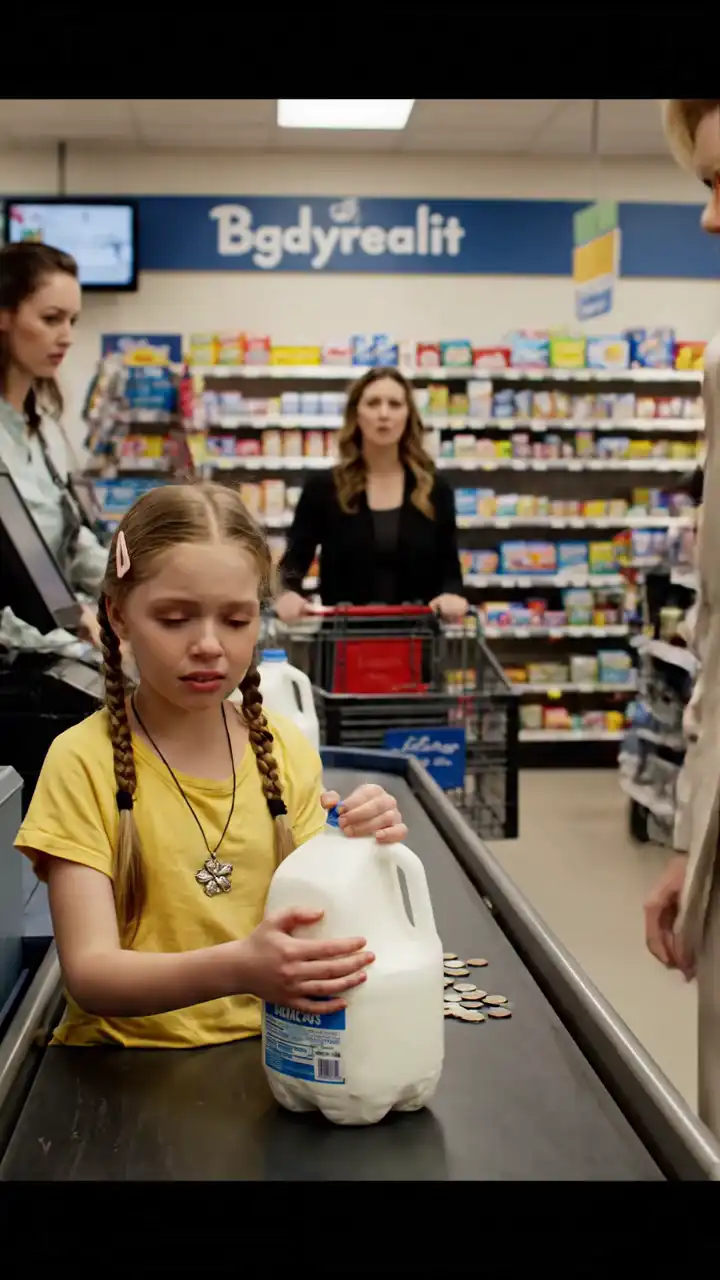
I was eleven, small for my age, wearing a navy dress my neighbor Mrs. Bell had ironed for me that morning. I had brushed my own hair three times and tied it back with a ribbon that kept slipping because my hands wouldn’t stop sweating. I came because my father’s assistant had called and said, “Your dad named you for attendance.” Those were her exact words. Named me for attendance, like I was a chair they had to set out.
I didn’t want money. I didn’t even know how much money there was.
I wanted someone to look at me like I belonged in that room.
Instead, every eye turned toward me as if I had entered the wrong funeral.
Trina stood nearest, all hard perfume and pressed beige pants. She had been my father’s older sister and, for the last week, the loudest voice in every hallway. Next to her sat her son Bryce, who wore a dark suit and a watch too expensive for someone who kept talking about “family responsibility.” There were also two board members from my father’s company, Mercer Industrial Roofing, and his girlfriend, Nadine Voss, wearing black silk and a face like grief had selected her personally.
No one had saved me a seat.
I took the only empty chair left, halfway down the table, too far from the head to matter and too close to the middle to disappear.
Mr. Crane cleared his throat. “We are here for the preliminary reading of Mr. Mercer’s testamentary documents.”
His voice was calm in the way hospitals are calm. Like everything bad had already happened.
He opened the binder. Papers shifted. Pens clicked. Someone’s phone buzzed and was quickly silenced.
I folded my hands in my lap so no one would see them shake.
Mr. Crane read the basic parts first. Real estate. Business shares. A lakeside property near Greystone Hollow. A truck collection I had never seen because my father kept that warehouse locked. Charitable distributions. A trust for maintenance of the family burial plots.
Then he paused.
The room seemed to lean.
“The remainder of the estate,” he said, “passes in controlling interest to Bryce Halden Mercer in accordance with the signed will dated February twelfth of this year.”
Aunt Trina exhaled through her nose, not quite a smile, but almost. Bryce lowered his eyes as if trying to look humble and failing.
My chest went cold so fast it felt like I had swallowed winter.
I don’t know what I had expected. Not everything. Not even half. But I had expected not to disappear.
Mr. Crane kept reading.
There was a modest educational provision for me. Tuition. Basic living support through age twenty-two. Restricted disbursement. Trustee oversight.
An allowance.
Not a daughter’s share. A managed expense.
I stared at the polished table until the wood grain blurred.
Nobody said I’m sorry.
Nobody said your father loved you.
Bryce finally did speak, and somehow that felt worse than silence.
“It’s generous,” he said.
I looked up at him.
His hands were folded over the document like he already owned the paper, the room, the air. He was twenty-nine, broad and pink-cheeked, with my father’s family jaw but none of his eyes. He spoke in that flat, public voice people use when they want to sound reasonable in front of witnesses.
“You’re a kid,” he added. “This protects you.”
My throat burned. “From what?”
He didn’t answer right away.
From me, his face said.
From wanting more.
From embarrassing the adults.
Nadine shifted in her chair and looked at me with a softness that might have been pity, which I hated instantly.
Aunt Trina leaned one hand on the table. “Willa, your father made his decisions carefully.”
“He didn’t tell me.”
“Children aren’t included in every legal conversation.”
I swallowed. “I’m not asking for every conversation.”
“Then don’t make a scene.”
That was the moment it happened, the one I would later see replayed in my head in perfect detail.
Mr. Crane slid the signature packet closer to Bryce for acknowledgment. A loose page slipped sideways from the stack, turning just enough for me to see the bottom half. It was a signature page from something older, maybe copied, maybe misplaced. Near the witness lines were two names.
Hollis Crane.
Lenora Vale.
And below them, in my father’s handwriting, not on the heir line but in the notation box beside the initials:
For my daughter Willa Mercer if not otherwise protected under Elm Street file
I stood up so suddenly my chair legs screeched across the floor.
“That says my name.”
Everyone froze.
Aunt Trina grabbed for the page, but I was closer than she thought. My fingers touched the corner first. The paper bent between us.
“That says my name,” I said again, louder now. “What is Elm Street file?”
Bryce rose too fast, knocking his water glass over. It rolled, spilling across the walnut table and dripping onto the carpet.
“It’s not relevant.”
He said it so quickly that the whole room heard the fear in it.
Mr. Crane stood halfway, one hand out. “Willa, sit down.”
“No.”
The room was still except for water dripping off the edge of the table.
I could feel every stare on my face, my dress, my cheap ribbon, my shaking hand holding the page everyone wanted back.
Aunt Trina’s voice dropped. “Give that here.”
“No.”
“It’s an old attachment,” Bryce said. “Incomplete. Probably revoked.”
“Then why are you scared of it?”
His mouth tightened.
For one sharp second, no one moved. The page was between my fingers and Aunt Trina’s manicured hand. The witness names sat there in black print. My father’s note sat there in blue ink. My name looked small, but it was real.
Then someone near the wall spoke up in a quiet voice I hadn’t noticed before.
“It isn’t incomplete.”
Everybody turned.
At the side credenza, near the untouched coffee urn, stood a woman in a gray cardigan holding a refill tray of paper cups. I had seen her when I walked in and assumed she worked for the law office or the building. Mid-fifties maybe. Thin braid over one shoulder. No one had looked at her twice.
She set the tray down carefully.
“I know that signature page,” she said. “Lenora Vale is me.”
The room changed.
I could feel it before anyone spoke. Like the air had stepped backward.
Mr. Crane’s face drained of color. Bryce blinked hard. Aunt Trina took her hand off the paper.
The woman looked directly at the page in my hand.
“There should be another file,” she said. “And if it’s the Elm Street file I’m thinking of, that little girl should not be sitting here getting talked to like she’s a mistake.”
Chapter 2
No one told me to sit after that.
Nobody seemed to know who was supposed to be in charge anymore.
The woman in the gray cardigan moved slowly toward the table, not dramatic, not loud, just steady in a way that made everyone else look clumsy. Up close she looked older than I first thought, with tired eyes and clean bare hands except for one silver ring on her thumb. Her name tag, half hidden by the cardigan seam, said LENORA VALE PROPERTY SERVICES.
Property services.
Not a lawyer. Not family. Not a board member.
Someone the room had already decided didn’t matter.
Mr. Crane straightened his papers with both hands. “Ms. Vale, I believe there’s been some misunderstanding.”
She gave him one look. “There has.”
Aunt Trina folded her arms. “And why exactly are you here?”
Lenora answered without looking at her. “Because your assistant called the building short-staffed and asked if I could set out coffee for a legal meeting.” Then she glanced at me. “And because some lies get unlucky.”
Nobody liked that.
Bryce reached for the page in my hand again, but I pulled it back against my chest.
Mr. Crane forced a small smile that didn’t belong on his face anymore. “The Mercer estate is a private matter.”
“Then you should’ve kept your pages in order.”
He inhaled through his nose. “Ms. Vale, if you are referring to an old witness acknowledgment, it would not supersede the operative will.”
Lenora nodded once. “I know that. I also know Mr. Mercer came to the Elm Street office two years ago carrying a brown accordion file so full the clasp wouldn’t shut. He asked me to witness signatures because your regular receptionist had left for lunch.”
Aunt Trina made a sound of disbelief. “This is absurd.”
“It might be.” Lenora shrugged. “But I remember him because he didn’t sign right away. He sat in the lobby staring at one page for twenty minutes, then he asked me one question.”
No one interrupted.
Lenora’s eyes moved to me again.
“He asked, ‘If people hate what’s fair, does paper still hold?’”
Something inside me tightened so hard it hurt.
That sounded like my father.
Not the father people saw in public, all broad shoulders and short answers. The one I knew had asked strange, serious questions when he thought I wasn’t listening. The one who once stood over a broken birdhouse in our yard and said, “Wood tells the truth after weather. People take longer.”
Bryce laughed once, too sharply. “Convenient.”
Lenora didn’t react. “He also asked for the address line to read exactly as written. Elm Street Records Annex, Unit C. Said if anything happened, it needed to be found there if the main office got difficult.”
Mr. Crane’s jaw shifted.
That tiny movement told me more than anything else in the room.
I turned to him. “What’s in the Elm Street file?”
“There are archived documents associated with multiple business matters,” he said.
“About me?”
“Potentially unrelated.”
“So yes.”
Aunt Trina snapped, “This is why minors shouldn’t sit in estate proceedings.”
I looked at her. “I’m sitting in one right now.”
Her cheeks darkened. Maybe because I said it clearly. Maybe because for the first time no one could act like I was too little to understand contempt.
Nadine finally spoke from her end of the table. Her voice was quiet, but it carried. “Hollis, is there another document?”
Mr. Crane didn’t answer at once.
That silence spread wider than any answer.
Bryce planted both palms on the table. “Even if there is some old draft, Dad replaced it. You heard him. February twelfth.” He looked around the room, gathering witnesses. “This isn’t complicated.”
But it was. You could see it in the room now. The board members weren’t nodding anymore. One of them, a woman named Cheryl Baines whom I recognized from company holiday parties, had opened a legal pad and begun writing notes.
Mr. Crane picked up the brass letter opener and set it down again. “I think the best course is to adjourn briefly while I verify whether the Elm Street archive contains any material relevant to today’s reading.”
“Briefly?” Aunt Trina said. “Absolutely not. We are already here.”
“That may be the problem,” Nadine said.
Everyone turned to her.
She was the kind of beautiful that seemed expensive to maintain, but that day it looked tired. Her lipstick had feathered at the edges. Her mascara was almost gone under her eyes. She touched the stem of her water glass but didn’t drink.
“What do you mean?” Bryce asked.
She held his gaze. “I mean maybe everyone got here too early.”
No one spoke.
I kept hearing Lenora’s line in my head. Some lies get unlucky.
Mr. Crane called the Elm Street Records Annex from the conference room speaker. We all listened to the automated menu, then hold music, then dead air, then a man named Devon with a thick county accent who said the annex had recently moved active storage from Unit C to a basement records vault after storm damage.
“Can the file be retrieved today?” Mr. Crane asked.
“Depends on file number.”
Mr. Crane looked at the loose page in my hand. “I don’t have it.”
Lenora stepped closer. “Check the bottom right backside. Mr. Mercer wrote his own indexing codes in pencil.”
Aunt Trina sighed like this whole thing was beneath her, but I turned the page over.
There it was.
EM C 14 77 W
My fingers trembled as I read it.
Devon asked for the code again, then we heard keys clicking.
“Got a box,” he said. “Restricted release. Dual authorization.”
Mr. Crane closed his eyes briefly.
Bryce caught it. “What does that mean?”
Mr. Crane said nothing.
Cheryl Baines looked up from her notes. “It means someone anticipated resistance.”
The room went colder.
Dual authorization required one legal custodian and one designated secondary witness. According to Devon, the digital record named Hollis Crane as custodian.
“And secondary?” Nadine asked.
There was a pause.
“Lenora Vale,” the speaker said.
Bryce slammed his hand on the table. “This is insane.”
Lenora tilted her head slightly. “Still convenient?”
My pulse pounded so loudly I could hear it in my ears.
Aunt Trina took a different tone then, lower and smoother, as if she had decided force wasn’t working and charm might. “Willa, sweetheart, there are technical papers adults have to sort through. Your father did care for you. Nobody is saying otherwise.”
“That’s not what you said before.”
Her smile held. “Emotions are high.”
“I know.”
It slipped out of me before I could soften it. I wasn’t trying to sound brave. I was just tired.
Mr. Crane arranged for the file to be couriered from the annex within the hour. Until then, he insisted, no further distributions would be discussed.
No one liked waiting together, but no one wanted to be the first to leave either. Not when the truth might arrive in a cardboard archive box.
I sat back down, still holding the signature page.
Lenora took the chair against the wall, not at the table, like she knew exactly how people like this room worked. She didn’t fidget. She didn’t seek attention. Yet somehow the whole balance had shifted toward her.
As the minutes passed, small details began to feel strange.
Mr. Crane wouldn’t meet my eyes.
Bryce texted constantly under the table.
Aunt Trina kept asking whether “old guardianship drafts” could be misinterpreted, though no one had mentioned guardianship yet.
And Nadine stared at the white envelope near Mr. Crane’s elbow as if she hated it.
I noticed all of it because once people decide a child is harmless, they stop hiding in front of her.
After twenty minutes, I left for the restroom just to breathe.
The hallway outside was lined with framed medical leases and outdated watercolor prints of Willow Creek, the town where my father had built most of his business. I leaned against the wall and counted backward from thirty the way my school counselor once taught me.
When I came back, I stopped before opening the conference room door because I heard my name.
Bryce’s voice.
“She was never supposed to be in the room.”
Then Aunt Trina, lower. “Keep your voice down.”
Mr. Crane said, “The attendance clause was added by the decedent.”
Nadine asked, “Why would he do that if he meant to exclude her?”
No one answered.
I stood there with my hand on the metal lever and suddenly understood something I should have understood sooner.
My father had wanted me present for this.
He had wanted me to hear it.
Either because he thought it would protect me.
Or because he knew the people in that room would show me who they were when they believed he was no longer there to stop them.
I opened the door and went back in.
No one repeated what they’d said.
At 4:17 p.m., the courier arrived with a weather-smudged archive box sealed in red tape.
The whole room stood up.
Chapter 3
The box was smaller than I expected.
It sat in the center of the walnut conference table looking plain and ugly, with one dented corner and a faded sticker from the Elm Street Records Annex. If I had seen it on a shelf, I might have walked right past it. But everyone in that room stared at it like it might explode.
Mr. Crane adjusted his cuff links before touching the tape.
His hands were not steady.
“There are procedures for this,” he said, mostly to remind himself he still belonged at the head of the table.
Lenora rose from the wall chair and stepped forward. “Then follow them.”
He cut the red seal.
Inside were six file folders, a sealed legal packet, and a manila envelope with my father’s handwriting across the front.
OPEN ONLY IF INITIAL DISTRIBUTION IS CHALLENGED IN THE CHILDS PRESENCE
The room seemed to tilt around that last word.
Child’s presence.
My presence.
He had known.
I heard Aunt Trina breathe in sharply. Bryce muttered, “You’ve got to be kidding me.”
No one was kidding.
Mr. Crane stared at the envelope for too long before lifting it. “This may be privileged.”
Cheryl Baines said, “Not if it was conditioned for this event.”
The other board member, Harold Sipe, who had hardly spoken all day, finally did. “Read it.”
Mr. Crane glanced at Aunt Trina, then at Bryce, then at me. Maybe he was looking for the version of this that hurt him least. He didn’t find it.
He broke the seal.
My father’s letter was only two pages. His handwriting slanted hard to the right, the way it always did when he was angry or in a hurry. He had written on yellow legal paper instead of stationery, like this was business and grief at the same time.
Mr. Crane read.
“If this envelope is open, then my daughter Willa has either been denied plain treatment or forced to sit through a performance before the adults in this family remember she is my child.”
No one moved.
My face went hot. Not from embarrassment. From the shock of hearing my father’s voice come back through someone else’s mouth.
Mr. Crane kept going.
“Let the record reflect that any reading of my February twelfth will without simultaneous production of the Elm Street supplemental trust and custody directive is incomplete by design.”
Bryce spoke over him. “Supplemental trust?”
“Be quiet,” Nadine said.
He looked at her as if she had struck him.
Mr. Crane swallowed and continued.
“I separated documents because I no longer trusted that all parties around me understood the difference between stewardship and appetite.”
That one landed like a dropped plate.
Aunt Trina sat down very slowly.
Mr. Crane kept reading, his voice flatter now.
“My daughter is not to be made to feel small for the comfort of larger people. If this letter is being heard aloud, then someone has already failed her.”
For the first time since I entered the room, no one looked at me.
Shame has a sound when it spreads through adults. Not dramatic. Not cinematic. It’s smaller than that. A shifting of paper. A throat cleared too late. A chair squeaking under somebody changing position because sitting still suddenly hurts.
I looked at the manila folders inside the box.
One was labeled CUSTODY CONTINGENCY.
One was labeled EDUCATIONAL TRUST EXPANDED.
One was labeled VOTING SHARES HELD IN PROTECTIVE TRUST UNTIL AGE 25.
And one was labeled LETTER OF EXPLANATION NOT FOR PUBLIC BOARD REVIEW.
Bryce reached for that one instinctively, and Mr. Crane pulled it away.
“No,” he said.
Bryce laughed without humor. “Now you’re drawing lines?”
That sentence hung in the room for reasons I couldn’t yet name.
Lenora noticed it too. I could tell from the way her eyes narrowed, not at Bryce, but at Mr. Crane.
Mr. Crane opened the supplemental trust packet. The legal language came first. Dense, formal, full of sections and clauses. But the meaning broke through quickly enough.
My father had not left me out.
He had done something far more complicated.
The February will, the one Bryce had been ready to walk out celebrating, transferred operating control of Mercer Industrial Roofing to Bryce only in the event that the supplemental trust remained dormant. But the supplemental trust, once triggered by challenge in my presence or evidence of hostile exclusion, would automatically shift majority beneficial ownership into a protected trust for me, with independent fiduciary oversight and delayed voting authority. Bryce would receive a salaried interim management role under strict review, not ownership.
The lakeside property went into my trust.
The warehouse collection too.
There were income protections, educational provisions, healthcare protections, and a separate home placement directive if anything happened before I turned eighteen.
It was all there.
Not simple. Not sentimental. But there.
I wasn’t erased.
I was protected.
And because they had pushed too hard in front of me, because they had made me sit there and feel it, the protection had awakened exactly how he planned.
Cheryl Baines let out a long breath. “He built a spring-loaded estate.”
Harold gave one stunned nod. “And we just stepped on it.”
Aunt Trina stood so quickly her chair hit the wall. “This is manipulative. This is emotional blackmail from the grave.”
Lenora spoke before anyone else could. “No. It’s planning.”
Bryce looked at Mr. Crane with open fury now. “You knew there was a second structure.”
“I knew there were archived contingencies.”
“You let me sit here.”
Mr. Crane’s face hardened. “You spoke for yourself.”
Something old and rotten was opening in the room now, bigger than inheritance. Not just who got what, but who thought they deserved to decide what a child should be told.
I looked down at my hands. They were still trembling, but not from the same
Disclaimer: Mention of any brand or trademark is for identification only and does not imply partnership or endorsement
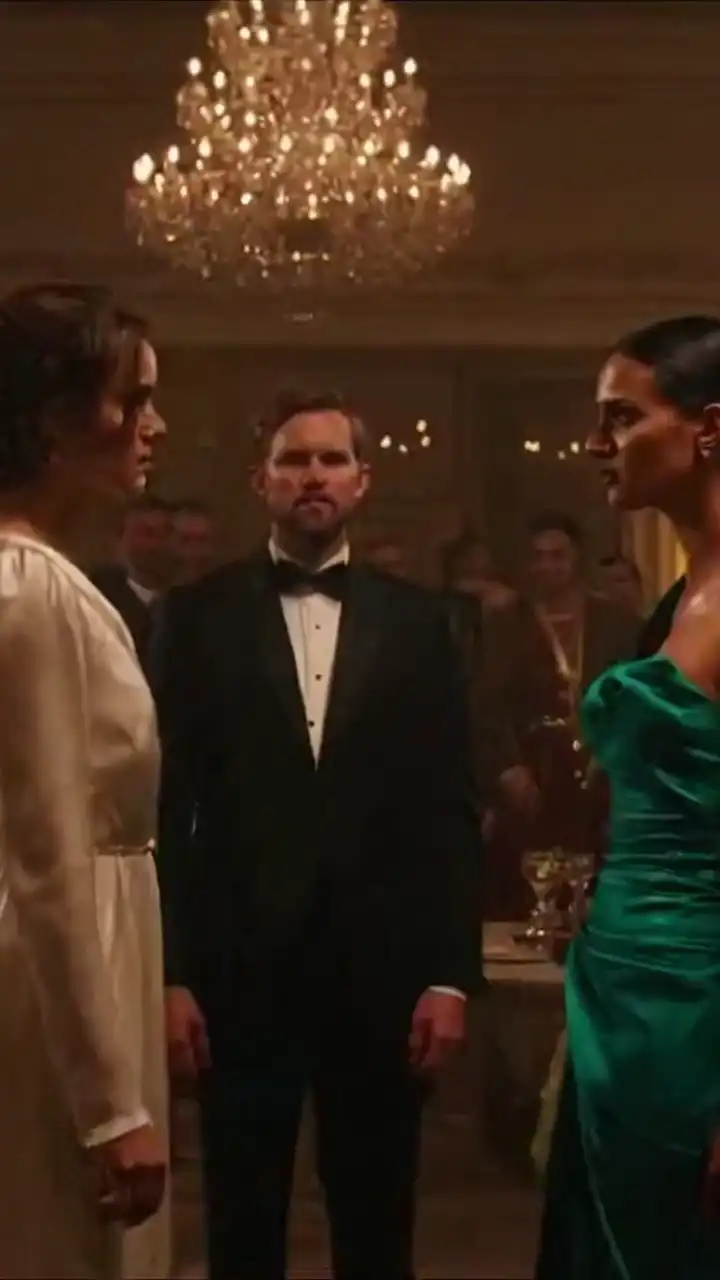
MY HUSBAND USED MY MONEY, GOT ENGAGED TO HIS MISTRESS, AND STOOD THERE WHILE SHE SLAPPED ME

THE MAID OF HONOR POURED WINE ON ME AT MY BRIDAL SHOWER AFTER STEALING MY FIANCÉ. SHE DIDN'T KNOW THE ROOM WAS ABOUT TO HEAR WHAT HE'D BEEN SAYING TO BOTH OF US.

THE MAID OF HONOR POURED WINE ON ME AT MY WEDDING AND CALLED ME CRAZY. SHE FORGOT I STILL HAD THE VOICE NOTE SHE SENT MY FIANCÉ.