THEY BARRED HER GRANDFATHER FROM SCHOOL WHILE SHE HELD HIS MEDICINE
Chapter 1
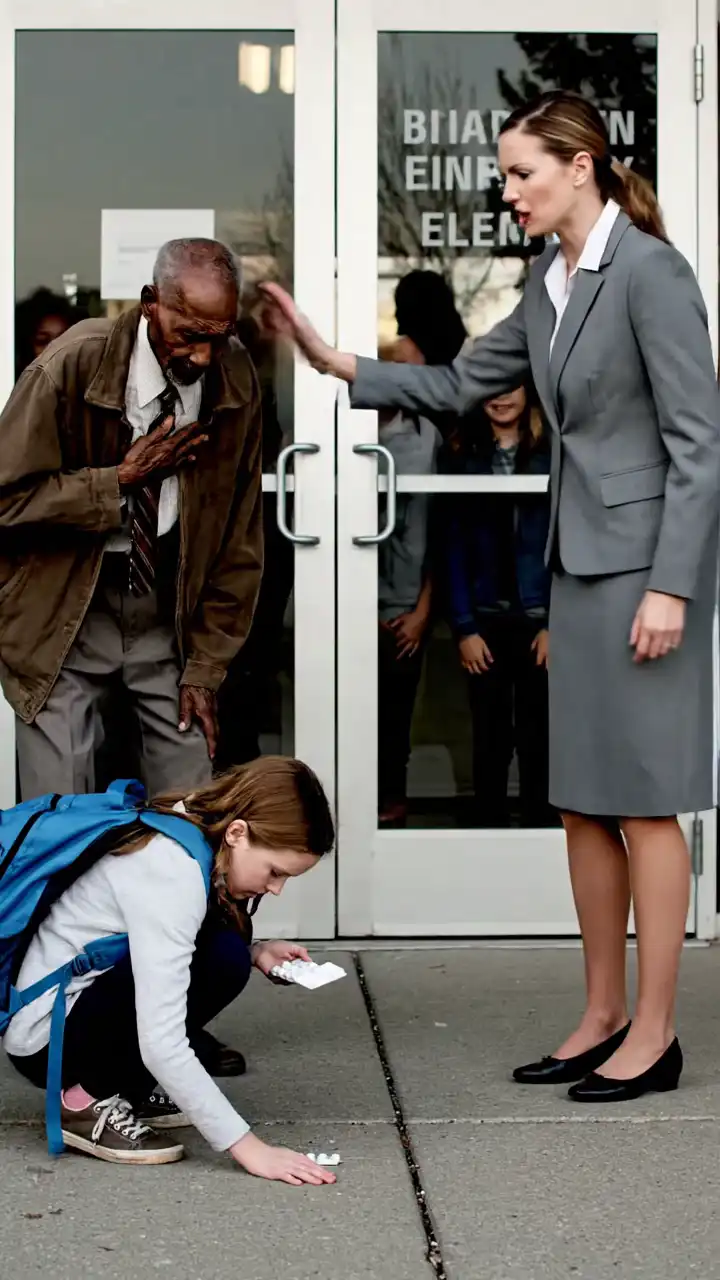
They stopped my grandfather at the front doors of Briar Glen Elementary while his pill box lay open in my hands.
One little white tablet had rolled onto the cracked concrete between my sneakers and the principal’s polished shoes. I still remember how bright it looked in the morning sun, like something too small to matter and too important to lose.
“Sir, you need to step away from the entrance,” Principal Darlene Wexler said, one hand stretched toward my grandfather as if he were dangerous.
He wasn’t dangerous.
He was seventy-two years old, thin in a frayed brown jacket, and breathing too hard because we had walked six blocks from Juniper Court after the bus passed us by. His name was Otis Bell, but everybody in our building called him Mr. Otis because he still held doors open and carried grocery bags for people whose knees worked better than his.
I crouched so fast my backpack slid off my shoulder. “Don’t step on it,” I whispered.
A cluster of kids had already formed just inside the glass doors, faces pressed to the windows. Parents on the sidewalk slowed down but didn’t stop. Some stared at Grandpa. Some stared at me. Most looked at the pill box because there was a pharmacy label on the lid, curling at the corners from being opened too many times.
MABEL BELL RIVERCREST NEUROLOGY CENTER TAKE AS DIRECTED
My friend Tori Haskins saw it too. She stood two steps inside the entrance holding her trumpet case, her freckles gone pale under the fluorescent light. She mouthed, You okay?
I wasn’t.
That morning was Grandparents Day breakfast, the one school event I had begged to attend all year. My teacher, Mrs. Loma Pritchard, had written in green marker on the flyer: Special guests welcome in Room 14 at 8:10. Pancakes, songs, and student artwork.
I had made a paper frame with blue tissue flowers and glued a photo of me and Grandpa at the laundromat inside it. He was laughing in the picture. I was missing one front tooth. At the bottom I had written, THIS IS MY SAFE PERSON.
Now the safe person was being blocked from the school like he didn’t belong near children.
“He’s with me,” I said, standing up so fast I almost dropped the pill box again. “He’s my grandfather.”
Principal Wexler kept her voice low, which somehow made it meaner. “Beatrice, go on inside. We will handle this.”
My name always sounded too grown-up when adults said it in that voice. Everybody else called me Bea.
“No,” I said.
My grandfather reached for my shoulder, his hand shaking. “Baby girl, it’s all right.”
But it wasn’t all right. He had shaved that morning with cold water because our hot water had gone out again. He had ironed his shirt with a dish towel between the iron and the fabric so it wouldn’t shine. He had taken out the tie Grandma Mabel bought him before she died, though he didn’t tie it right anymore and it sat crooked under his collar.
He had come because I asked him to.
And now the school secretary, Mrs. Fenley, stood in the doorway with a clipboard and that tight smile adults use when they want to hide disgust behind manners.
“Mr. Bell is not listed on the approved guest form,” she said. “We also have concerns.”
Concerns.
I looked around like maybe there was another old man behind us they could possibly mean. “What concerns?”
Mrs. Fenley glanced down at the open pill box in my hand.
The silence after that was ugly. Even kids could understand that kind of silence.
My grandfather lowered his eyes. That was the part that cut me. He didn’t argue. He didn’t ask what they were thinking. He just stood there and let them think it.
“He forgot his morning dose,” I said quickly. “That’s why I brought it.”
Principal Wexler’s face changed for half a second, not softer, just sharper. “Beatrice, why are you carrying someone else’s medication?”
“It’s not—” I started, then stopped.
Because the truth was hard to explain, and I had spent months learning how to make hard things smaller.
The label said Mabel Bell.
My grandmother had been dead for almost three years.
“Bea.” Grandpa’s voice was thin. “Let’s just go home.”
“No.”
The one word came out louder than I meant it to. A little boy near the doors giggled. Somebody’s mother pulled her daughter closer.
Principal Wexler’s shoes shifted closer to the white tablet still lying on the sidewalk. I scooped it up before she could crush it.
“I said don’t step on it.”
She drew back, offended now, as if I had broken some bigger rule than the one she was inventing for us. “Young lady, enough.”
Mrs. Pritchard appeared behind the glass, carrying a tray of paper cups. She saw me first, then Grandpa, then the principal, and I watched her understanding change shape in real time. Not understanding the truth. Understanding the scene. Understanding what it looked like.
That was the beginning of the worst part.
Adults will forgive a lot if a problem stays private. But once a thing happens in front of an audience, they start protecting themselves from how it looks.
“Come on,” Mrs. Pritchard said gently through the cracked door. “Bea, your class is waiting.”
“My class can wait.”
The whole sidewalk went still.
My grandfather touched his chest once, the way he did when he got short of breath. I knew he was embarrassed. I knew he hated scenes. I knew the sound in his breathing meant he needed to sit down soon. But I also knew if he turned around and walked away, every person there would believe they had been right to stop him.
Tori pushed the door wider before anyone could stop her. “She made him a frame,” she blurted. “It’s on her desk.”
Nobody answered her.
Mrs. Fenley looked at the label again. “Is this prescription current?”
I clutched the box tighter. “Give me one reason that’s your business.”
“Beatrice,” Mrs. Pritchard warned.
That was when my grandfather leaned toward me and whispered, “Please don’t make this harder.”
I looked up at him. His eyes were wet, and that scared me more than the principal did. Grandpa cried once at Grandma’s funeral and once when our old cat had to be put down. That was all.
“Just let me sit in the back,” he said to nobody and everybody. “I won’t bother anyone.”
Principal Wexler folded her hands. “I’m sorry. We can’t allow unauthorized adults into the building.”
Unauthorized.
Like love needed a badge.
I held the medicine between us like proof of something I couldn’t force them to see.
Then one of the cafeteria dads on the sidewalk muttered, not quietly enough, “If he’s confused and she’s giving him pills, somebody ought to call someone.”
My face went hot so fast I thought I might pass out.
My grandfather heard it too. His shoulders folded inward. “Bea,” he said, almost too softly to hear. “Let it go.”
But the thing about being eleven is that sometimes your whole heart stands up before your fear can sit it down.
“You don’t know him,” I said, turning toward all of them. “He remembers every birthday on our floor. He walks me to school every day. He makes soup when I’m sick. He—”
“Beatrice.” This time it was Principal Wexler, clipped and cold. “Inside. Now.”
I should have gone in. I know that now. But then Tori’s eyes dropped to the label, and she frowned hard like she had caught hold of something strange.
“Mabel Bell?” she said.
I went still.
Grandpa looked at the ground.
And in that tiny, horrible pause, I knew this morning wasn’t going to stay small.
Chapter 2
By lunch, everybody in Room 14 had a version of what happened.
In one version, my grandfather had tried to get into the school high on somebody else’s medication. In another, he had dementia and I was the one giving him random pills because nobody at my house cared what happened. By recess, one fifth grader I didn’t even know asked if Child Services was coming to get me.
Nobody asked me what was true.
They asked the kind of questions kids ask when they want a story, not an answer.
“Was he yelling?”
“Did he fall down?”
“Why was the medicine in a dead lady’s name?”
That last one traveled fastest because Tori had seen the label and because labels feel official, even when people don’t understand them.
I kept my eyes on my tray and peeled the edges off my grilled cheese until it looked like a sponge.
Tori slid onto the bench across from me. “I didn’t tell them like that.”
“I know.”
She looked miserable anyway. Tori always looked like she had one foot in trouble even when she was being kind. Her mom cleaned houses on the south side of Lenora Falls, and Tori spent half her life taking care of two younger brothers with matching cowlicks. She understood how fast adults could turn one bad-looking moment into a whole story about your family.
“I just said the label looked old,” she whispered. “Because it did.”
“It is old.”
She stared at me. “Why does he still have it?”
I should have said none of your business. I should have picked up my tray and left. Instead I said nothing, because silence was the one thing I still felt I could control.
At the front of the cafeteria, Principal Wexler stood by the milk cooler talking to the school nurse, Ms. Heller. They both looked at me once, then away.
That tiny glance made my stomach hurt.
At recess, Mrs. Pritchard kept me inside to “finish a missing vocabulary sheet” that she had never cared about before. She sat at her desk pretending to grade while I pretended to write. Finally she said, without looking up, “Bea, if there’s something difficult going on at home, you can tell a grown-up.”
I pressed my pencil so hard the tip snapped.
“There isn’t.”
She set down her pen. “Your grandfather seemed unwell.”
“He was tired.”
“And the medication?”
I stared at the broken pencil lead on my paper. “Can I go to recess now?”
She waited one beat too long. “The school has responsibilities.”
That was another one of those adult words. Responsibilities. Concerns. Procedures. They always sounded clean. They never sounded like a little girl standing outside with a pill in her hand while people judged the only person who showed up for her.
When she finally let me go, the playground air felt colder than it had that morning. Tori was near the monkey bars with a jump rope wrapped around her waist like a belt. She jogged over when she saw me.
“My aunt works nights at Rivercrest,” she said in a rush. “At the neuro place on the label.”
I froze.
“She does laundry there,” Tori added. “Not a nurse or anything. But she knows names sometimes.”
I hated how fast my heart started beating. “So?”
“So maybe Mabel Bell wasn’t the patient.”
I looked at her hard. “What are you talking about?”
Tori lowered her voice. “My aunt said sometimes family members pick up meds under old records when insurance gets messed up or a chart doesn’t get fixed. She complains about it all the time.”
I wanted to believe her, but belief felt dangerous. Dangerous because if she was right, then all morning I could have just said that. Dangerous because if she was wrong, I had let one more person touch the secret I was trying to hold shut.
“Forget it,” I said.
But Tori didn’t. “Bea, are you hiding something because you’re scared or because he asked you to?”
Before I could answer, the recess aide blew her whistle.
That afternoon, I was called to the office.
The secretary didn’t even make me sit. Principal Wexler had me stand in front of her desk while she folded and unfolded a yellow legal pad. Through the blinds behind her, I could see the front flag whipping in the wind.
“Beatrice,” she said, “we attempted to contact your guardian.”
“My grandfather doesn’t always hear the phone.”
“We also called your emergency backup contact, a Mrs. Janine Corrow.”
I nodded. Janine lived two apartments down from us and worked evenings at a beauty supply store. She used to play cards with Grandma Mabel and still brought us leftover sweet rolls on Sundays.
“She is coming to pick you up.”
My mouth dried out. “Why?”
“We feel it would be best if an adult could clarify some things before dismissal.”
“Am I in trouble?”
“Not if you cooperate.”
That answer was worse than yes.
When Janine arrived, she looked straight at me first, which made me want to cry from relief. She was wearing pink scrubs under a denim jacket, not because she worked in medicine but because she bought everything secondhand and pink scrubs were cheap. Her braids were piled on top of her head in a hurry.
“What happened?” she asked.
Principal Wexler gave her a careful version. Unauthorized adult. Concerning medication. Possible confusion. Student evasiveness.
Janine’s face got flatter with every sentence.
Finally she said, “You’re talking about Otis Bell like he wandered in off a highway.”
“He presented in a way that raised questions,” Principal Wexler replied.
“Presented?” Janine repeated. “He came for pancakes.”
Nobody smiled.
I watched Janine take a breath and force herself calm. “If there’s a concern, ask it plain.”
Principal Wexler glanced at Ms. Heller, who had stepped into the office without me noticing. The nurse held a folder against her chest like a shield.
“Our concern,” Ms. Heller said, “is whether Mr. Bell is medically able to care for Bea.”
There it was. Not safety in general. Not a misunderstanding. That exact wound.
Janine turned to me. “Did they ask you this in front of other people?”
I nodded.
Her jaw worked. “That should not have happened.”
“We had to act quickly,” Principal Wexler said.
Janine laughed once, but there was no humor in it. “Act quickly? On what? An old jacket and a pharmacy label?”
No one answered.
Then Ms. Heller said something that changed the room.
“If there is a diagnosis being concealed, the school should know.”
Concealed.
Like we were criminals.
I felt the floor tilt under me. Grandpa had told me over and over, “This stays in the family till we know more.” Not because he was ashamed, exactly, though maybe a little of that too. Mostly because he was afraid of becoming paperwork before he became sick. Afraid once people heard certain words, they’d stop seeing him and start seeing what they were allowed to deny him.
Janine looked at me long enough to understand there was, in fact, something.
Her voice softened. “Bea, honey. Is he all right right now?”
I swallowed hard. “He was supposed to go back to Rivercrest next week.”
Principal Wexler leaned forward. “For what?”
I should have kept my mouth shut.
Instead I said, “They found something after he got lost in October.”
The room went so still it felt vacuum-sealed.
Janine closed her eyes for one second. She knew then. Maybe not everything. Enough.
Principal Wexler sat back. “Then I’m afraid we made the correct call.”
“No,” Janine said quietly. “You made the fastest call. That’s not the same thing.”
She took my hand and led me out before they could say another word.
In the parking lot, with the buses lining up and crows scratching around the edges of the asphalt, Janine finally asked, “Does Otis know they know something?”
I shook my head.
“Then we tell him before anyone else does.”
On the walk home through the Maple Row apartments, every sound seemed too loud—the shopping cart with one bad wheel, a baby crying behind a screen door, somebody’s TV playing game show applause through an open window.
When we reached our building, Grandpa was sitting on the front stoop in his good shirt with the tie still crooked, both hands clasped between his knees.
He stood when he saw me.
“Did they call you out of class?” he asked.
I nodded.
He looked at Janine, and whatever he saw on her face made his own collapse. “What did they say?”
Janine didn’t soften it. “They think Bea isn’t safe with you.”
Grandpa sat back down like his legs had forgotten him.
For a second, nobody moved.
Then he looked at me and said the saddest thing I had ever heard in my life.
“I should’ve just stayed home.”
Chapter 3
That night our apartment felt smaller than usual, like the walls had shifted inward to hear us.
We lived in Unit 3B over a discount tax office that was never open on time. The living room had one lamp that buzzed and a couch Grandpa repaired twice with duct tape under the cushions. Grandma Mabel’s crocheted blanket still lay over the armrest even though nobody used it anymore because it smelled faintly of cedar and Vicks and losing her.
Grandpa sat at the kitchen table with his glasses off, rubbing the bridge of his nose. Janine leaned against the counter with her arms crossed. I stood by the sink pretending to rinse a plate that was already clean.
“He got turned around one time,” Grandpa said. “One time.”
Janine’s voice stayed gentle but firm. “Otis, it was not one time.”
He looked up sharply. “Don’t.”
She didn’t back down. “It was October at the coin laundry. Then December at the bus station. Then that morning in February when Bea called me because you forgot where the cereal was kept in your own kitchen.”
I shut off the water. I hadn’t known she knew about the cereal.
Grandpa stared at the table. “Everybody forgets things.”
“Not like this.”
That sentence hung there, heavy as wet coats.
I hated hearing Janine say it, even though I knew she loved him. Love didn’t make truth hurt less. Sometimes it made it land cleaner.
He reached for the old blue pill box, the one from that morning, and turned it slowly in his hands. The label was cloudy from years of use.
“You should’ve thrown this away,” Janine said.
He gave a tired little shrug. “The new one cracked.”
“That’s not why you kept it.”
He didn’t answer.
I knew why he kept it. Because Grandma’s name on that box made him feel like she was still helping him remember what to do. Morning. Night. Tuesday refill. Take with food. Her name had become a thread tied around his finger after she was gone.
He had started using her old pill box months after Rivercrest told him there were “cognitive changes” and “areas of concern” and “further evaluation recommended.” They never said things simply at Rivercrest. They said them in rooms with fake plants and pamphlets. They said them while checking computers. They said them in voices that made you feel like your fear needed to stay reasonable for everyone’s convenience.
The first visit happened after he was found outside Carson Tire Center three miles from home without knowing how he got there. A police officer brought him back. Grandpa laughed it off in front of me, but that night I heard him vomiting in the bathroom.
At Rivercrest Neurology Center, we waited four hours under a TV playing daytime court shows with the volume too low to follow. A woman at the desk asked him the same date of birth three times because she wasn’t looking up when he answered. Another man in slippers slept with his mouth open beside a potted ficus. An elderly woman in a green coat cried because she had been fasting for bloodwork and no one remembered to come get her.
When the doctor finally saw us, he spoke mostly to his screen.
“Possible early-onset dementia patterns are less likely at his age than mixed vascular changes,” he said.
Grandpa had leaned forward. “Doc, say it so my granddaughter can hear it.”
The doctor blinked, annoyed, like plain language was an extra service.
“It means we need more tests,” he said.
That was all we got after six hours, one missed bus, and fifty dollars Janine loaned us for the cab home because Grandpa felt too weak to stand.
Then came the bills.
Then the next appointment got moved.
Then another specialist referral disappeared.
Then somebody at Rivercrest said we needed a guardian authorization form to access records, and somebody else said no, not unless he was declared incompetent, which he wasn’t, and the whole thing twisted into a knot of delay and insult.
In the meantime, Grandpa still packed my lunches and checked my spelling words and walked me to school every morning because he could do those things and because doing them proved something to himself.
Now all of that had turned against us.
“School’s going to call again,” Janine said.
Grandpa gave a bitter half laugh. “School. Hospital. They all talk to each other when they smell trouble.”
“They smell poor,” Janine said.
No one argued because it was true.
I took the plate from the sink and put it away just to have something to do. “I could go with somebody else.”
Both adults turned to look at me.
I wished I hadn’t said it. The words felt like betrayal the second they left my mouth.
Grandpa’s face softened in a way that made me want to take them back. “Baby girl, no.”
“I just mean for a while.”
“For a while becomes longer than you think,” he said.
Janine nodded toward the pill box. “Then tell the school the truth before they make up more.”
He shook his head at once. “No.”
“Otis.”
“No.” He looked at me then, and I saw the fear under his pride. “You know what happens. First they talk slower to you. Then they stop asking you things. Then they decide for you.”
Janine didn’t deny it.
He pointed toward the window, toward all of Lenora Falls and every office in it. “I worked thirty-four years loading trucks at Delmont Paper. Never missed a rent payment. Raised my daughter till the day cancer took her. Buried my wife. I’m still here. I’m still taking care of her.” He looked at me again. “And one bad morning at a school door, suddenly I’m what? Unsafe?”
His voice cracked on the last word.
I couldn’t stand it. “You’re not.”
He gave me a sad smile. “I know what I am to you.”
That was not the same as what he was to everyone else, and all three of us knew it.
The next morning, Janine walked me to school because she insisted. Her sneakers slapped the sidewalk fast and angry.
At the entrance, Mrs. Fenley handed me a tardy slip even though the first bell hadn’t rung.
“Principal Wexler would like to see your guardian before the next family event,” she said.
Janine took the slip from my hand and read it. “You put that in writing?”
“Yes.”
“Good.”
Something in her tone made Mrs. Fenley sit straighter.
By third period, everybody knew my grandfather had been “banned.” Kids loved that word. It sounded dramatic, final, movie-like. One boy from another class made a big show of crossing invisible lines in front of me and saying, “Sorry, unauthorized.”
I shoved past him so hard he dropped his juice pouch.
At lunch, I was sent to the counselor’s office for “peer conflict.”
The counselor, Mr. Vale, had a room full of beanbags and posters about feelings. He asked me to describe my “home support structure.” I stared at the fish tank on his shelf and counted seven fake seaweed plants because counting was safer than speaking.
“Bea,” he said softly, “sometimes children protect adults even when adults should be protecting them.”
I looked at him then. “Sometimes adults protect rules because rules are easier than people.”
His eyebrows went up. He wrote something down.
When I got back to class, Tori slipped a folded note onto my desk. It wasn’t words, just a careful drawing of the blue pill box with the torn label, and under it she had written in tiny print: Save the box.
I turned halfway around. She gave one small nod.
That afternoon, as rain started needling the classroom windows, the school office called Room 14 and asked for me again.
This time Principal Wexler didn’t bother pretending it was informal. Janine was there. So was a woman from district student services named Carla Menser, wearing a camel coat and carrying a legal pad. And, to my horror, Ms. Heller had a photocopy of the pill box label on the table.
“How did you get that?” I asked.
Ms. Heller said, “It was visible during the incident.”
Incident. Another clean word.
Carla Menser smiled the way people smile when they plan to be reasonable at you. “Beatrice, we just want to make sure your home situation is stable.”
“It is.”
Janine cut in. “You have no basis to interrogate her without cause.”
“We do have cause,” Principal Wexler said. “A potentially impaired caregiver and an unidentified medication issue.”
“He’s identified,” I snapped. “He’s my grandfather.”
No one corrected me, but nobody softened either.
Carla tapped the copied label. “Why is a deceased person’s prescription container being used in your household?”
I pressed my lips together.
Janine touched my arm. “Bea.”
I shook my head.
That was when Tori’s voice came from the open office doorway.
“Because Rivercrest messed up his chart.”
Every adult in the room turned.
Tori stood there clutching her trumpet case to her chest so hard her knuckles were white. Behind her, Mrs. Pritchard looked horrified, as if Tori had broken into a judge’s chambers instead of a school office.
“Tori,” Principal Wexler said sharply, “this is private.”
Tori swallowed. “My aunt says Rivercrest leaves old family labels on refill boxes when records don’t get cleaned up. She said the Bell file got mixed up after the wife died.”
The room changed.
Not all at once. Not kindly. But changed.
Carla Menser looked at Ms. Heller. Ms. Heller looked at the copy. Janine looked at Tori like she might hug her and cry at the same time.
Principal Wexler’s face stayed tight. “A child repeating secondhand information is not documentation.”
“No,” Janine said. “But it is enough to tell you your certainty was reckless.”
And for the first time since that terrible morning, I saw something flicker in the principal’s eyes.
Not guilt.
Worry.
Chapter 4
The school tried to slow everything down after that.
Adults love urgency when they think they’re right. They love process when they think they may have gone too far.
For two days, nobody called me to the office. Nobody asked fresh questions. But silence didn’t mean peace. It meant they were making phone calls without me.
I could feel it in the way Mrs. Pritchard kept pausing mid-sentence when the classroom phone rang. I could feel it in the way Ms. Heller watched me at dismissal from the nurse’s doorway. I could feel it in the way Janine started coming by our apartment every evening with folded papers in her purse and a new crease between her eyebrows.
On Thursday she spread the papers across our kitchen table.
“Rivercrest says they can’t release records without Otis signing again because the last authorization expired.”
Grandpa sat in his undershirt, turning a spoon over in his coffee cup. “So I’ll sign again.”
“They also say some imaging from November was never uploaded properly.”
He stared. “What does that mean?”
“It means somebody lost part of your file.”
He barked out one rough laugh. “Of course they did.”
Janine looked at me and then back at him. “There’s more. They scheduled follow-up cognitive testing in January and marked it as patient no-show.”
Grandpa straightened. “I was there.”
“I know.”
I remembered that day. The waiting room smelled like wet wool and burnt coffee. We sat under a crooked print of sailboats for three hours. A man at the desk told us the doctor was delayed. Then another woman told us the appointment had been canceled. Then a third person said maybe we had come on the wrong date. By the time we left, Grandpa’s hands were shaking so badly he couldn’t fit the key into our apartment door.
Janine tapped the papers. “They no-showed you in the computer and then treated the case like you weren’t complying.”
I didn’t understand all of it, but I understood enough. If a hospital wrote down that you failed them, other people believed it faster than if you said the hospital failed you.
Grandpa pushed away his coffee. “This is what I told you. Once it’s in a file, that file becomes your face.”
The next morning Janine took him to Rivercrest in person. She left me with Mrs. Keene on the first floor and promised to call. Every hour felt like two. I sat on Mrs. Keene’s sofa listening to her old clock click and trying to read a library book without seeing the words.
At school, Tori slid into step with me after homeroom. “Did they go?”
I nodded.
She chewed her lip. “My aunt said if the chart is wrong, that’s big.”
“Big good or big bad?”
“Both.”
At lunch, a group of girls from fifth grade passed our table and one of them said, “That’s her.” The others looked at me in that hungry sideways way people look at public shame. I kept eating my applesauce.
Tori muttered, “I hate this place.”
“Me too.”
But school wasn’t the only place. The story had slipped beyond the building. When I got home, Ms. Renda from downstairs was talking too brightly to Grandpa in the hall, the way neighbors do when they are fishing for information while pretending concern. The maintenance man held the lobby door for us and said, “How we doing today, Mr. Bell?” with such careful emphasis that it sounded like another test.
Grandpa answered everyone politely. Then he came inside and sat in the dark without turning on the lamp.
That evening Janine finally returned from Rivercrest carrying a manila envelope and a face I could not read.
“Well?” Grandpa asked.
She set the envelope down. “I got records.”
He waited.
“And I got mad.”
That almost made him smile. “Only today?”
Janine pulled out a stapled report, a stack of billing printouts, and a discharge summary from an emergency observation stay I had never seen before.
“What’s that?” I asked.
Grandpa’s head snapped toward me. “What stay?”
Janine looked between us, then exhaled. “Otis, there’s a record from six months ago. Overnight observation after a fainting episode outside Rivercrest.”
I stared at him. “You fainted?”
He looked trapped, not by the truth itself but by being discovered in front of me. “It was brief.”
“You never told me.”
He rubbed his forehead. “I didn’t want you scared.”
Janine tapped the report. “They noted memory lapses, episodes of disorientation, and probable transient ischemic events.”
I didn’t know that phrase.
Grandpa did. His face went gray. “Mini-strokes.”
Janine nodded.
The room rang in my ears. “You had strokes?”
“Small ones,” he said too fast. “Not like people think. Not the big kind.”
“Why didn’t you tell me?”
He looked at the table. “Because you’re eleven.”
That answer burned.
I wanted to yell. I wanted to cry. Instead I said, “I’m old enough to know when you might forget where home is.”
He flinched like I had struck him.
Janine stepped in before either of us could say worse things. “Listen to me. The records also show they recommended follow-up treatment and medication adjustment, but the referral was delayed because insurance authorization got hung up. Then the chart mixed with Mabel’s pharmacy record on one refill transfer. It’s all here.”
She held up pages full of codes and signatures and dates.
“All here,” Grandpa repeated bitterly. “A little late.”
There was one more paper in the envelope, folded in half.
Janine unfolded it carefully. “This is the part they didn’t explain well.”
She read aloud from a neurologist’s note in plain voice, making the medical words sound human.
Patient demonstrates early vascular cognitive impairment associated with untreated transient ischemic episodes. Symptoms may fluctuate. Patient remains aware of deficits and is attempting compensatory behaviors. Recommend family support, routine safeguards, expedited care.
Compensatory behaviors.
I knew what those were without needing a doctor.
The notes in his pockets. The labels on drawers. The same route to school every day. Grandma’s old pill box. Making me recite our address out loud for no reason. Saying, “If I ever look turned around, you speak up.”
He hadn’t been ignoring the problem.
He had been building rails around it with the little strength and money he had.
Suddenly that terrible morning outside school looked different even to me. Not just a humiliation. A man trying with everything he had left to remain himself long enough to sit in a tiny classroom and hear his granddaughter sing.
I started crying so hard I couldn’t stop. Not loud, just helpless.
Grandpa reached for me. “Bea.”
I let him hold my hand, but I couldn’t look at him yet. “You lied.”
“Yes,” he said. “I did.”
“Why?”
His answer came after a long pause. “Because I was afraid if I said the word out loud, people would take you before they took me seriously.”
Janine covered her mouth.
I finally looked at him. He wasn’t the school’s version of him. He wasn’t a dangerous stranger at a locked door. He was a tired old man who had been carrying a diagnosis like hot metal in his bare hands.
The next day things moved fast.
Janine filed a formal complaint with the district. Tori’s aunt wrote a statement about recurring record confusion at Rivercrest. Mrs. Keene from downstairs swore she had seen me doing half the caregiving tasks in the building for months because “that child notices things adults walk past.” Even Mr. Garrison, the crossing guard, said he had never once seen Otis Bell fail to get me safely to school.
And then Rivercrest called.
Not to apologize. Not first.
They called because there was now “concern regarding reputational exposure.” Janine repeated those words three times after hanging up, each time angrier.
“What does that mean?” I asked.
“It means they hear lawsuit before they hear pain.”
By Monday, district officials requested a meeting at school. Principal Wexler would attend. So would the nurse. So would a family liaison, a district compliance officer, Janine, Grandpa, and me if Janine approved.
“I’m going,” I said before anyone could object.
Grandpa looked exhausted. “You shouldn’t have to.”
“But I do.”
He nodded once.
The morning of the meeting, he dressed in the same good shirt and crooked tie he had worn for Grandparents Day. This time I tied it for him using a video Janine pulled up on her phone.
When I finished, he touched the knot and smiled sadly. “Your grandma would say it’s still a little ugly.”
“It’s better than yours.”
He laughed for real then, and the sound loosened something in my chest.
As we left the apartment, he reached for the blue pill box on the counter.
I put my hand over it first.
“Use the new one,” I said.
He looked at my hand, then at me, and nodded.
Chapter 5
The meeting was held in the school library before classes started.
The little kid reading corner with its bright alphabet rug had been pushed to one side to make room for a long folding table. It looked wrong, like a place built for stories had been rearranged for blame.
Principal Wexler sat straight-backed with a neat folder in front of her. Ms. Heller had her nurse’s bag on the floor and a strained expression she kept trying to smooth away. Beside them sat Mr. Leon Bixby from district compliance, a narrow man in rimless glasses whose voice sounded like printer paper. A family liaison named Shonda Reyes sat at the far end with a yellow mug and kind eyes that took everything in.
Janine came with a stack of documents clipped so tight the metal bent. Grandpa sat beside me, hands folded, breathing carefully. He looked smaller in the library chairs than he did at home.
I hated that.
Mr. Bixby began with “thank you for coming” and “shared goal of student safety,” and I stopped listening after the first minute. The words were too polished, like stones rubbed smooth enough to hide what they had hit.
Then Janine put the Rivercrest records on the table.
“This,” she said, “is what your staff guessed at in public.”
No one moved.
She laid out the timeline. The October disorientation. The delayed testing. The January appointment mishandled by Rivercrest. The fainting episode. The transient ischemic events. The charting confusion involving Mabel Bell’s old pharmacy label. The recommendations for family support rather than immediate removal of caregiving responsibilities. The fact that no school staff member had asked for context privately before humiliating an elderly man and an eleven-year-old child at the entrance.
With every page, the room got quieter.
Principal Wexler tried once. “Our actions were based on visible warning signs.”
Janine did not raise her voice. “No. Your actions were based on assumptions.”
Shonda Reyes finally spoke. “Was there an immediate threat observed?”
Ms. Heller looked down. “No acute threat. Concern based on presentation.”
“Presentation,” Janine repeated. “He was poor, winded, and holding still while scared.”
Grandpa flinched slightly at the word poor, but he didn’t deny it.
Mr. Bixby adjusted his glasses. “The school is required to respond where impairment may affect student welfare.”
“Then ask with dignity,” Janine said. “Not in front of children. Not on a sidewalk. Not with a dead woman’s name waved around like proof of guilt.”
Nobody answered that because there wasn’t an answer.
Then, to my shock, Grandpa spoke.
His voice was low, but every person in the library heard him.
“I know I should’ve said more sooner. I know that. But I need somebody here to hear this plain.” He looked at Principal Wexler. “When you stopped me at that door, you did not see a sick man. You saw a man easy to deny.”
The silence after that felt alive.
He continued, hands trembling only a little. “I am not asking to be treated like I’m above rules. I am asking to be treated like a person before a problem.”
Principal Wexler’s face changed. Not dramatically. But something defensive in it loosened.
Shonda folded her hands. “Mr. Bell, thank you.”
Janine slid one final page across the table. “And this is the note from Rivercrest acknowledging administrative error in pharmacy record carryover and delayed follow-up processing.”
Ms. Heller read it first. Color drained from her face.
Principal Wexler took the page next. Her mouth tightened. Then she looked at me.
I did not look away.
For the first time since this started, she seemed to understand that the child in the room remembered every second.
Tori’s clue had been right. The label had not been proof against us. It had been proof of how badly we had been failed.
Mr. Bixby cleared his throat. “In light of this information, the district will review protocol.”
Janine almost laughed. “Protocol?”
Shonda intervened gently. “There should also be an immediate corrective response to the family.”
“Corrective response” was another clean phrase, but I liked her tone better. It sounded like she meant repair, not paperwork.
Principal Wexler folded her hands on the table. She looked at Grandpa first.
“Mr. Bell,” she said carefully, “I regret the way that morning was handled.”
Janine’s eyebrows shot up, maybe expecting less. I wanted more than regret. I wanted her to say wrong. I wanted her to say humiliating. I wanted her to say we saw an old man and a child and chose the coldest possible version of caution.
Grandpa nodded once, but he didn’t rescue her.
So she had to keep going.
“I should have spoken with you privately,” she said. “And with Bea privately. I should not have allowed public speculation to shape our response.”
That was closer.
Ms. Heller spoke next, looking at me. “I’m sorry.”
Those two words landed differently because her voice shook.
I waited.
Then something happened I will never forget.
The library door opened a few inches, and Tori slipped in before anyone stopped her. She still had her backpack on, one strap hanging low. Mrs. Pritchard came in right behind her looking flustered, but Tori stood her ground.
“I know I’m not supposed to be here,” she said, breathing hard. “But they’re saying in class that Bea made it up for attention.”
My whole body went hot.
Tori looked at the adults, then at the stack of papers, then at the blue copy of the label on the table.
“She didn’t,” Tori said. “And if you all know that now, then say it loud enough so kids hear it too.”
Nobody in that room had been brave enough to ask for the thing that actually mattered.
A grown-up apology behind a closed library door was not enough. Shame had happened in public. Truth needed to happen there too.
Shonda Reyes sat back with a small look of surprise that was almost admiration.
Janine murmured, “Lord, I like this child.”
Principal Wexler looked deeply uncomfortable, which was exactly right.
After a long pause, she said, “You’re correct.”
Tori blinked.
Principal Wexler straightened. “Mrs. Pritchard, please inform Class 5B that false rumors about Bea Bell’s family are unacceptable and untrue. I will also make a school-wide statement regarding respectful conduct and privacy.”
“Today?” Tori asked.
“Yes,” Principal Wexler said.
Tori nodded once. “Okay.”
Before she turned to leave, she glanced at me. It wasn’t a smile. Just solidarity. Sometimes that means more.
After she left, Shonda leaned toward me. “Bea, is there anything you want to say before we close?”
I had thought about this so many nights that the words were ready before I knew it.
“Yes.”
Everybody waited.
“When people saw that pill box, they looked at us like we were dirty or dangerous or too messed up to belong here. But the scariest thing wasn’t that my grandpa got sick.” My voice shook, but I kept going. “The scariest thing was how fast everyone got colder than the sickness.”
No one interrupted.
I looked at the adults one by one. “If you had just asked kindly, I would’ve told you he needed help. I didn’t tell you because you were already treating him like someone to keep out.”
Grandpa covered his eyes with one hand.
Janine cried silently.
Even Mr. Bixby stopped looking like paper.
The meeting ended with plans and forms and support referrals and promises. Some might even be kept. A transportation accommodation was offered. A family care coordinator was assigned. Shonda gave Janine her direct number and wrote it twice in big digits.
But the real ending of the meeting came at the door.
Principal Wexler stepped toward Grandpa as we were leaving. For a second I thought she might offer another polished sentence.
Instead she said quietly, “You were trying to come hear your granddaughter sing.”
Grandpa nodded.
She swallowed. “You should have been let in.”
That was the first true thing she said.
Chapter 6
Two weeks later, Room 14 held a second breakfast.
Not because the school was generous. Because enough people had witnessed what happened, and enough pressure had followed, that pretending nothing was wrong became harder than fixing one small part of it.
Mrs. Pritchard called it “Family Morning Make-Up Celebration,” which was clunky and schoolish and impossible to fit on the little paper banner Tori helped tape over the whiteboard. But the room smelled like syrup and toaster waffles, and for once nobody laughed at the effort.
Grandpa came in through the front doors wearing his brown jacket and holding a visitor badge clipped to his pocket.
No one stopped him.
I stood by the coat hooks, suddenly unable to breathe right. He looked around the classroom like a man entering a church after a funeral, careful, grateful, not sure he was ready.
Then he saw the frame on my desk.
The same one from before, blue tissue flowers slightly crushed at the edges, our laundromat picture in the center, and my handwriting underneath:
THIS IS MY SAFE PERSON
He touched the frame with one finger and cleared his throat. “You kept it.”
“Of course I did.”
Around us, kids were settling with their adults. Tori sat with her aunt this time, a broad-shouldered woman named Coretta who gave me a wink from across the room. Janine stood in the back near the sink because she had worked late and didn’t want attention, but she had come anyway.
Principal Wexler appeared at the door for only a moment. She didn’t come in. She just looked toward us, gave one small nod, and moved on. It wasn’t friendship. It wasn’t even forgiveness. But it was an acknowledgment that we were no longer being treated like a scene.
Mrs. Pritchard handed out paper plates. Her voice was extra bright with nerves. “Bea, would you like to share your writing piece?”
I looked at Grandpa. He gave me a tiny shrug that meant only if you want.
So I stood beside my desk with my page shaking in my hand.
Most kids had written cute things. My grandma makes cookies. My uncle tells funny jokes. My aunt braids my hair. I had written mine three times before getting it right.
“My grandfather,” I read, “knows how to make soup from almost nothing. He saves rubber bands in a jar. He walks slow on bad days and faster when he thinks I’m worried. He forgets some things now, but he still remembers to ask if I had enough lunch. He tells me home is a place that should know my name when I walk in.”
The room was very quiet.
I looked down at the last line and almost skipped it. Then I read it anyway.
“Some people think being taken care of only counts if it looks easy. But love can look tired and still be love.”
When I finished, I heard Janine sniff in the back.
Grandpa did not clap. He just looked at me with both hands folded over his cane and eyes full of a thousand things he couldn’t fit into speech.
After breakfast, while the other families drifted toward the hallway, Mrs. Pritchard stopped me by the pencil sharpener.
“Bea,” she said softly, “I’m sorry I didn’t do better.”
I studied her face. She meant it. But I had learned something bigger than whether one teacher meant it.
“You can now,” I said.
She nodded slowly. “Yes.”
Outside, the spring air had finally turned warm. Tori ran ahead kicking dandelions growing through the edge of the sidewalk. Coretta laughed and told her not to ruin her shoes. Janine checked her phone and muttered about being late. The crossing guard waved. Kids shouted. A bus hissed at the curb.
Ordinary sounds. That felt almost miraculous.
Grandpa and I walked home the long way through Oak Mercy Park because he said the sun felt good on his face. He tired halfway past the benches, so we sat under a maple tree just starting to leaf.
He looked at the playground across the street where a toddler in a red coat kept falling and standing back up.
“I’m going to get worse,” he said.
I knew better now than to tell him not to say things out loud just because they hurt.
“I know.”
“And Janine may have to help more.”
“I know.”
“And one day somebody else might walk you to school.”
That one lodged in my throat. But I nodded.
He turned the cane handle slowly in his palm. “I need you to hear one thing. If that day comes, it will not mean I loved you less.”
I leaned against his arm. “I know that too.”
We sat there for a while with the wind moving through the branches above us. Finally he said, “You were brave at that school.”
“So were you.”
He smiled faintly. “Didn’t feel like it.”
“Maybe brave can feel ugly.”
He laughed under his breath. “That sounds true.”
When we reached home, Janine was already on our stoop with groceries and a folder of appointment papers. Life had not become easier. Rivercrest was still slow. The bills were still real. Grandpa’s health had not turned into a miracle because a school admitted fault.
But the cold had been named.
And once coldness has a name, people can no longer pretend it is caution, policy, professionalism, or concern. Sometimes it is just what it is.
That was the hardest lesson I learned at eleven.
Not that illness can steal pieces of a person.
Not that poverty makes every private struggle easier to judge.
It was this:
Being poor is hard. Being sick is frightening. But nothing wounds faster than standing in need while someone with power chooses distance over mercy.
Coldness can wear a badge. It can sit behind a desk. It can hide inside a file, a hallway, a careful voice.
And coldness is more dangerous than poverty, because poverty leaves you needing help.
Coldness decides you are not worth giving it.
Disclaimer: Mention of any brand or trademark is for identification only and does not imply partnership or endorsement
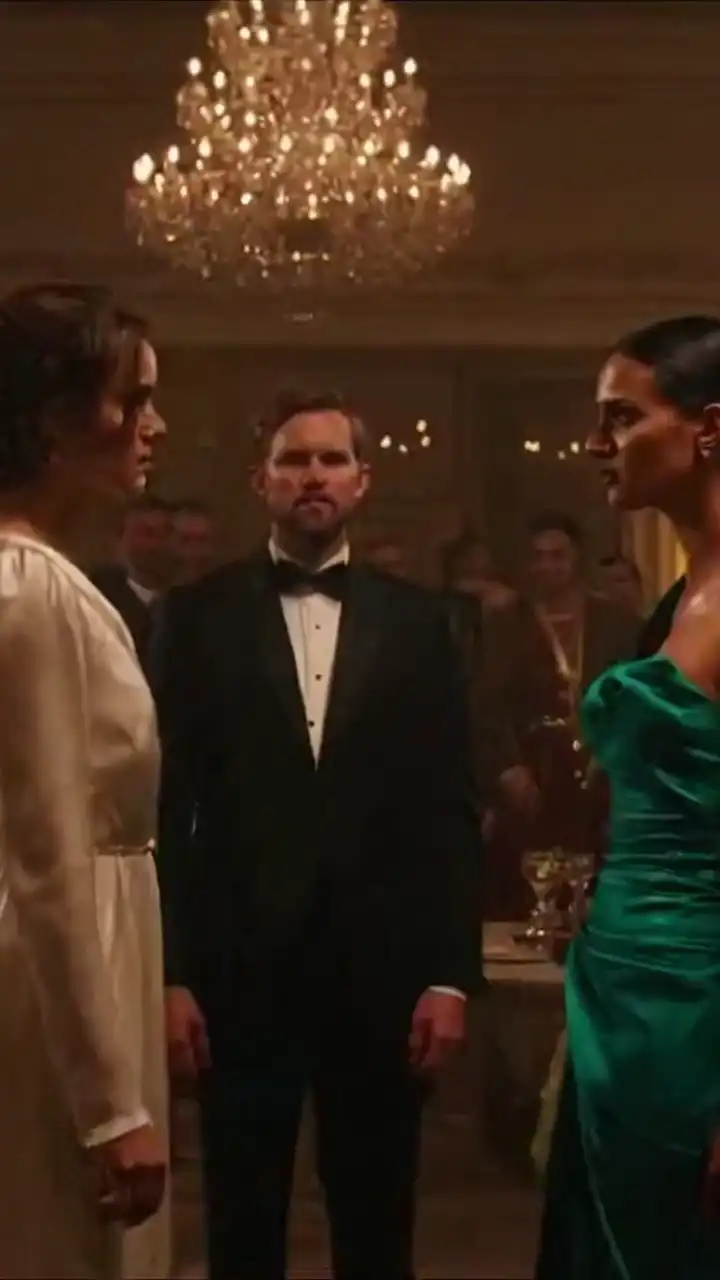
MY HUSBAND USED MY MONEY, GOT ENGAGED TO HIS MISTRESS, AND STOOD THERE WHILE SHE SLAPPED ME

THE MAID OF HONOR POURED WINE ON ME AT MY BRIDAL SHOWER AFTER STEALING MY FIANCÉ. SHE DIDN'T KNOW THE ROOM WAS ABOUT TO HEAR WHAT HE'D BEEN SAYING TO BOTH OF US.

THE MAID OF HONOR POURED WINE ON ME AT MY WEDDING AND CALLED ME CRAZY. SHE FORGOT I STILL HAD THE VOICE NOTE SHE SENT MY FIANCÉ.