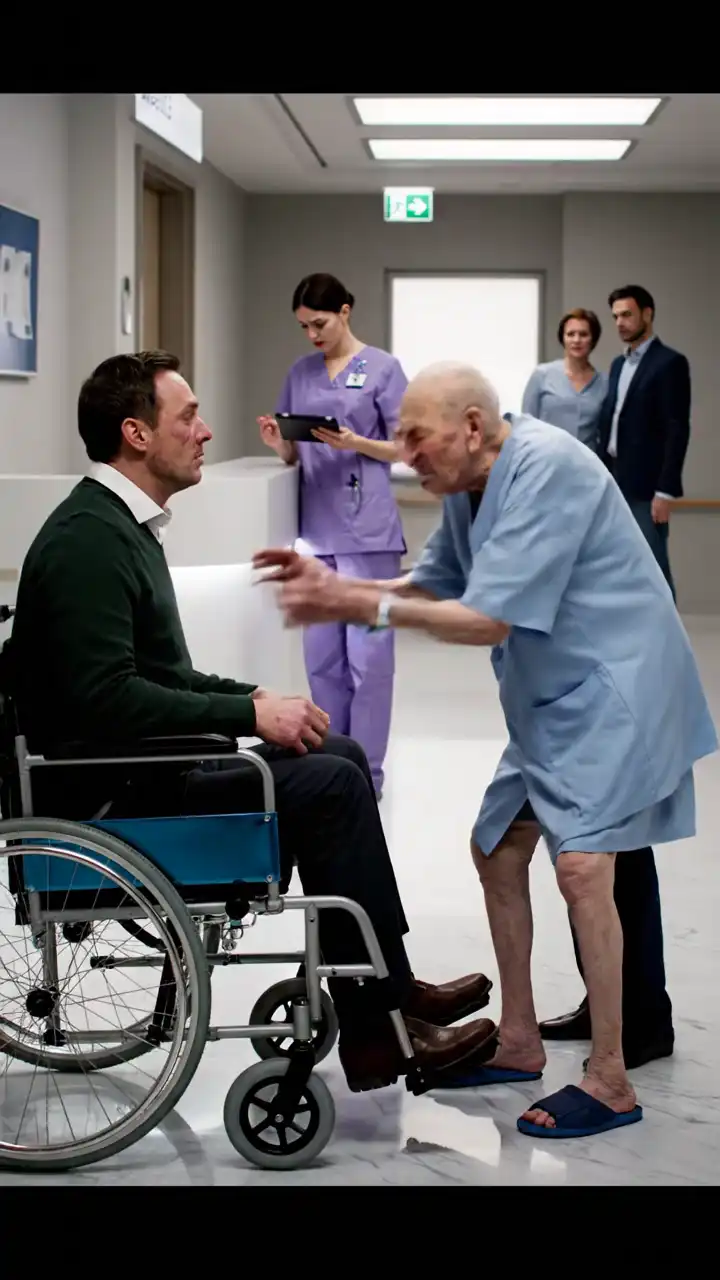
THEY LEFT THE OLD MAN CALLING MY NAME IN THE HALLWAY
Chapter 1
They rolled my wheelchair against the wall like extra furniture and left an old man reaching for my hand.
“Roscoe,” he kept saying, thin and desperate. “Roscoe, don’t go.”
His fingers trembled in the air between us. He was wearing a pale blue robe that had slipped open at the throat. A paper bracelet hung loose around his wrist. His slippers were twisted sideways, one halfway off his heel, and his eyes were wild with that awful kind of panic old people get when everyone around them starts talking over their heads.
“I’m not Roscoe,” I said softly.
He still reached for me.
We were in the front hallway of Briar Glen Residence, a nursing home just outside Moberly Creek, Tennessee, though the place tried hard to call itself a “senior living campus” on the brochures stacked by the door. The hallway smelled like lemon disinfectant over boiled carrots. Two family members near the reception desk had turned to stare. A candy dish sat under a sign-in clipboard. Somewhere farther back, a television laughed too loudly at something no one in that building found funny.
“Mr. Weller, come on now,” said the nurse in lavender scrubs without even looking at him. She was tapping a tablet with one hand and holding a phone to her ear with the other. “Let’s not do this today.”
Let’s not do this today.
Not let’s help him. Not let’s see what’s wrong. Just let’s not.
The old man’s fingers brushed my blanket. “Roscoe,” he whispered again, and then louder, with his whole chest straining, “Roscoe, they took the birds.”
I looked up at the nurse. “He’s scared.”
She gave me the kind of smile people use on children and drunks. “He says all kinds of things, sir.”
Sir was generous. Everything else in her face said nuisance.
“My name’s Ellis Vale,” I said. “And I’m waiting for transport to St. Bernadette’s rehab wing, not making trouble. But he thinks I’m somebody. Maybe you should—”
“We know our residents,” she said, cutting me off.
The words stung more than they should have.
I had been in Briar Glen for eleven days after a bad cardiac episode and a fall that cracked two ribs. I wasn’t supposed to be there long. The county hospital had overflowed. A bed opened here. “Temporary placement,” they told me, like I was luggage set aside in the wrong station. Most of the staff treated me like a body on loan. I was only fifty-eight, too young for their assumptions, too weak to fight them, and too quiet to become memorable.
The nurse finally lowered the phone and glanced at the old man. “Mr. Weller, your son is coming later. Let go of the gentleman.”
He wasn’t holding me. He was begging the air.
“He said they took the birds,” I repeated.
The nurse sighed. Her badge said TANDRA KEMP. “Mr. Weller talks about birds, trains, war, pie, his dead wife, a dog named Bishop, and a county fair that burned down in 1961. If I chased every sentence, I’d never finish med pass.”
The woman by the reception desk snorted. Her husband tugged her sleeve, embarrassed, but not enough to stop staring.
I looked back at the old man. There was a folded piece of paper clenched in his fist. It shook with every breath he took. On the outside, in dark block letters made with a thick marker, one name had been written over and over.
ROSCOE
Not Weller. Not room number. Roscoe.
He noticed me looking at it and closed his hand tighter, like a child protecting a secret.
“Please,” he said.
That word changed something in me.
People had been saying please to me all my life when what they meant was move, hurry, sign here, stay calm, make this easy. But this was a real plea. Small. Bare. Immediate.
I had no business getting involved. My chest still hurt when I shifted. My left hand still went numb sometimes. I had no family in town. No one would come charging in if I made myself a problem. I needed a clean transfer to rehab, a quiet week, maybe a little dignity.
Instead I said, “What birds?”
Tandra snapped, “Mr. Vale, let staff handle staff business.”
That made the couple by the desk look at me differently. Not as a patient. As someone crossing a line.
The old man licked his dry lips. “Window,” he whispered. “Gone.”
He began to cry then, soundless at first, then with a broken little animal noise that made the hair rise on my arms. He wasn’t thrashing. He wasn’t aggressive. He was humiliated. Crying in a hallway under fluorescent lights while three adults acted inconvenienced.
A young custodian pushing a yellow mop bucket slowed near us. He was maybe nineteen, maybe twenty, narrow shoulders, red work shirt under a gray housekeeping vest. He glanced at the old man, then at me, then at Tandra. His badge read MALIK SORREN.
“Need me to call someone?” he asked.
“No,” Tandra said too quickly.
The old man reached again, missed my hand, and caught the edge of my admission folder balanced on my lap. It slipped open. Several papers slid onto the floor.
Tandra made an irritated sound. “Great.”
Malik bent first. He gathered the papers carefully, but before he handed them back, his eyes caught on the top page. His expression changed. Not polite, not curious. Startled.
He looked from the paper to me.
“Ellis Vale?” he said.
The hallway quieted in one strange beat. Even the woman by the desk leaned in.
I felt heat rise up my neck. “Yes.”
Malik blinked hard. “Like… Dr. Ellis Vale?”
Tandra’s mouth tightened. “He’s a patient waiting for transport.”
But Malik was still looking at me. “From the wildlife hospital in Red Mason? The raptor center?”
I took the papers from him a little too fast. “Used to be.”
The old man grabbed my sleeve with surprising force. “Roscoe knows,” he said. “Roscoe always knows.”
No one spoke.
The couple by the desk exchanged a look. Tandra straightened, suddenly cautious in a way she had not been thirty seconds earlier.
I hated that. I hated the shift more than the disrespect before it. I didn’t want my name to work like a key when simple decency had not.
“It doesn’t matter who I am,” I said.
But of course it did now. I could see it in all of them.
Malik glanced at the clenched note in Mr. Weller’s hand. “My grandma used to watch your Sunday rescue segments,” he said quietly. “You were on Channel Eight. You saved that eagle with one wing.”
“Two wings,” I said. “One was just shattered.”
The old man was still crying. “The birds,” he whispered.
And because everyone had finally gone still, because the name had landed and opened some invisible door, I heard something then that I hadn’t noticed before.
A faint tapping.
Not pipes. Not a branch. Not construction.
A rapid, desperate flutter against glass, coming from somewhere down the hall.
Chapter 2
“I hear that too,” Malik said.
Tandra gave a short laugh that sounded forced. “The aviary TV in the memory lounge has sound effects. It loops.”
But the tapping came again, thin and frantic.
Mr. Weller lifted his face toward the sound as if his whole body had been waiting for someone else to admit it was real. “Window,” he said.
I looked down the corridor. The light there was dimmer, the carpet patterned with little green vines meant to look cheerful. Doors stood half open. A medication cart blocked part of the passage. At the end was a sunroom with fake ficus trees and a bank of windows facing the courtyard.
“Please check,” I said.
“My shift doesn’t revolve around paranoia,” Tandra replied.
Malik shifted his grip on the mop handle. “I can look.”
“No.” She fixed him with the kind of stare low-wage workers know too well. “You can finish B hall.”
He didn’t move.
A woman in a denim jacket approached from the elevator, carrying a tote bag and a bunch of grocery-store daisies. She had silver roots under salon blond hair and an expression already sharpened for complaint. “What is going on now?” she asked.
“Ms. Weller, your father is having a moment,” Tandra said, suddenly all syrup.
So this was the son’s stand-in. Not the son. A daughter. Maybe the one who came when schedules allowed.
The woman glanced at her father and then at me. “Who’s this?”
“Another patient,” Tandra said. “There’s no issue.”
Mr. Weller pointed at me. “Roscoe.”
The daughter’s face changed in a hard, tired way. “No. Not again.”
Again.
She set the daisies on the reception counter like she no longer had the strength to carry them. “Dad, Roscoe is gone.”
He flinched as if she had slapped him.
My chest tightened. “Maybe don’t say it like that.”
She turned to me, surprised I’d spoken. “Excuse me?”
“He’s upset.”
“He’s confused,” she said. “There’s a difference.”
There was. But confusion did not cancel pain.
She noticed the papers in my lap, the attention in the hallway, the way Malik was still standing there. “What happened?”
“Nothing happened,” Tandra said.
Malik looked at the floor.
The daughter sighed. “I’m Deena Weller. I drive forty minutes from Copper Ridge every other day. If he’s wandered again, just say that.”
“He didn’t wander,” I said. “He was standing here crying because he says someone took the birds from his window.”
Deena gave me a blank, exhausted stare. “There are no birds in his window.”
Before I could answer, the tapping came again. Harder now. Several quick strikes.
Malik looked straight at her. “There kind of are.”
Tandra’s jaw tightened. “Enough.”
I knew that tone. It was the tone of a person guarding something small and ugly and thinking authority would make it disappear.
Deena heard it too. “Enough what?”
No one answered.
She followed the sound down the hall with her eyes, then snatched the daisies back up and said, “Show me.”
Tandra stepped in front of her. “Residents are resting.”
“My father isn’t.”
That should have been enough, but Tandra was still blocking. A man in maintenance blues poked his head from a side door, sensed trouble, and vanished. The staring couple by reception had become three people now, then four. In a place like Briar Glen, stillness was gossip.
“Please move me down there,” I said to Malik.
Tandra snapped, “He is not to be transported without orderlies.”
“I have arms,” Malik said.
Deena looked at me like she was only now seeing the bruised skin, the hospital socks, the telemetry scars peeking above my T-shirt collar. “You don’t have to get involved.”
“I know.”
Mr. Weller lifted the folded note with shaking fingers. “Roscoe wrote it.”
That got us all.
Deena took a step toward him. “What note?”
He pulled back and clutched it to his chest. “Mine.”
She rubbed her eyes. “Dad.”
I had seen that look on relatives at rescue centers before. Not cruelty exactly. Wear. Wear so deep it curdled into impatience. You can love somebody and still start handling them too rough. The worst part was how ordinary it was.
Malik came behind my chair. “I’ll wheel him.”
Tandra said, “If anyone goes in that sunroom, I need to know why.”
“You seem like the only one who doesn’t,” Deena said.
That landed.
We started down the hall, slow because my ribs screamed with every crack in the wheels. Mr. Weller shuffled beside us in his robe and twisted slipper until Deena finally tucked the flowers under one arm and took his elbow. Tandra followed, furious now because events had slipped beyond her control. Two more staff peered from doorways. The TV somewhere behind us kept laughing.
The sunroom doors were propped open with a fake brass doorstop shaped like a sleeping cat. Warm light flooded the carpet. There were six cushioned chairs, a puzzle table, and three wide windows overlooking the enclosed courtyard. One of the windows had a white sheet taped clumsily over the bottom half from inside, as if hiding a crack or damage.
The tapping came from there.
Malik moved the sheet aside.
Behind the glass, trapped between the outer storm panel and the inner window frame, was a small yellow finch beating itself nearly senseless against the pane.
Deena sucked in a breath. Mr. Weller made a low sound that was almost a prayer.
The bird flung itself upward, slid down, flung itself again. Tiny claws scratching. Tiny chest hammering.
“What on earth,” Deena whispered.
Tandra recovered first. “Maintenance said they’d handle it.”
“When?” Malik asked.
No answer.
I looked closer. Dried droppings marked the sill. Seed husks were caught in the tracks. There had been more than one bird here, maybe over days. Maybe longer.
Mr. Weller began to cry again. “They were hungry.”
Deena stared at the sill, then at the courtyard below where a little metal feeder hung from a shepherd’s hook, empty and swinging.
“My father put seed out,” she said slowly.
Malik nodded once. “He asked for cups from the kitchen. I saw him.”
Tandra folded her arms. “Residents are not supposed to feed wildlife from windows. It creates sanitation issues.”
The word sanitation sat in the room like something rotten.
I wheeled closer until my knees almost touched the wall. A paper was taped beside the window: RESIDENTS MAY NOT OPEN WINDOWS DUE TO SAFETY POLICY. Under it, in a weaker hand and blue ballpoint pen, someone had written, Then please help the birds.
Deena read it and went white. “He wrote that?”
Mr. Weller blinked at the glass. “Roscoe told me to.”
“Roscoe who?” she said, but softer now.
I knew enough not to answer quickly. Memory patients often kept two times in their heads at once. The living and the dead sat side by side. But the note in his hand mattered. The repeated name mattered.
“May I see the paper?” I asked him.
He looked at me for a long moment. Then he unfolded it and placed it in my lap with a kind of ceremony.
It was a shaky drawing, more map than picture. A window. A feeder. Little dots for seed. A stick figure with a cap. And under it, printed in giant letters:
ROSCOE SAYS THEY COME AT 3 10
“Every day?” I asked.
Mr. Weller nodded urgently.
Malik checked the big clock over the puzzle table.
Three oh six.
Chapter 3
No one moved for a few seconds after we saw the time.
The finch hit the glass again. Its wings made a papery thrum. I knew that sound too well. Panic burning through a body faster than the body could survive it.
“At Briar Glen,” Tandra said, slipping into her practiced public voice, “we follow wildlife safety protocol through certified vendors.”
I looked at her. “That bird doesn’t need a vendor. It needs an opening.”
She gave me a brittle smile. “And if you get cut on the glass? If the patient becomes agitated? If administration asks why a temporary cardiac resident is directing care in a memory unit?”
There it was. Status. Liability. The holy trinity of places that forget people.
Mr. Weller reached toward the window. “Hungry,” he whispered.
Deena turned on Tandra. “How long has this been happening?”
Tandra didn’t answer directly. “Your father fixates on birds. We’ve redirected repeatedly.”
Redirected.
I was getting tired of words that meant ignore.
The finch dropped to the sill, stunned. I saw its beak open and close.
“Malik,” I said, “is there a maintenance latch on the outer panel?”
He crouched and checked. “From inside, yeah. Top corner.”
“Can you reach it?”
“Probably.”
Tandra stepped forward. “Do not touch that window.”
Deena faced her fully now. “Why not?”
“It was sealed after an incident.”
“What incident?”
“A resident attempted to remove the screen last fall.”
“So because someone once did something unsafe, you left a live bird trapped in there?”
“That is not what I said.”
“It’s what I’m seeing.”
Voices traveled fast in nursing homes. By then a dietary aide had joined the doorway. Then an activities coordinator with glitter on her cardigan from some craft project. Then a broad man in a tie too tight for his neck, carrying a clipboard like a shield. His badge said BRETT CARMICHAEL, UNIT MANAGER.
“What’s happening?” he asked, smiling the smile of a man arriving late to prevent the wrong kind of truth.
Tandra turned toward him with visible relief. “A misunderstanding.”
Mr. Weller pointed at the window. “They took the birds.”
Brett barely glanced. “We’re aware of the issue.”
That phrase hit me colder than anything yet.
“You’re aware,” I said. “And still it’s there.”
His eyes flicked to me, measuring. Patient. Male. Middle-aged. Weak enough to dismiss. “Sir, this is a care matter.”
“No,” I said. “It’s a living thing dying in a wall while that man begs you to see it.”
The hallway behind him had gone quiet. Enough people were listening now that his next sentence mattered.
He lowered his voice as if that made him humane. “Mr. Vale, is it? We appreciate your concern. But you are not employed here, and you are currently under medical restriction.”
Deena looked between us. “You know his name?”
Brett’s answer came a beat too late. “I reviewed the intake file.”
He was lying. Or half-lying. Maybe Malik had whispered. Maybe Tandra had. Either way, the air had changed again. I despised how quickly recognition made cowards rearrange themselves.
“It still doesn’t matter who I am,” I said.
“It seems to matter to you,” Deena said to Brett.
The finch threw itself upward again and this time a single yellow feather drifted down between the panes.
Mr. Weller made a sound that shut everyone up.
“Please,” he said.
Just that.
One word. Thin as paper. Heavy as a life.
Malik stood. “I’m opening it.”
Brett stepped toward him. “You are absolutely not.”
Malik’s face flushed dark. He was young, but there was something steady in him I trusted immediately. “Then you do it.”
Brett did not move.
“Do it,” Deena said.
He looked at the growing audience in the hall. A woman in a church volunteer smock had her phone halfway out, not filming yet but close. Public pressure is often the first honest force in private institutions.
Brett exhaled through his nose. “Fine. Maintenance can—”
I cut in. “At 3:10, more birds come.”
Everyone looked at the feeder outside.
Empty. Swinging.
Mr. Weller fumbled at his robe pocket and pulled out three saltine crackers in damp pieces. “No seed,” he murmured. “No seed.”
Deena covered her mouth.
“He’s been trying to feed them with crackers,” she said.
“Because no one would get him birdseed,” Malik said quietly.
Tandra snapped, “That is not appropriate nutrition for wildlife.”
I almost laughed at the obscenity of that line. Not because it was wrong. Because now, suddenly, appropriate nutrition mattered.
The volunteer in the doorway spoke up. “My husband keeps finches. He has seed in his truck.”
Everybody turned toward her. She blinked, surprised she had become part of it. “I mean… if someone needs it.”
Brett opened his mouth, then closed it.
“Please get it,” I said.
She hurried off before anyone with a title could stop her.
Malik had already found a plastic butter knife from the puzzle caddy and was working carefully at the inner latch. “Glass is stuck.”
“Stop,” Brett said, but softer now. He could feel the room slipping.
A little boy appeared at the doorway holding his grandmother’s hand. Maybe seven, maybe eight, wearing a T-ball jersey and looking startled by all the adults facing one window. “Why’s that bird in jail?” he asked.
No one answered him.
Children have a brutal way of naming things correctly.
Mr. Weller looked at the boy as if hearing something clear through fog. “Not jail,” he said. “Forgot.”
That line landed in me like a stone.
Forgot.
Not hated. Not attacked. Not even noticed enough for cruelty. Just forgotten.
I leaned back in my chair because the ache in my chest had sharpened, a warning pulse under my sternum. My own body was not built for heroics anymore. Three months ago I had collapsed in the intake room at the Red Mason Wildlife Institute beside a cardboard crate containing a hawk with fishing line around its foot. I woke up in county hospital with a bruised face, a bad heart rhythm, and my last contract quietly allowed to expire while I was flat on my back. I had spent thirty-two years saving animals nobody thought could be saved and then discovered how quickly a sick man becomes a scheduling inconvenience.
Maybe that was why this room enraged me so much. I knew the shape of being set aside.
Malik finally popped the latch. A breath of outside air slipped through as the inner window gave a fraction of an inch.
“There,” I said. “Slow.”
Brett lunged, too late to prevent it but fast enough to claim supervision. He and Malik pried the frame wider. The trapped finch shot downward, then up, then out in a blur of yellow that flashed past all our faces and vanished into the courtyard sky.
The room exhaled.
The little boy smiled. “It got out.”
Mr. Weller began sobbing openly, shoulders shaking. Deena dropped to her knees beside him. “Dad,” she whispered. “Dad, I’m sorry.”
He kept looking beyond her, through the window, to the empty feeder.
At exactly 3:10, the first pair arrived.
Two finches landed on the hook, then scattered, confused by the emptiness. Then a chickadee. Then another yellow flash. Their wings made small urgent movements against the late afternoon light.
Mr. Weller lifted one hand toward them. “Roscoe said they’d come.”
I looked at the note again. ROSCOE SAYS THEY COME AT 3 10.
The name was not random. It was a memory tied to habit, to time, to care.
The volunteer returned with a bag of seed from the parking lot, slightly out of breath. “I found some.”
Before anyone else could speak, Deena took it from her and said, “Open the window.”
Brett hesitated.
“Open it,” she repeated.
This time he did.
With Malik holding the frame, Deena leaned out and poured seed into the empty feeder. Her hand shook so hard some spilled onto the sill. The birds startled back, then returned in cautious little hops.
Mr. Weller watched them, crying and smiling at once.
“Who is Roscoe?” I asked gently.
He wiped at his nose with the back of his hand, still staring out. “Janitor,” he said. “Fed them with me.”
Malik and I exchanged a look.
“How long ago?” Deena asked.
Mr. Weller frowned, searching through whatever years were mixed inside him. “Before the nice nurse left. Before winter. Before…” He lost it then, the thread going slack. “Roscoe knows.”
Brett cleared his throat. “There is no current employee by that name.”
But Malik was already looking at the old brass plaque mounted near the sunroom entrance, the kind donors get when somebody funds a renovation.
SUNROOM RESTORED IN MEMORY OF ROSCOE TILLMAN Groundskeeper and Friend of Briar Glen 1954 to 2021
Malik read it out loud.
And the room went still all over again.
Chapter 4
Once the plaque was noticed, everyone acted as if it had always been obvious.
That was the part that bothered me most. Not ignorance itself. The speed with which people rewrote their own memory to avoid shame.
“Roscoe Tillman,” Deena said, staring at the brass plate. “I’ve walked past that for two years.”
Mr. Weller nodded vigorously. “Roscoe.”
Brett adjusted his tie. “Mr. Tillman handled grounds and courtyard maintenance before he passed.”
“Then my father wasn’t making it up,” Deena said.
No one answered.
The birds kept landing now that the feeder held seed. Three finches. A cardinal. Then a tufted titmouse that darted in and out like nervous punctuation. The little boy at the door whispered, “That red one’s mad.”
For the first time all day, a few people laughed. Even Mr. Weller gave a watery little chuckle.
You could have ended the moment there and called it a small victory. Bird released. Old man soothed. Staff embarrassed. Everybody returns to routine.
But real harm doesn’t end because one witness finally looks at it.
I asked Deena if she would help me get back to the hall. My chest was pulsing in a way I knew too well, and sweat had gathered cold at the base of my neck. Malik noticed and crouched beside my chair.
“You okay?” he asked.
“I’m upright,” I said.
“That’s not what I asked.”
I almost smiled. “Hurts to breathe.”
His expression sharpened. “I’ll get someone.”
“No.” I looked toward the growing cluster of staff. “Stay here.”
Part of me knew that was foolish. Another part knew what happens when the wrong person controls a scene.
From the sunroom, the whole thing spilled outward. A resident with a blanket over her knees wanted to know why everyone was crowding. A CNA whispered to another CNA. The church volunteer began telling someone near reception, “The poor man had a whole system with those birds.” Deena stood beside her father with one hand on his shoulder and the bag of seed still in the other. She looked raw, like someone who had just seen the inside of a wound she had been calling normal.
Brett shifted into public-recovery mode. “We’ll review window procedures and courtyard activity permissions—”
“What about the notes?” I asked.
He blinked. “What notes?”
The blue pen note on the wall was only one. The sill told me there had been persistence. Repetition. Someone had asked more than once.
Mr. Weller still held his map drawing in his lap. I looked around the room. Puzzle books stacked under a side table. A basket of magazines. A slim drawer in the windowsill cabinet.
“May I?” I asked Deena.
She nodded.
Inside the drawer were paper napkins folded around seed husks, two plastic medication cups, a bent spoon, and five more notes. Every single one in shaky block letters. Some were addressed to nobody. Some to HELP. One simply read BIRDS HERE AGAIN. Another: PLEASE OPEN WINDOW. Another: ROSCOE SAID DON’T LET THEM STARVE.
Deena pressed her fist to her mouth.
Brett said, “Residents often write repetitive statements.”
I turned and looked straight at him. “These are requests.”
“Unclear requests.”
“Not unclear if you read them.”
His face hardened. “Sir, with respect, you are escalating a situation you do not fully understand.”
That sentence can hide a thousand failures.
“What exactly don’t I understand?” I asked.
He glanced at the audience. “Care compliance. Infection control. Memory distortion. Families making unrealistic demands. Staff shortages.”
All real things. That’s how neglect survives. It wraps itself in true words.
Deena stepped closer. “My father asked for help and was ignored.”
“That is not an accurate characterization.”
“Then characterize this.” She held up the notes.
Tandra jumped in. “Ms. Weller, your father also believes Roscoe still speaks to him.”
“That doesn’t mean the birds weren’t real,” I said.
Malik stood by the window, silent but visibly furious. He was no longer just an employee in a housekeeping vest. He was a witness. That changes a person.
A thin woman in cranberry scrubs appeared, older than Tandra, carrying an oxygen tank cart. Her badge said LISA PURYEAR, RN SUPERVISOR. She took in the crowd, the open window, the notes, the feeder, the crying daughter, the man in the wheelchair, and the manager with his jaw locked.
“What happened?” she asked.
Nobody wanted to be first.
Then, unexpectedly, the little boy did. “They forgot the bird.”
Adults turned toward him again. He shrank slightly behind his grandmother’s hand but held his ground.
Lisa looked at the trapped-feather smear on the window track and understood enough. “Mr. Carmichael?”
Brett said, “A temporary lapse in environmental response.”
Lisa closed her eyes briefly, as if that phrase caused her physical pain. “Did someone document this?”
Silence.
“Did anyone file maintenance?”
More silence.
Malik spoke. “I heard Mr. Weller ask all week.”
Tandra rounded on him. “You are not clinical staff.”
“No,” he said. “I was mopping.”
There was something devastating about that. The lowest person in the hierarchy had seen the clearest because he was the only one not pretending not to.
Lisa took the notes from Deena one by one. Her mouth thinned as she read them. Then she looked at me. “You’re Mr. Vale.”
I was too tired to care about the recognition anymore. “I’m a patient.”
“Yes.” She gave a small nod, and unlike the others, there was no social scramble in it. Just acknowledgment. “Do you need medical attention right now?”
I wanted to say no out of stubbornness. Instead I said, “Maybe soon.”
She pointed to a CNA. “Get a vitals cart.” Then to Brett: “Call maintenance now, and call Administrator Flemming.”
Brett stiffened. “That won’t be necessary.”
“It is now.”
The room changed with that. Authority had shifted. Tandra went very quiet. Malik looked down, maybe to hide relief.
While they moved around me, I studied Mr. Weller. He had calmed enough to sit in a sunroom chair beside the open window, his robe gathered around his knees, his eyes on the feeder. Birds came and went in soft arcs. Each time one landed, his face eased.
“Did you feed them with Roscoe every day?” I asked.
He nodded.
“Outside?”
“Sometimes.” He smiled faintly. “He whistled terrible.”
Deena let out a broken laugh through tears. “Dad, I never knew this.”
He turned to her, and for one sharp second the fog cleared from his eyes. “You were busy, honey.”
She looked like she had been punched.
I looked away to give her the mercy of privacy, but there isn’t much privacy in public grief. Everyone heard it.
Lisa came back with a blood pressure cuff and clipped an oxygen sensor to my finger herself. “You pushed too hard,” she said under her breath.
“I know.”
“Why’d you?”
I looked at the old man by the feeder, at the paper notes spread on the puzzle table, at Malik standing guard near the open window as if daring anyone to close it.
“Because he asked,” I said.
She held my gaze for a moment, then nodded like that was answer enough.
Administrator Noreen Flemming arrived ten minutes later in a navy blazer over floral scrubs, smelling faintly of expensive hand lotion and urgency. She had the smooth voice of a woman who spends her days solving disasters before they become legal. She listened to Brett talk first, which told me plenty. Then she listened to Lisa. Then to Deena. Then, to my surprise, to Malik.
When Malik mentioned my name, Flemming’s eyebrows rose. “Dr. Vale?”
“It’s Ellis.”
“The Ellis Vale who founded Red Mason Avian Rescue?”
Founded was too grand. Built, mostly from patched roofs and donated cages and years of smelling like antiseptic and feathers. But yes.
Deena turned to stare at me. “You never said that.”
“There didn’t seem much point.”
A strange look crossed her face then, half shame, half dawning understanding. “You knew what that sound was right away.”
“Yes.”
Noreen folded her hands. “Mr. Vale, I understand you’ve had a distinguished career.”
I almost laughed. Distinguished career. Two weeks ago an insurance clerk had referred to me as “currently non-essential transport.”
“Today’s not about my career,” I said.
“Maybe it is,” Malik murmured.
We all looked at him.
He flushed but went on. “I mean… if nobody knew who he was, they would’ve kept acting like he didn’t matter.”
No one contradicted him because no one could.
Noreen shifted course with practiced speed. “What matters is that a concern raised by a resident was not addressed with adequate responsiveness. We take that seriously.”
“Will you put that in writing?” Deena asked.
Good for her, I thought.
Noreen paused. “We can schedule a family care review.”
“In writing,” Deena repeated.
The woman had come in carrying daisies and exhaustion. Now she had found her spine. Sometimes guilt does that.
Noreen nodded. “Yes.”
The vitals cart beeped. Lisa looked at the screen and said quietly, “He’s going to need that transport moved up.”
I knew before she told me. Heart racing too high, oxygen a little low, pain climbing.
Deena crouched beside me. “You should have said something.”
“I didn’t come here to be anyone’s problem.”
She looked over at her father, then back at me. “That seems to be a disease in this building.”
I sat with that.
Then Mr. Weller lifted his hand toward me and said, very clearly, “Not Roscoe.”
The room went still.
He smiled. “Bird doctor.”
It was the first accurate new thing he had said all day, and somehow that was the moment that nearly undid me.
Chapter 5
By evening, Briar Glen smelled like coffee, rain on hot pavement, and consequences.
A storm moved over Moberly Creek just after five. Wind rattled the windows. Families stayed later than usual because no one wanted to drive in the downpour. Staff passed in tighter circles. Administrator Flemming had that stretched, alert look people wear when emails are already being drafted in their heads.
My transfer to St. Bernadette’s rehab unit was delayed because of the weather, then expedited because Lisa refused to let me sit unmonitored in a hallway after my vitals dipped. So they moved me to a short-stay room near the nurses’ station until transport could safely come. I should have rested. Instead the whole place kept unfolding around me.
Deena came back after calling her brother. She had changed somehow in the last few hours. Less polished, less defended. She carried the grocery-store daisies again, now in a plastic water pitcher because nobody had found a vase. She set them on the windowsill in my room.
“I put the good stems in your room,” she said. “Dad gets the fuller bunch. He likes crowded flowers.”
“That sounds like a fair split.”
She smiled for half a second, then sat in the chair by my bed. Rain streaked the window behind her. “My brother said Dad does this all the time. Gets attached to some detail, writes notes, panics, then forgets. He said not to let one incident make me dramatic.”
“And what do you think?”
She looked down at her hands. “I think one incident is plenty if it shows you the shape of ten others.”
That was well said. Painfully well.
She told me Roslyn—her mother, Mr. Weller’s wife—had died four years before. After that, her father had declined fast. He had been a machinist in Belden Forge, precise and stubborn, the kind of man who oiled door hinges unasked and never missed a utility payment. Birds had not been his thing, she said. Not until Briar Glen.
“He hated this place at first,” she admitted. “Said it smelled like overcooked peas and surrender. Then a groundskeeper started talking to him in the courtyard. Roscoe. I remember the name now. Tall man, baseball cap, front tooth missing. Dad mentioned him for months. I thought it was just one more staff member.”
“Maybe he was more than that.”
She nodded toward the hall. “They found something.”
Malik appeared in my doorway just then, dripping from having run across the breezeway between buildings. He held a clear plastic document sleeve against his chest. “Lisa said I should bring this to you first.”
“To me?”
He stepped inside and handed it over.
Inside the sleeve was a thin framed certificate, damp at one corner from wherever it had been stored, and an old newspaper clipping browned with age. At the top of the certificate, under the state seal, were the words TENNESSEE GOVERNOR’S AWARD FOR OUTSTANDING WILDLIFE CONSERVATION.
My name was printed beneath it.
I stared at it.
“I found it in the activities closet,” Malik said. “Behind board games and Christmas garland. There were more articles too. All about you. Administrator says Briar Glen got them from some local news feature because you donated to build a therapeutic bird garden years ago.”
I looked up sharply. “What?”
Deena sat up. “You donated here?”
“Not exactly here.” My voice sounded far away to my own ears. “Years back, after the tornado season. We funded small courtyard habitat spaces at three facilities that wanted sensory gardens for dementia residents. One was in Moberly County. I never came to see which site got the grant.”
Malik’s eyes widened. “It was this one.”
I looked again at the clipping. There I was, younger by at least fifteen years, holding a red-tailed hawk in thick gloves, smiling into sun I no longer remembered. The article mentioned the Vale Foundation grant, seeded from television appearance money and lecture fees I had never cared about, redirected into bird-safe spaces around hospitals and elder homes.
The feeder in the courtyard. The hook. The little native shrubs outside the sunroom.
I had paid for them.
For a moment the room tilted in a way that had nothing to do with my heart.
Deena whispered, “You built the thing they ignored.”
I shut my eyes.
I had never liked plaques. Never attended the ceremonies if I could help it. Money came in from donors who liked my face on TV when I was younger, before illness and debt and budget cuts and contracts whittled everything down. I pushed as much of it as I could into enclosures, rehab flights, educational spaces, community habitats. Then my own life narrowed. The institute was absorbed into a larger organization. My title vanished. My name remained in old archives and forgotten walls.
And here, in a closet behind holiday decorations, was proof that even being the benefactor of a thing didn’t guarantee anyone would listen to you once you were weak.
I laughed once, a bad sound. “That’s almost funny.”
“It’s terrible,” Deena said.
“Yes.”
Malik pulled another paper from the sleeve. It was a typed program from the courtyard dedication. At the bottom, in smaller print: Bird Garden created in honor of longtime groundskeeper Roscoe Tillman, whose daily care of residents and wildlife made Briar Glen gentler.
Deena touched the page. “So Roscoe didn’t just feed birds with my father. He helped create the whole space.”
“And your father remembered the part that was kind,” I said.
Rain hammered harder at the glass.
A knock came at the door. Administrator Flemming entered, followed by Brett, who looked as if he had swallowed a nail. Lisa stayed in the hall, arms crossed.
Noreen saw the certificate in my hands and stopped. “You found that.”
“Malik did,” I said.
Her face went carefully neutral. “We were unaware of the extent of your connection to Briar Glen.”
“That keeps happening today.”
She winced. Good.
Brett cleared his throat. “Mr. Vale, we want to apologize for any discourtesy in your experience here.”
“Discourtesy,” Deena repeated, incredulous.
Noreen shot him a look. “What Mr. Carmichael means is that we failed both a resident and a patient. We are conducting a full review. Immediate policy changes begin tonight. The feeder schedule will be assigned, the window area checked each shift, and all resident written concerns—”
“My father’s notes were in a drawer,” Deena said. “What policy kept them there?”
None answered.
I held up the dedication program. “Did any of you know Roscoe Tillman’s name before today?”
Brett looked away. Noreen stayed still.
Malik did something brave then. “I knew the plaque,” he said. “I just didn’t know the story.”
Lisa spoke from the doorway. “Stories disappear when places get busy.”
There it was. The truest sentence of the day.
Noreen took a breath. “Mr. Vale, we’d like to ask your permission to publicly acknowledge your earlier support of the garden and—”
“No.”
She blinked. “No?”
“You can fix the place without using me.”
“It may help reassure families.”
“It may help your image,” I said. My voice was tired, but it held. “If you’re going to tell any story, tell Roscoe Tillman’s. Tell the one about a groundskeeper who noticed lonely residents and made a routine around the birds. Tell the one about an old man who kept asking for help after everyone else forgot why the feeder mattered. Tell the one about the custodian who listened before management did.”
The room was silent except for rain.
Malik stared at the floor, stunned and red-eyed.
Noreen nodded slowly. “Understood.”
I turned to Brett. “And stop calling neglect a misunderstanding.”
He swallowed. “Yes, sir.”
Sir again. But not the same sir.
Deena rose from her chair and went to the door. “Come with me,” she said to Noreen. “I want to see every note my father ever wrote that staff saved, misplaced, or ignored.”
Noreen hesitated only a moment, then followed.
Brett lingered. He looked at me as if trying to decide whether I was the same man he had dismissed that afternoon or someone else entirely. Finally he said, “I truly didn’t know.”
“That’s the problem,” I answered.
After he left, the room felt lighter.
Malik remained. He shoved his hands into his vest pockets. “I almost kept quiet.”
“But you didn’t.”
He shrugged, embarrassed. “Only because I knew your name.”
I thought about that, then shook my head. “Maybe that got you started. But you stayed because you knew his pain.”
He looked up.
“That matters more.”
His mouth tightened. “My granddad was in a place like this. People talked around him like he was furniture. I guess when Mr. Weller started calling your name, I just… I don’t know. It felt wrong.”
“It was wrong.”
He nodded. “I’m in community college at night. Vet tech prereqs. Maybe wildlife rehab if I can transfer later.”
“Good,” I said. “We need people who notice.”
That nearly broke him. He looked away fast.
When transport finally arrived close to nine, the storm had softened to a steady rain. Lisa signed my paperwork herself. Deena wheeled me to the front hall, where the whole ugly day had started. Mr. Weller sat in a chair by the sunroom entrance wrapped in a quilt, already drifting, one hand open on his lap.
The feeder outside was full. Even in the dark, I could make out movement at the edge of the courtyard light.
As we passed, he opened his eyes.
“Bird doctor,” he said.
“Yes,” I answered.
He looked toward the window, then back at me. “Roscoe was kind.”
“I can tell.”
He nodded once, satisfied, and closed his eyes again.
Deena pressed something into my hand before the transport team rolled me out. It was one of the notes from the drawer, flattened carefully.
PLEASE OPEN WINDOW
“I’m keeping the others,” she said. “As proof.”
“As reminder,” I said.
She squeezed my shoulder very gently, mindful of the bruises. “I think both.”
Chapter 6
Three months later, I went back to Briar Glen on a cold bright morning with cedar smell in the air and a stiffness in my ribs that I was told would probably be my companion for life.
I was walking on my own again, slower than before, with a cane I resented and relied on. Rehab at St. Bernadette’s had done its work. So had rest, medication, and the humiliating grace of admitting I could not return to the life I used to lead in exactly the same shape. My heart had limits now. My pride did too.
Moberly Creek looked washed clean after autumn. The highway ditch grasses had gone gold. Mailboxes leaned into the wind. On the passenger seat beside me sat a forty-pound bag of finch mix, two bags of black oil sunflower seed, and a small framed photo Malik had asked me to sign for his transfer application essay. In the picture, taken from an old clipping, I was younger and standing in a flight cage with an owl on my glove. I had written beneath it: Notice first. Everything starts there.
Briar Glen’s front hall looked almost the same. Same lemon cleaner. Same brochures. Same TV muttering somewhere deep inside. But the sunroom window was open a crack under supervised hardware, and beneath the donor plaque now hung a new one.
IN HONOR OF ROSCOE TILLMAN AND THE RESIDENTS WHO STILL NOTICE THE BIRDS
Below that, in smaller letters:
If a resident asks you to look twice Look twice
I stood there longer than I expected to.
“You came back.”
I turned. Deena was crossing the lobby with a paper cup of coffee and a knit scarf looped around her neck. She looked tired still, but not the hollow kind from before. The honest kind. The kind people carry when they’ve chosen to stay awake in their own lives.
“I said I might,” I answered.
She smiled. “Dad’s in the courtyard room.”
As we walked, she filled me in. Brett Carmichael was gone. Tandra had transferred before the review finished. Lisa had taken over more of the unit’s operations until a replacement came. Written concern logs were now checked at every shift change. The feeder was assigned, documented, and absurdly overfilled half the time because staff were terrified of underdoing it. Families had formed a volunteer garden circle. Somebody’s grandson built birdhouses in shop class. Someone else donated binoculars with oversized grips for shaky hands.
“And Malik?” I asked.
“Accepted into the Knoxville wildlife tech program,” she said. “Starts in January. He still works weekends.”
“That figures.”
We reached the courtyard room. The winter sun poured across Mr. Weller’s blanket. He sat by the glass in a cardigan that didn’t quite match his pants, watching a feeder busy with finches. His face had thinned since I’d seen him last. So had mine, probably. Illness carves us all in its own style.
Deena touched his shoulder. “Dad, look who’s here.”
He turned slowly.
For a second, there was only polite vacancy. Then his eyes sharpened.
“Bird doctor,” he said.
I laughed softly. “That’s me.”
He pointed toward the feeder. “Hungry little fools.”
“Yes, they are.”
I sat beside him. We watched in companionable silence while a cardinal bullied everybody twice its size. A sparrow clung upside down for no reason I could see. Wind rattled the bare shrubs Roscoe had once planted, and the movement made the whole courtyard feel alive.
After a while Mr. Weller said, “Roscoe used to tap the glass twice before he filled it.”
He lifted his knuckles and tapped the armrest lightly. Twice.
I did the same.
He nodded, pleased.
Deena stood a little behind us, hands wrapped around her coffee, eyes wet but calm. She no longer looked like a woman trying to manage a burden. She looked like a daughter learning her father again in fragments.
Malik came in near noon in his housekeeping vest, grinning when he saw me. He had his acceptance packet folded in his back pocket and a confidence he hadn’t worn the first day. We carried seed together to the courtyard cabinet. He did most of the lifting; I did most of the pretending I could still help more than I actually could.
“You were right,” he told me quietly. “People act different when somebody notices.”
“Do they?”
“Yeah.” He glanced through the glass at Lisa helping a resident aim binoculars at the feeder. “Now everybody wants to be the one who saw first.”
I smiled. “That’s not the worst problem for a place to have.”
When I left that afternoon, Mr. Weller had drifted off in his chair, one hand open, peaceful. A finch landed at the feeder just as I reached the hall. Then another. Then three at once, flashing yellow against the winter gray.
At the front desk, I saw the old note Deena had kept. It was framed now beside the sign-in clipboard.
PLEASE OPEN WINDOW
People entering the building slowed to read it. Some probably thought it was charming. Some sad. A few might have understood it was an indictment. But I hoped most of all they understood it as instruction.
A request does not become small because the voice asking is weak.
Outside, the air bit at my cheeks. I stood for a moment beside my car and looked back at Briar Glen. Not a miracle. Not transformed into heaven. Just improved by attention, which is often the closest thing we get.
I thought about Roscoe Tillman, gone and still doing good through a remembered habit. I thought about Mr. Weller, who kept asking until somebody listened. I thought about Malik, who was almost too low in the system to matter and mattered anyway. I thought about how strange it was that my own hidden name opened a door, and how much stranger that kindness had kept working here long after I forgot where I had sent it.
Maybe that is what redemption really is. Not one grand reversal. Just one act of care landing somewhere you can’t see, waiting years for the right hurting person to need it.
Before I got into the car, I heard tapping behind me.
Two soft taps on glass.
I turned. Mr. Weller was awake again, looking through the courtyard window. He lifted his hand in a small wave.
I waved back.
Then a finch landed between us, bright as a dropped piece of sun, and for one still second the whole world looked like it had finally decided to be gentle.
Disclaimer: Mention of any brand or trademark is for identification only and does not imply partnership or endorsement
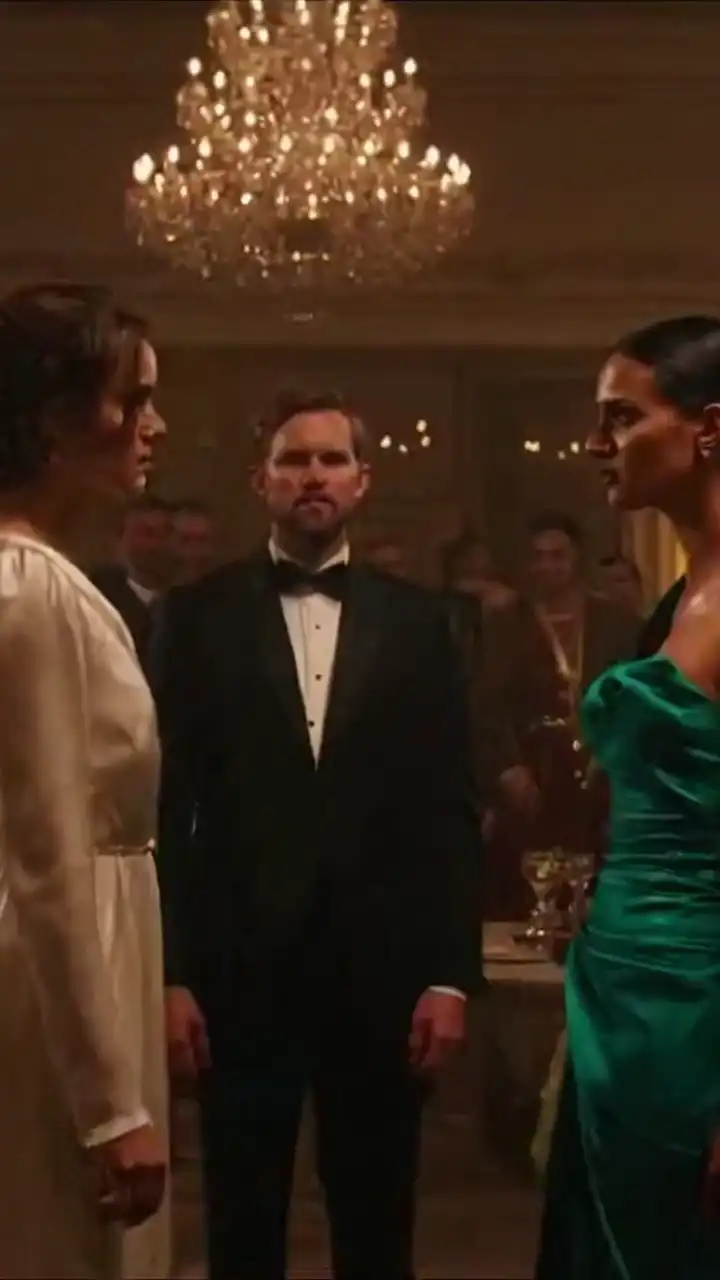
MY HUSBAND USED MY MONEY, GOT ENGAGED TO HIS MISTRESS, AND STOOD THERE WHILE SHE SLAPPED ME
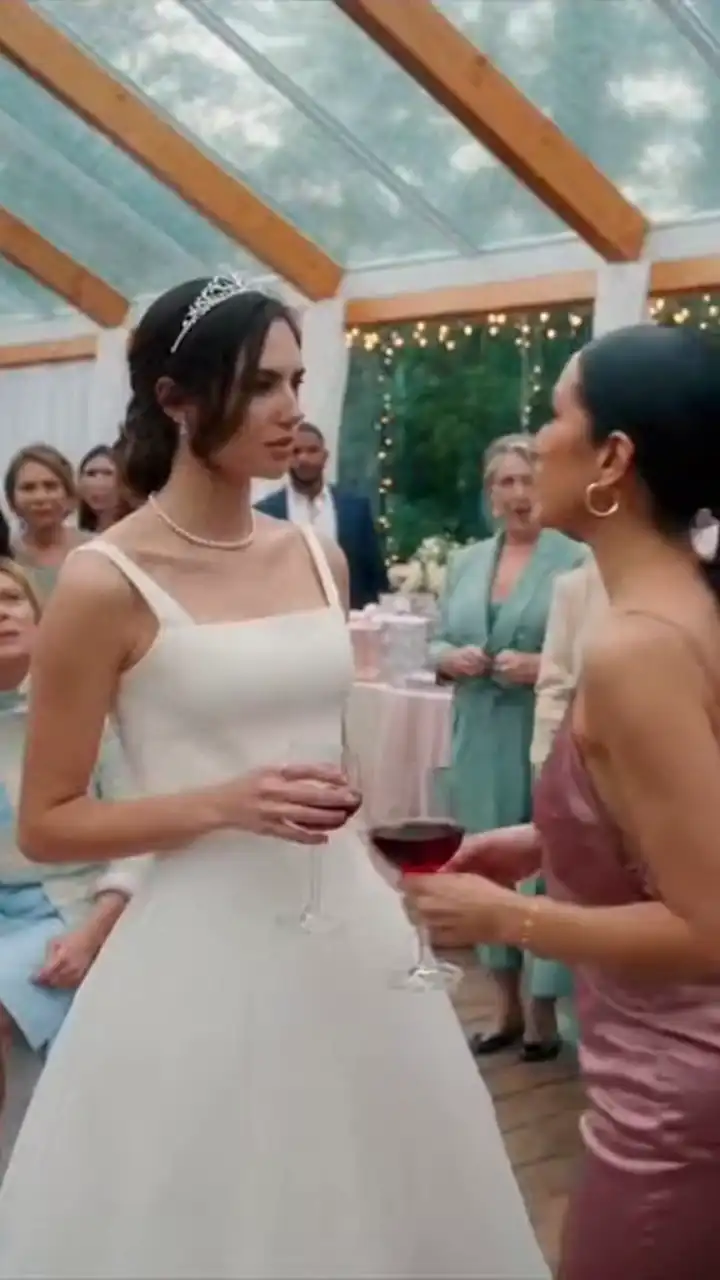
THE MAID OF HONOR POURED WINE ON ME AT MY BRIDAL SHOWER AFTER STEALING MY FIANCÉ. SHE DIDN'T KNOW THE ROOM WAS ABOUT TO HEAR WHAT HE'D BEEN SAYING TO BOTH OF US.
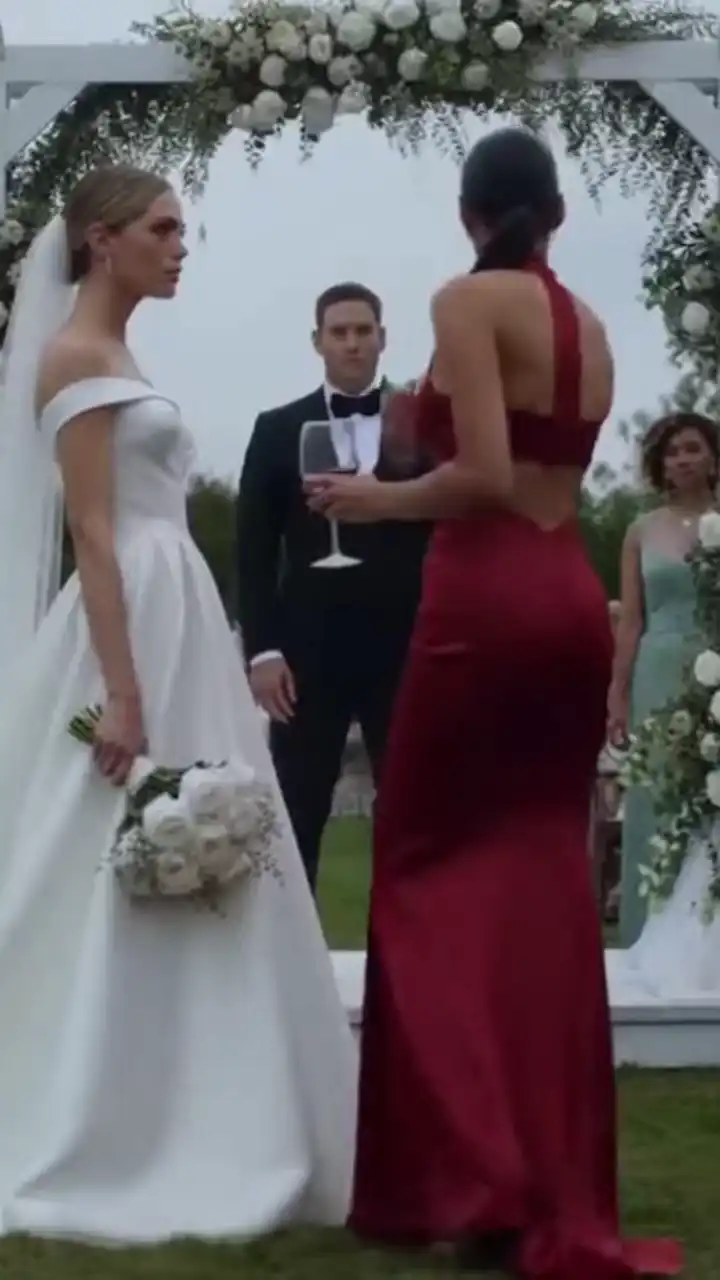
THE MAID OF HONOR POURED WINE ON ME AT MY WEDDING AND CALLED ME CRAZY. SHE FORGOT I STILL HAD THE VOICE NOTE SHE SENT MY FIANCÉ.