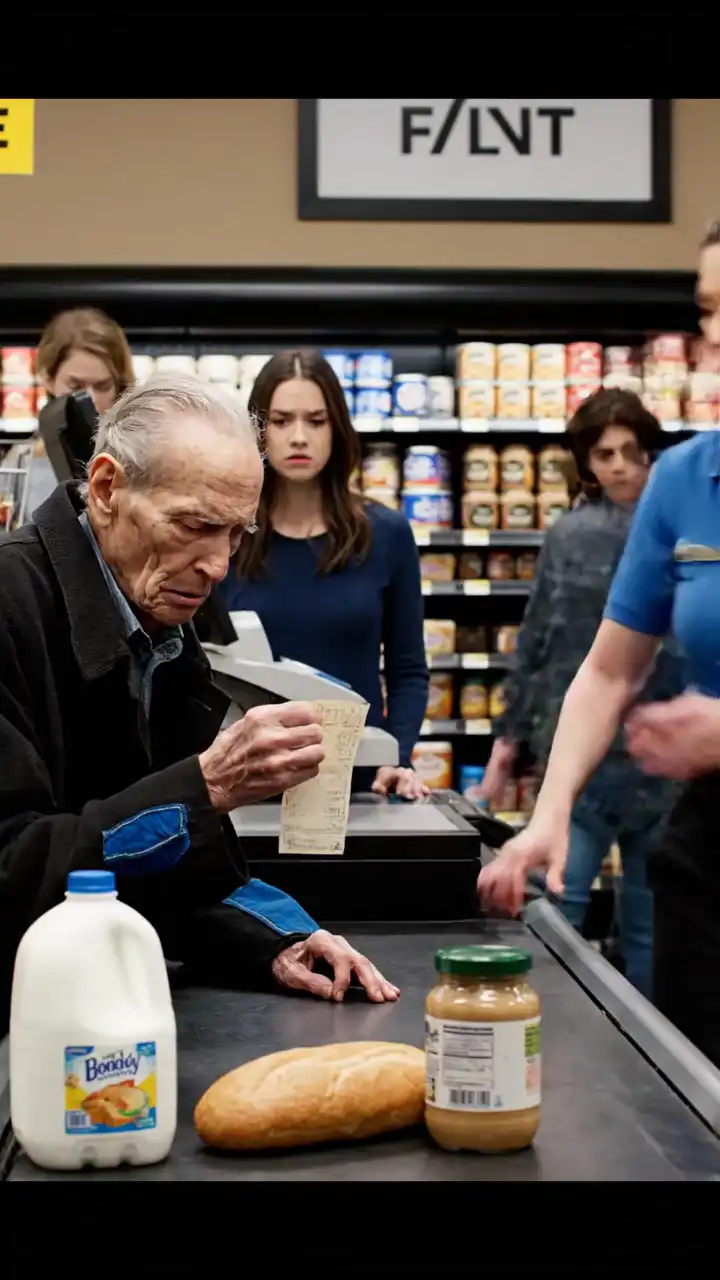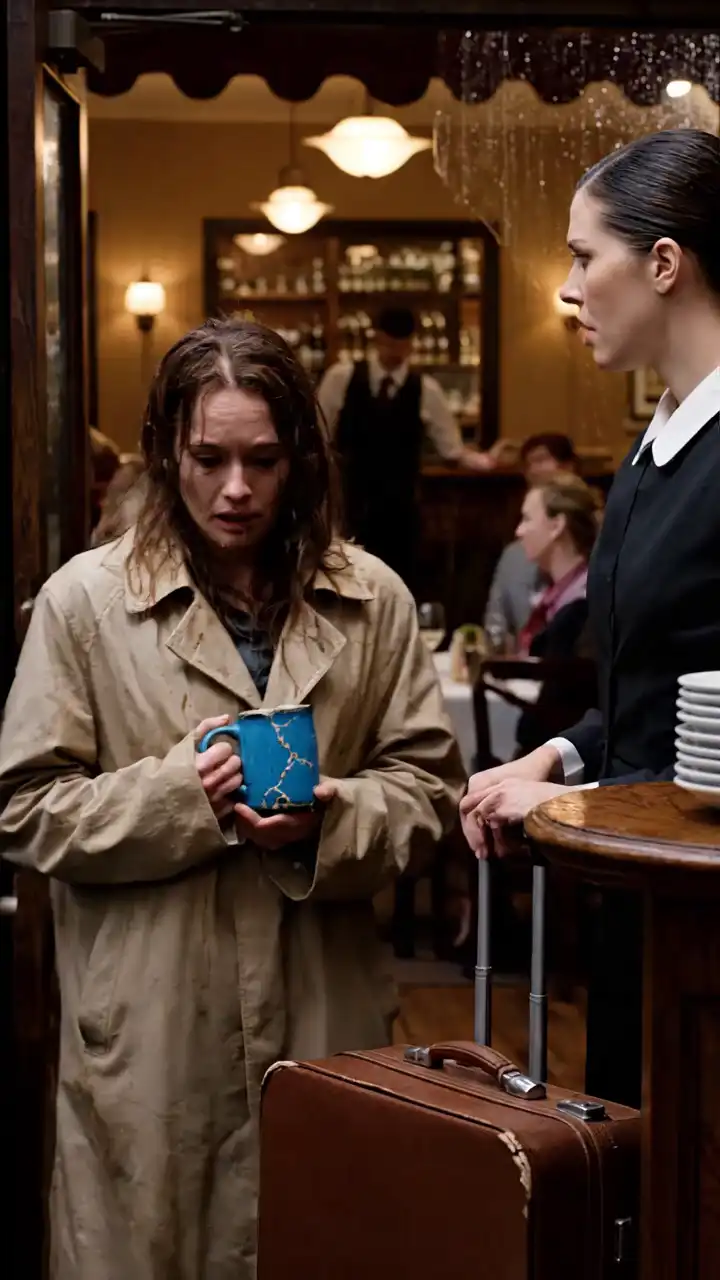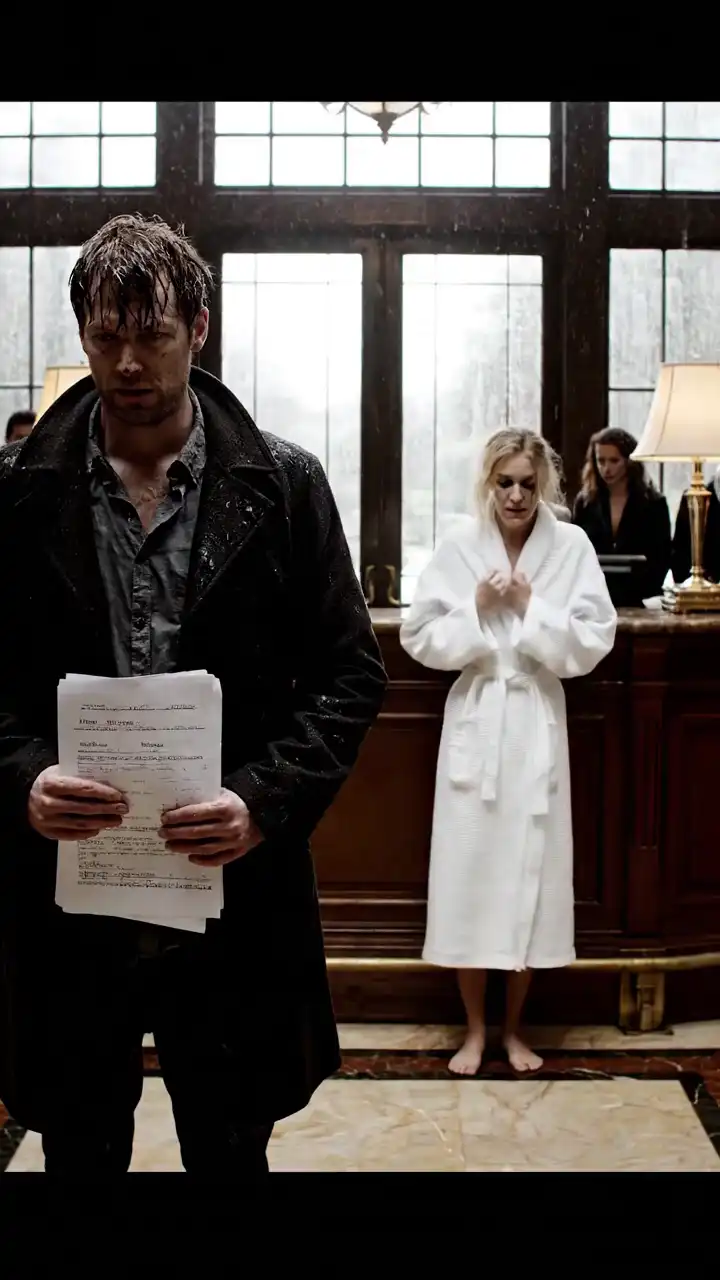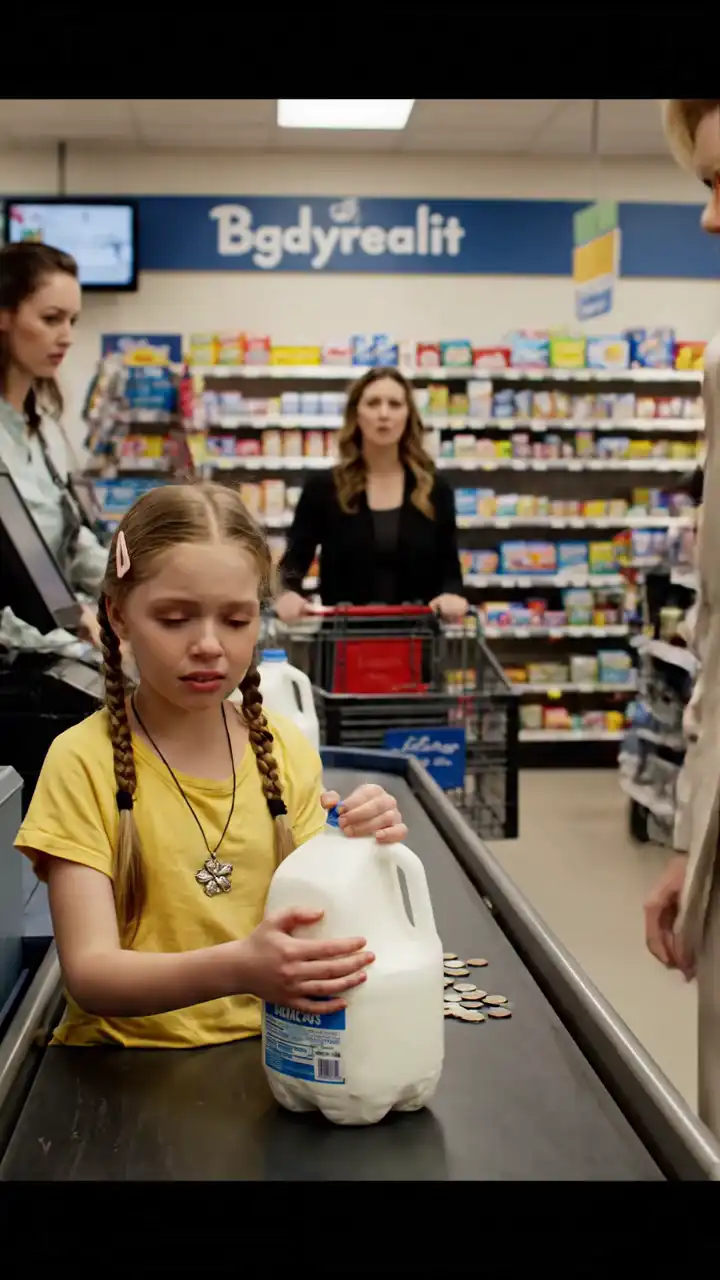
THEY THOUGHT I WAS AFTER HIS FAMILY MONEY UNTIL HIS FATHERS NAME MADE ME FLINCH
Chapter 1
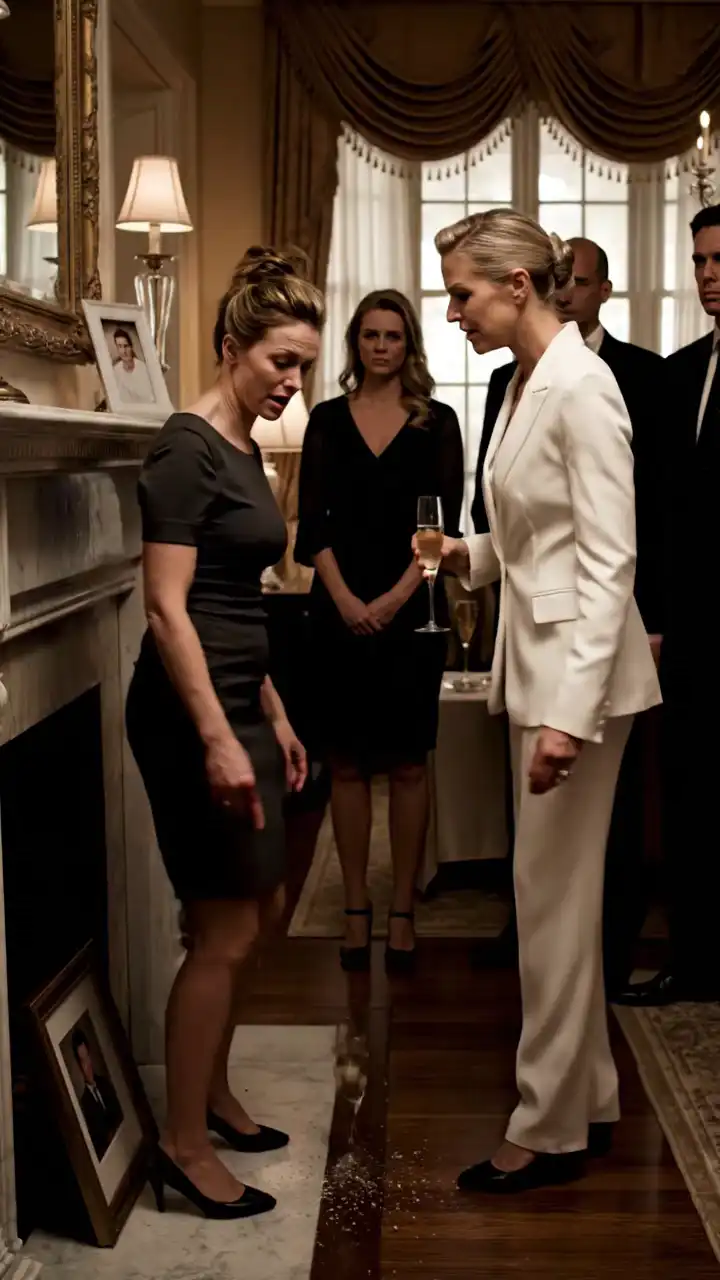
The room went quiet when I dropped the champagne glass.
It slipped out of my hand so fast it almost looked like I had thrown it. Crystal hit the hardwood floor of the Garrison House ballroom and shattered under the edge of a white runner, sharp enough to make three women gasp and one waiter jump back with a tray of crab cakes.
I was still staring at the framed memorial display by the fireplace.
A silver card stood next to a photograph of a handsome older man in a navy suit. Beneath the photo, in polished script, were the words:
IN LOVING MEMORY OF ALDEN VALE MERCER
I felt all the blood drain out of my face.
My fingers went numb. My chest closed. For one terrible second I was no longer standing in a bright room filled with low jazz, expensive perfume, and my husband’s family.
I was twenty-three again. I was in a locked office. I was hearing a door click shut.
“Maris?”
My husband’s voice came from behind me, low and tense.
I bent automatically, trying to gather the broken pieces before anyone noticed how badly my hands were shaking. “I’m sorry,” I said. “I just—”
“Don’t touch it, ma’am,” the waiter said quickly.
Too late. A thin red line opened across my fingertip.
I stared at the blood welling there, and then I heard a woman near the piano whisper, not quietly enough, “There it is.”
“There what?” another woman asked.
“The performance.”
I looked up.
Selene Mercer stood beside the fireplace in a fitted ivory suit, one hand curled around a champagne flute, the other resting lightly on the arm of her brother, my husband, Grant. No—former brother and now husband did not fit in the same place. Selene was Grant’s older sister, and she had hated me since the day he married me at the county courthouse in Millbrook Crossing without asking his family for their blessing.
Her smile was soft. Her eyes were not.
“This is exactly why tonight should have stayed private,” she said. “Some people don’t know how to carry themselves in a family matter.”
Heat climbed my neck. Around us, conversations had thinned into listening.
The gathering had been announced as a memorial dinner for Grant’s father, held six months after his death and one week after the estate lawyer said there would be a formal reading of an amended inheritance document. It was already an uncomfortable night for me. I was the outsider. The woman with a ten-year-old daughter from a previous relationship. The single mother who had married into old money too quickly, if you believed the whispers.
Now I was standing by the dead man’s photo with blood on my finger and broken glass at my feet.
Grant stepped toward me. “Selene, stop.”
But she was only warming up.
“She sees his name and suddenly can’t stand?” Selene asked, glancing at the little audience gathering around us. “How convenient.”
“Enough,” Grant said.
I should have let him speak for me. That was the easier move. Smile tightly, excuse myself, go to the restroom, breathe into a paper towel, come back pretending nothing had happened.
But my daughter was there.
Nori stood near the dessert table in a pale yellow dress, one hand wrapped around a folded paper napkin, watching me with her father’s old worried eyes—the father who had left when she was three, the father who sent birthday texts twice a year and called that devotion. I had promised myself, after too many humiliations in too many rooms, that I would never let her see me beg for basic dignity again.
So I straightened.
“It was an accident,” I said.
Selene took a slow sip. “Was it?”
“Selene.” Grant’s jaw tightened. “Drop it.”
She didn’t even look at him. “We all know why people marry into grief, Grant.”
The sentence landed exactly the way she wanted it to. A visible wound. A public one.
My cheeks burned. Somewhere behind me, someone murmured, “Oh my God.”
Grant moved beside me then, close enough that I could smell cedar on his jacket. “Maris, come sit down.”
I heard the care in his voice, but I also heard the hidden plea beneath it: Please don’t make this uglier.
The worst part about being misunderstood in a rich family is that every quiet request for peace sounds like a request for surrender.
“I’m fine,” I said, though I was not.
Selene tipped her head toward the memorial photograph. “Then maybe explain why my father’s name upset you so much.”
For a second, the room narrowed to the silver card and the dead man’s smile.
Alden.
I had not heard that name spoken aloud in eleven years.
I had spent those years building a life where that name had no walls around me, no keys in a desk, no stale bourbon breath across my cheek, no hand gripping my wrist hard enough to bruise. I had buried it under waitressing shifts, rent checks, parent-teacher meetings, the simple holy work of raising a child and surviving.
And now it stood in silver script under candlelight while people in formal clothes waited for my answer.
I opened my mouth.
Nothing came out.
Selene gave a tiny, victorious laugh. “That’s what I thought.”
“Mom?”
Nori’s voice was small but clear.
I turned. She had taken one step toward me, her little shoulders drawn up tight.
“Are you cut bad?” she asked.
That question saved me.
Children have a way of yanking you back into the body you are trying not to abandon.
“It’s okay, baby,” I said. “Just a little.”
Grant took my hand before I could pull it away. His thumb pressed a napkin over the cut. He looked at me, not his sister, not the room. “Come with me.”
But before I could answer, another voice floated over the crowd.
“What’s going on?”
A tall man with silver at his temples was stepping in from the side hallway, carrying a coffee cup instead of champagne. I recognized him vaguely from the funeral—a friend of the family, maybe. His suit was simple, less showy than the others. He looked annoyed at the attention, as if he had only come out because the silence had gotten too loud.
Selene exhaled with irritation. “Nothing, Dr. Tolland. A small disruption.”
The man’s eyes moved from the broken glass to my hand, then to the memorial display, then to my face.
Something changed in his expression.
Not fully. Just a flicker.
“Mrs. Mercer,” he said carefully.
No one in that room knew that hearing that title still startled me. I had been married to Grant for eleven months, and part of me still expected every official form to reject me.
“Yes?” I said.
He glanced toward the silver card by the photo. “Did someone say Alden Vale Mercer?”
My throat tightened again. I didn’t answer.
He watched me one second longer, and I saw it happen—the tiniest recoil, almost invisible, but there. As if he had said the name and instantly wished he had not.
As if the name itself had edges.
Grant noticed it too. “Do you know my wife?”
“No,” Dr. Tolland said too quickly. “I don’t believe so.”
But he was still looking at me with an unsettled, searching expression that made the fine hairs rise on my arms.
Selene set down her glass with a little click. “Well. This is becoming theatrical.”
The estate attorney, a narrow woman named Evelyn Pike, emerged from the dining room at exactly the wrong moment, holding a leather portfolio. “If everyone is here,” she said, trying and failing to sound warm, “we should proceed with the family remarks and document review.”
The words document review passed through the room like a current.
People shifted. Faces sharpened. Every grief gathering turns ugly the moment money enters it.
Selene folded her hands and smiled straight at me. “Yes,” she said. “Let’s proceed.”
Grant’s hand was still around mine.
I wanted to pull away. I wanted to walk out. I wanted to grab Nori and drive back to our small brick rental on Pecan Street where nobody displayed the dead on easels.
Instead, because I had spent half my life staying in rooms that wanted me gone, I lifted my chin and said, “Fine.”
But as we moved toward the long dining room, Dr. Tolland stayed where he was by the fireplace, staring at Alden Mercer’s photograph with a look that was not grief.
It was dread.
Chapter 2
The dining room at Garrison House was all polished walnut and soft gold walls, the kind of room designed to make bad news sound elegant. A table long enough for twenty gleamed under low chandeliers. Place cards sat in neat calligraphy beside folded linen napkins.
Mine read MARIS MERCER.
Seeing it there should have felt like belonging.
Instead, it felt like a test.
Grant pulled out my chair. Across from us sat Selene and her husband, Keaton Byrd, a real estate developer who always looked as if he had just stepped out of a magazine ad for expensive disappointment. At the far end sat Grant’s aunt Verna, two cousins from Asheville, and an older family friend named Lila Creason who watched everything with bright, hungry eyes. Nori had been seated at a smaller side table with two other children and a teenage babysitter, but she kept glancing toward me.
Evelyn Pike remained standing, portfolio in hand.
“Before we begin the legal portion,” she said, “Mr. Mercer requested a brief remembrance.”
Selene rose immediately, as if she had been waiting for applause.
“My father,” she began, “believed fiercely in family legacy. He built Mercer Outdoor Supply from one storefront on Ransom Avenue into a regional company because he understood discipline, loyalty, and standards.”
Her voice was smooth. Well-practiced. The kind of grief that comes with strategic posture.
“He also believed,” she continued, “that people should earn their place.”
That line was not for the room. It was for me.
Nobody missed it.
Grant’s shoulders went rigid beside me. Under the table, his knee touched mine once, lightly, but I couldn’t tell if it was comfort or warning.
Selene sat down to a murmur of approval from Aunt Verna. Then Grant stood.
He did not make speeches well, and that was one of the reasons I loved him. His words arrived honest, not polished.
“My father could be generous,” he said. “He could also be hard. Most of you know that.”
Aunt Verna made a disapproving sound through her nose.
Grant ignored her. “I’m not interested in pretending the dead become saints because they’re dead. I hope tonight gives us clarity, not more damage.”
When he sat, Selene’s mouth tightened.
Clarity.
That was the dangerous word in the room.
Evelyn opened the portfolio and adjusted her glasses. “As you know, a prior will was executed nine years ago. Three months before Mr. Mercer’s death, an amendment was drafted and witnessed. We are here because several assets were reassigned, and because Mr. Mercer attached a sealed letter requesting it be read in the presence of immediate family.”
Several eyes flicked to me.
Immediate family.
I felt them measuring whether I counted.
Selene leaned back. “Please read it.”
Evelyn lifted one page. “The amended distribution of personal holdings includes the lake property, the downtown office building, and certain trust protections. The residence on Elder Crest Road remains jointly transferable under conditions already filed. Fifty-one percent of company shares remain divided between Grant Mercer and Selene Mercer Byrd.”
Selene looked satisfied until Evelyn turned the page.
“In addition, Mr. Mercer directed that a separate fund in the amount of four hundred thousand dollars be created under restricted trust for Miss Norielle Dane—”
The room broke before she finished.
“What?” Selene snapped.
Grant looked at me so sharply I nearly flinched. “Nori?”
I stared at Evelyn, thinking I had misheard.
The attorney continued with visible reluctance. “Restricted for educational, housing, and medical support, with discretionary oversight by trustee until age thirty.”
“That is absurd,” Keaton said.
“There has to be an error,” Aunt Verna muttered.
Nori, hearing her name from the side table, looked up in confusion.
Selene pushed back her chair. “Why would my father leave money to her?”
Not to a charity. Not to an employee. To her.
To my child.
My heart began to pound in a slow, sick rhythm.
“I don’t know,” I said honestly.
Selene laughed once, sharp and humorless. “You expect us to believe that?”
Grant still hadn’t looked away from me. “Maris.”
There it was. Not an accusation yet. Just my name. But strained.
I turned to him. “I swear to you, I didn’t know.”
Selene planted both palms on the table. “This is exactly what I warned you about. She marries you, brings her daughter into the family, and suddenly Dad rewrites the estate?”
“Sit down,” Grant said.
“No.”
Her voice cracked like a whip through the room.
“She’s been in this family less than a year. Less than a year, Grant. And now your stepdaughter gets four hundred thousand dollars from our father’s estate?”
“My daughter,” I said before I could stop myself. “She’s my daughter.”
Selene turned on me. “Exactly.”
The humiliation came in layers. Not just being accused, but being accused in the language rich people use when they want to sound reasonable. Exactly. Standards. Earned place. Family legacy.
I could feel everyone arranging the story in their heads.
Single mother. Quick marriage. Dead father. Changed will. Child rewarded.
The ugly math wrote itself.
Grant stood up slowly. “Selene, enough.”
But this time even he sounded shaken.
I understood why. He had spent years trying to separate himself from his father’s control, and now a final gift from the grave had dragged us all into something foul. If he defended me too hard, it would look blind. If he asked questions, it would wound me.
So we stood there, husband and wife, in the space where trust should have been easiest, and found it suddenly crowded with strangers.
Evelyn cleared her throat. “There is more.”
Nobody sat.
“Mr. Mercer also left a sealed personal statement regarding this specific trust. However”—she looked down at the page—“he directed that it be opened only if any beneficiary formally contests the trust or accuses outside influence.”
Selene froze.
Keaton said, “That’s manipulation.”
“Legal manipulation,” Evelyn said. “But valid.”
Aunt Verna hissed, “Of course he’d do that.”
Grant rubbed a hand over his mouth. “So if no one contests it, we never hear why?”
“Correct.”
Selene smiled slowly then, and I knew before she spoke that she had decided to burn the whole room down.
“I contest it,” she said.
Grant stared at her. “Selene.”
“I absolutely contest it.”
Evelyn gave a resigned nod and reached into the portfolio again. She withdrew a second envelope, thick cream paper, sealed with a dark red stamp.
For one surreal moment, all I could hear was the soft buzz of a chandelier and the clink of ice from a distant bar.
Evelyn broke the seal.
My lungs felt too small.
She unfolded the letter.
Before she could read, Dr. Tolland appeared in the doorway.
He had that same coffee cup in his hand, though the coffee inside was gone. “Evelyn,” he said. “A word, please.”
Selene gave a brittle laugh. “Now?”
He didn’t look at her. He looked only at the letter.
“It cannot wait.”
Evelyn frowned. “We are in the middle of—”
“It concerns the document,” he said. “And I think it concerns Mrs. Mercer.”
The room turned toward me again.
I felt trapped under their attention, like an insect pinned flat.
Grant said, “Why would a family friend know something about my wife?”
Dr. Tolland finally set the cup down on the sideboard. His fingers were unsteady.
“I’m not a family friend,” he said quietly. “I was Alden Mercer’s physician for a period of years. Mostly private consultations after a cardiac event. I came tonight because Selene asked me to speak briefly about his final months. But when I heard your wife’s first name, I thought nothing of it. Then I heard the full name. Maris Dane.”
I went cold.
No one in this family used my maiden name.
Dr. Tolland swallowed. “And when I saw her face at the memorial display, I realized I may have seen her before.”
“Seen her where?” Grant asked.
Dr. Tolland hesitated.
Then he said the one name I had not been braced for.
“Briarfield Clinic.”
My chair scraped loudly as I stood so fast it hit the floor.
The room spun.
I heard Nori from the side table, frightened now. “Mom?”
Grant reached for me. “Maris—”
“Don’t,” I whispered.
Because Briarfield Clinic was where they had taken me after.
And nobody in that room knew there had been an after.
Chapter 3
There are certain silences that do not feel empty. They feel packed. Packed with suspicion, shame, memory, and all the things people are too startled to say first.
That was the silence in the dining room after Dr. Tolland said Briarfield Clinic.
I could hear Nori’s babysitter trying to distract the children with a dessert menu. I could hear Selene’s bracelet slide softly down her wrist as she folded her arms. I could hear Grant breathing beside me.
“Maris,” he said, very gently this time. “What is Briarfield?”
I looked at him and saw the beginning of fear in his face. Not fear of me. Fear that there was something huge inside my life he had never touched.
And there was.
I had promised myself I would never tell that story in a room where anyone could use it.
“I need air,” I said.
Selene made a small dismissive sound. “Of course.”
Grant rounded on her. “You will be quiet for five minutes if it kills you.”
That shocked her into silence.
I turned and walked out before anyone could stop me. Not fast enough to look frantic. Not slow enough to invite questions. Just steady, one foot after another, through the side hallway lined with oil portraits and into the back garden where string lights hung over wet flagstones.
The March air bit at my skin.
I put both hands on the cold stone edge of a fountain and bent forward, trying not to be sick.
Inside the house, through the French doors, people moved in blurred shapes.
I heard the door open behind me.
“Mom?”
Nori.
I wiped my face and straightened too quickly. “Baby, you should stay inside.”
She came closer anyway, clutching a paper place card in one hand. Her yellow dress fluttered in the breeze. “Are we in trouble?”
There is no clean way to answer a child when adults have filled a room with poison.
So I knelt and held her shoulders. “No. Listen to me. You are not in trouble. None of this is because of you.”
“Then why did that lady say my name all mad?”
Because grown people will attach greed to a child if it helps them feel righteous.
“Because she doesn’t understand something,” I said.
Nori studied my face. “You look scared.”
I smiled badly. “I know.”
She touched the cut on my finger with one careful fingertip. “Did Grandpa Alden hurt you?”
The world stopped.
Children notice what adults step over. They hear shape before content. They know when names land like falling dishes.
I stared at her. “Why would you ask that?”
“You did this.” She flinched her own shoulders and pulled back from an invisible thing. “When they said his name.”
I did not realize someone else had come outside until a man’s voice said softly, “She’s observant.”
I stood so fast I nearly stumbled.
Dr. Tolland stood a few feet away by the garden path, hands visible, posture cautious, as if approaching a wounded animal.
“Don’t come any closer,” I said.
He stopped immediately. “All right.”
Nori moved behind my skirt.
Grant came out after him, jaw set, eyes moving from Tolland to me to Nori. “What the hell is going on?”
The lights from the house spilled over the stone. Somewhere inside, Selene was talking loudly enough that I could hear the rhythm if not the words.
Dr. Tolland spoke first. “Mrs. Mercer, I am sorry. I should not have said the clinic name in front of everyone.”
“No,” I said. “You should not have.”
Grant looked at me. “Did you know my father?”
The way he asked it hurt more than anger would have. Quiet. Careful. Already bracing.
I had known this moment might come one day, though never like this. Not in formal clothes, not with my daughter ten feet away, not with his dead father’s estate letter waiting on a table.
“I met him once,” I lied.
Dr. Tolland closed his eyes briefly.
Grant saw that. “Don’t do that,” he said sharply. “Don’t make that face if she’s trying to answer.”
Tolland inhaled. “I’m not trying to trap her. But it was not once.”
I turned on him. “You don’t get to tell this.”
His expression shifted with something like guilt. “No. I don’t. But I know enough to understand why hearing his name did that to you.”
Grant took one step back from all of us, raking a hand through his hair. “Someone say one clear thing.”
I wanted to. I wanted one clean sentence that could carry eleven years of buried panic. But trauma does not line up politely for other people’s understanding. It splinters. It hides. It makes your own history feel like stolen property.
Nori tugged my hand. “Mom.”
I looked down. She was frightened now in earnest.
That decided it for me. Whatever happened next, it would not happen with her standing in the middle of it.
I crouched. “Go inside with Mrs. Benton, okay? Sit near the staircase where I can see you through the glass. Don’t go anywhere with anybody unless I say.”
She searched my face. “Promise?”
“Promise.”
She nodded and went reluctantly toward the door, glancing back twice.
When she was gone, Grant said, “Maris, please.”
The word please nearly broke me.
So I told the smallest truth first.
“When Nori was a baby, I worked nights at a private dining club outside Larkhaven. Alden Mercer was a member.”
Grant stared at me. Dr. Tolland stayed still and silent.
“I was twenty-three,” I said. “Her father had already left. Rent was due every month whether I cried about it or not. I picked up shifts anywhere I could. One of the managers liked me because I smiled even when men were rude.”
Grant’s face changed. Not understanding yet. Dread moving into place.
“One night,” I said, “the manager asked me to bring a bottle to an office upstairs because an important client wanted privacy.”
I had never spoken this aloud to any man I loved.
The fountain water trickled behind us.
“I went in,” I said. “The door locked.”
Grant whispered, “Jesus.”
I kept looking at the stone because I could not say it while looking at his face.
“I fought. I remember his watch scraping my arm. I remember the smell of bourbon. I remember saying I had a baby at home. I remember that he laughed.”
The garden blurred. I was crying now, but quietly, the way I had taught myself to cry in apartment bathrooms while a toddler slept in the next room.
“When it was over, I was told very clearly who he was and what would happen if I made trouble. The manager said no one would believe a broke single mother over a respected businessman. He said if I wanted shifts in this town again, I’d keep my mouth shut.”
Grant’s mouth opened, then closed.
Dr. Tolland said softly, “She was treated at Briarfield under a private file request.”
I laughed once, harshly. “Treated. That’s a clean word.”
Grant turned to him with sudden fury. “And you knew?”
“I knew there was a young woman,” Tolland said. “I did not know her name at the time. The record was restricted. Alden came to me later in a panic over a blood pressure episode. He talked when he was medicated. Not clearly. But enough.”
I wrapped my arms around myself. “I left town for a while after that. Came back because poor women come back to jobs. We don’t have the luxury of disappearing forever. I changed where I worked. I never told anyone his name.”
“Why not the police?” Grant asked, and then instantly looked ashamed for sounding like everyone else.
“Because I had a baby and no money and a manager ready to lie and a man with lawyers,” I said. “Because I was tired. Because I wanted one thing in this world that wasn’t shaped by him.”
Grant’s eyes filled then, but he held them steady on me. “Did he know Nori existed?”
“No.” I shook my head hard. “No. She is not his child. She was already six months old. Alden had nothing to do with her except…” My voice cracked. “Except he knew I was a mother when he did it anyway.”
That distinction mattered to me so much it felt physical.
Grant nodded once, slowly, as if locking that truth into his bones.
Behind the glass, I saw Selene appear in the doorway with Evelyn Pike and Keaton close behind. Of course they had followed. Shame attracts spectators.
Selene stepped into the garden. “What exactly are we all supposed to believe out here?”
Grant turned. “Go back inside.”
“No. There’s a legal issue involving my father’s estate and her daughter. I think I’m entitled to hear why this suddenly became a backyard conference.”
I wiped my face. “You think you’re entitled to everything.”
She met my eyes without flinching. “If you’re accusing a dead man who can’t defend himself, yes, I want details.”
Dr. Tolland said, “Selene.”
She ignored him. “This is convenient. Very convenient. A hidden trauma appears the minute money is questioned.”
Grant moved between us. “Stop.”
But Keaton had already joined in, that calm, ugly tone people use when they want to sound objective while they gut you. “Let’s be sensible. We have no evidence, only a story that surfaces after a surprise trust is announced.”
I looked at him and thought, this is what people mean when they say humiliation burns. It is heat with nowhere to go.
Evelyn Pike spoke carefully. “If any claim is being made that affects testamentary intent, then documentation may matter.”
Selene seized on that. “Exactly.”
Dr. Tolland’s jaw tightened. “You are behaving monstrously.”
Selene folded her arms. “No. I am protecting my family from manipulation.”
That was the shape of the wrong-looking thing, standing under string lights while my husband’s family weighed whether my pain was real enough to count.
Not one of them asked if I was all right.
Only whether I could prove it.
Chapter 4
If you have ever been cornered by people in good clothes demanding the worst day of your life in acceptable legal language, you learn very quickly that cruelty does not always raise its voice.
Most of the voices in the garden stayed measured.
That made it worse.
Evelyn Pike suggested we return inside and “address the matter with discretion,” which was a polite way of saying everyone could keep staring, just with chairs. Nori was sent upstairs with the babysitter after I told her I’d come for her soon. She did not want to go. She went because children learn early when adults are no longer safe to interrupt.
Back in the sitting room, nobody touched the plated desserts.
Grant stood beside the mantel, one hand braced against it, looking like a man trying not to split in two. I sat on the far end of a velvet sofa because I needed something solid at my back. Dr. Tolland took a straight-backed chair near the windows. Selene and Keaton sat together across from me. Aunt Verna had drifted in despite being told this was private. Lila Creason hovered by the piano as if she had paid for a front-row seat.
Evelyn placed the sealed letter on the coffee table between us and said, “Before I read this, I need to understand whether what we are discussing has any direct relation to the trust for Miss Dane.”
I laughed again, because apparently ugly laughter was all I had left. “You mean did the dead man leave my child money because he attacked her mother?”
No one answered.
Grant looked at Evelyn. “Read the letter.”
Selene lifted her chin. “Not until this woman gives something verifiable.”
Grant’s head snapped toward her. “This woman is my wife.”
That landed, but not enough.
Selene kept her eyes on me. “Then your wife should understand why this looks exactly the way it looks.”
She was right about one thing. It did look bad. To outsiders, maybe even to insiders, the pieces formed a grotesque little picture: secret encounter, hidden history, unexplained money left to the daughter of the woman accusing the dead man. I could see the suspicion clearly. I hated that I could see it because it meant some part of me had expected it all along.
Dr. Tolland set his hands on his knees. “I can verify one aspect. A restricted file was created at Briarfield Clinic on May fourteenth, eleven years ago, under a patient request facilitated by outside pressure. The patient was a female in her early twenties with injuries consistent with assault.”
Selene turned sharply. “And you know it was her?”
“No,” he said. “Not from that record alone. I know because two years later Alden Mercer came to me after a minor cardiac event and made fragmented statements while sedated. He referred to a waitress, a baby, a payoff to management, and a trust he planned to create if anything ever happened to him.”
The room still carried enough disbelief that I could feel it.
Keaton said, “Sedated statements are not reliable.”
“Some aren’t,” Tolland said. “Some are admissions no one intends to make.”
Evelyn asked, “Did Mr. Mercer ever communicate any such concern to you in writing?”
“Not to me.”
“Then we still have hearsay,” Keaton said.
I turned to him. “Why are you so eager for this to be a lie?”
He didn’t answer, but Selene did.
“Because lies can destroy families.”
The sentence hit me with almost unbearable irony.
I leaned forward. “No. What destroys families is what families protect.”
The room went still.
Aunt Verna spoke at last, thin and sour. “Alden had flaws. We all know that. But he adored his children. He built everything for them.”
Grant looked at his aunt with open disgust. “That has nothing to do with what he may have done.”
“It has everything to do with character,” she insisted.
“No,” I said, surprising even myself with the steadiness of my voice. “It has to do with image.”
Evelyn finally picked up the letter. “I think the document may answer more than this conversation can.”
Selene sat back. “Read it.”
Evelyn unfolded the pages. Her expression altered as she scanned the first lines. She glanced up at me once, then at Grant.
“Proceed,” Grant said.
Her voice was controlled, but the room heard the strain.
“To my children, if you are hearing this, then one of you has done exactly what I expected and forced open what I hoped to leave quieter than I lived.”
Selene’s face hardened.
Evelyn continued.
“I was not a good man in all the ways that matter, though I was called successful in most of the ways that impress people. There is one injury for which I cannot ask forgiveness, because I never earned the right to it. Years ago I assaulted a young woman employed at the Ridgemark Dining Club. She was a mother. She begged me to let her go home to her baby. I did not stop.”
No one moved.
The clock on the mantel seemed suddenly absurd in its ticking.
Evelyn’s hand trembled once before she went on.
“I used money and fear to bury what I had done. I told myself what men like me always tell ourselves when we do not wish to become monsters in our own eyes. I called it a mistake. It was violence.”
I closed my eyes.
Grant made a sound I had never heard from him before. Not a word. A wounded exhale torn out by force.
Selene whispered, “No.”
Evelyn read on.
“I learned later that the woman’s child had been with a sitter that night. The fact that she was a mother did not stop me. It only returns to me now as proof of what I chose to ignore. I do not know whether this letter will ever reach her. I did not have the courage to find her directly without reopening the harm on my terms rather than hers.”
Keaton was staring at the carpet.
Aunt Verna had gone pale.
Lila Creason lowered herself silently onto the piano bench as if her legs no longer trusted her.
Evelyn turned the page.
“I instructed that a trust be created for the child if the woman could be identified with confidence through legal counsel after my death. The child is not mine. Let that be stated plainly. The money is not blood inheritance. It is a remedy so inadequate it shames me to name it. But if the mother refuses it, that refusal must be honored.”
The breath went out of my body so hard it hurt.
The child is not mine.
I had not realized until that second how much of me had still been braced for the ugliest misunderstanding of all.
Grant looked at me immediately, as if he knew that line mattered more than any other in the room.
Evelyn swallowed and continued.
“I did not tell Selene or Grant because I was a coward. I expected contest. I expected outrage. I deserve both. If Dr. Nolan Tolland is present, he may know enough to confirm I spoke of this before my death, though I never gave him the woman’s name. The law firm of Pike and Henshaw was given instructions to verify employment records from the club and a clinic intake note held under seal. If matched, the trust was to be activated quietly.”
Selene’s eyes flew to Evelyn. “You knew?”
Evelyn stiffened. “I knew there was a confidential directive. I did not know the underlying act until this moment. The file was sealed pending challenge.”
Selene stood abruptly. “So my father left almost half a million dollars to cover his own guilt, and no one thought that was relevant?”
“Sit down,” Grant said.
She didn’t. “No. Don’t you dare tell me to sit down when my dead father is being rewritten into—”
“Into what?” Grant thundered. “A man who did exactly what he confessed to?”
She flinched. Everyone did.
Grant had rarely raised his voice in the years I knew him. Hearing it now was like watching a church bell crack.
Selene’s eyes filled, but there was anger in them, not surrender. “You think one letter settles everything?”
Dr. Tolland said, “For me, yes.”
She whipped toward him. “Why?”
And there it was. The hidden detail. The instinctive avoidance that had hovered around the edges all night.
Tolland took off his glasses. “Because when Alden first mentioned it under sedation, he would not say the woman’s name. He only said ‘Maris’ once. Every time he started to say it again, his pulse spiked violently. After that, whenever the name came up among household staff or social lists, he changed the subject. It was one of the few names he reacted to like fire.”
I felt the room pivot around that small, awful human reflex. Not an abstract confession. A bodily one. A guilty man recoiling from a name.
Selene looked shaken despite herself.
Grant turned to Evelyn. “The records. Were they matched?”
“Yes,” Evelyn said quietly. “The firm obtained employment confirmation from Ridgemark under old payroll archives and clinic documentation through a court-approved restricted process after Mr. Mercer’s death. The beneficiary identification was completed three weeks ago.”
My voice came out thin. “And nobody told me?”
“The trust was to be offered privately after tonight,” Evelyn said. “Without public explanation unless challenged.”
Selene laughed once, but now it sounded broken. “So if I had kept my mouth shut, we’d all just continue the myth.”
“Apparently,” Evelyn said.
That was when the change in the room became undeniable.
Not kindness. Not yet.
But certainty.
The people who had watched me like a thief were now looking at me like a witness they had failed.
It did not feel good.
It felt late.
Chapter 5
After the letter was read, nobody knew where to put their eyes.
The living room had become a holding space for the wreckage of reputation. Alden Mercer’s portrait still stood in the next room by the fireplace, smiling into a world that no longer matched him. Somewhere upstairs, children were being kept occupied with cartoons and sugar while adults discovered what kind of family they really were.
Selene was the first to move.
She crossed to the bar cart with a stiffness that made her seem older and poured herself a drink with unsteady hands. She did not ask if anyone else wanted one. She did not look at me.
Grant remained where he was, one hand on the mantel, staring into the cold fireplace.
I could not read him, and that frightened me more than Selene’s open hostility had.
Evelyn gathered the pages of the letter as if they might cut her. “Mrs. Mercer,” she said, with more softness than before, “you are under no obligation to accept the trust. If you wish, I can have all future contact handled through a private representative.”
I nodded because words felt heavy.
Keaton recovered first in the way men like him often do—through legal posture. “This still raises questions of timing and administration.”
Grant turned toward him with such quiet fury that Keaton finally shut up.
Dr. Tolland stood. “There is one more thing.”
Everyone looked at him.
“When Alden came through his final decline,” he said, “he asked twice whether the law firm had found her. Not to contact her. Just whether the trust had been set. He cried.”
Selene gave a bitter, strangled laugh. “Well. That fixes everything.”
“No,” Tolland said. “It fixes nothing. I’m telling you because remorse is not innocence, but it is still a fact.”
I sat very still, absorbing that. For years I had imagined Alden Mercer as a sealed room in my life, untouched and untouched back. A man who moved on while I stitched myself together in silence. Hearing that he had cried did not heal me. It did not even soften him. But it altered the shape of the past enough to make me feel briefly unsteady.
Not because I cared what he felt.
Because I had built my survival on the certainty that he had felt nothing.
Grant crossed the room and knelt in front of me.
That simple movement changed the air.
He was not trying to tower over me, manage me, or shield the room from discomfort. He was putting himself where I could see him without effort, where his face was level with mine.
“Why didn’t you tell me?” he asked.
There was no accusation in it now. Only hurt.
“I was going to,” I said. “A hundred times.”
His eyes searched mine.
“I tried on our third date,” I whispered. “When you told me your last name, I almost left the restaurant.”
He stared.
“I didn’t know at first,” I said. “Mercer is not rare enough to mean anything by itself. Then you said your father owned Mercer Outdoor Supply, and I went home and threw up. I thought I could walk away before it became serious.”
“Why didn’t you?”
“Because you were kind.”
He shut his eyes briefly.
“That sounds small,” I said, “but when you have lived through certain things, kindness is not small. It is blinding.”
His mouth trembled. “Maris.”
“I watched you with Nori. I watched you ask her opinions like they mattered. I watched you apologize when you were wrong. I had never seen a man from that kind of family move so gently. I thought maybe you had become yourself despite him.”
“I did,” he said hoarsely.
“I know.”
“Then why marry me without telling me?”
Because love does not erase fear. Because poor women are experts at rationing truth. Because I had spent years making sure my history did not become the most important thing about me. Because I wanted one relationship in which I was not first a damaged person and only then a woman.
Instead I said the plainest version.
“Because I was afraid your love would turn into protection,” I said, “and protection would turn into control.”
He frowned through his grief. “I would never—”
“I know you wouldn’t mean to,” I said. “But men who love wounded women sometimes start building fences and calling them safety.”
That landed harder than anything else I had said all night.
Selene, by the bar cart, looked up too.
I kept going because the truth had already ripped open and there was no point covering half of it.
“I did not want to become your project. I did not want your family to say I trapped you with some terrible story. I did not want Nori looked at like a reminder of your father’s crime. And I definitely did not want anybody deciding what was best for me because they loved me.”
Grant bowed his head.
A long silence passed.
Then he said, “I think I already started doing that.”
I waited.
He looked up at me. “Small things. Not cruel things. But I hear them now. Asking you not to work extra shifts because I could cover it. Wanting to move you and Nori out of the rental before you were ready. Getting tense when you said you handled things alone for too long.”
He let out a rough breath. “I called it taking care of you.”
I touched the edge of the sofa cushion to steady myself. “Sometimes it was. Sometimes it felt like being slowly put away.”
Selene stared at her drink, eyes distant now. “He did that too,” she said suddenly.
No one had spoken to her, but the room shifted toward her anyway.
She laughed weakly. “Not like this. Never like this. But my father decided everything. Which school fit me. Which men were respectable. Which version of me was acceptable enough to carry the Mercer name.”
Grant looked at his sister with anger still in him, but now something else had joined it. Recognition.
Selene swallowed. “I spent my whole life believing control was love with better posture.”
The sentence sat between us all.
It did not excuse what she had done to me that night. Nothing would. But I saw, maybe for the first time, the machinery that had built her.
Evelyn quietly placed the letter back in its envelope.
Dr. Tolland turned to me. “If you choose, I can help connect you with the clinic records and a counselor who handles delayed disclosure trauma. Not because you need fixing. Because you should have had proper care years ago.”
The gentleness of that nearly undid me.
“Thank you,” I said.
There was movement on the stairs then. Nori.
She stood on the landing in her yellow dress, one hand on the banister, eyes searching for me. The babysitter reached for her, but Nori slipped away and came down fast.
“Mom?”
I opened my arms and she came right into them.
“Are we leaving?” she asked into my shoulder.
“Soon.”
She pulled back and looked at Grant. “Are you mad?”
His face crumpled for one raw second. He shook his head. “No, sweetheart. Never at you.”
She nodded solemnly, then leaned against me again.
Children know when the storm center has moved.
I looked at Grant over her head. “I’m taking her home tonight.”
He nodded immediately. “Okay.”
Not I’m coming with you. Not Let me handle this. Not You shouldn’t drive upset.
Okay.
A small word. A clean one. It was the first thing all evening that felt like room to breathe.
Before I stood, Selene crossed the carpet and stopped a few feet away. She looked terrible now—makeup intact, expression ruined.
Her voice was low. “I was wrong.”
I said nothing.
She looked at Nori, then back at me. “That’s not enough. I know that. But I need to say it plain. I was wrong, and I made you suffer in public because it was easier than letting my father be small.”
That was the closest she could come, maybe ever, to apology.
I accepted the fact of it without accepting the wound away.
Nori studied her and then whispered to me, loudly enough for everyone to hear, “Is she gonna be mean again?”
No adult in the room escaped that question with dignity.
Selene shut her eyes. “I hope not.”
Chapter 6
By the time I drove away from Garrison House, the sky over Bellmere was almost black and the dogwoods along the road looked like pale hands in the dark.
Nori fell asleep in the back seat before we reached Pecan Street, still clutching the folded place card with her name misspelled on it. Children can sleep after almost anything if someone they trust is driving. I envied that.
At home, I carried her inside, changed her into soft pajamas without fully waking her, and tucked her into bed with the green quilt my neighbor Ms. Arlene had sewn for her years ago. She opened one eye and whispered, “You okay now?”
I brushed the hair from her forehead. “I’m getting there.”
“Grant okay?”
“I don’t know yet.”
She considered that with sleepy seriousness. “Then he can get there too.”
I smiled despite everything. “Go to sleep, baby.”
When the apartment was finally quiet, I sat alone at the kitchen table with the overhead light on and a glass of water I never drank. My finger still stung where the glass had cut me. Across from me were school lunch forms, a grocery receipt, and a flyer for the Spring Fair at Maple Run Elementary.
Ordinary life.
For years, ordinary life had been the miracle I built with my own hands.
My phone buzzed just after midnight.
Grant: I’m outside but I won’t come up unless you want me to
I stared at the screen for a long moment before replying.
Come up
He entered five minutes later without the confidence of a husband and without the caution of a stranger. Something in between. That felt honest.
He looked exhausted. His tie was gone. His face was scrubbed raw with grief and thought.
“I checked on Nori through the door,” he said quietly. “I didn’t wake her.”
“Thank you.”
He stood by the table, waiting.
I gestured to the chair across from me. He sat.
For a moment neither of us spoke. The refrigerator hummed. A car passed outside. Somewhere upstairs, a couple argued softly through thin walls about money or laundry or love.
Finally Grant said, “I spent the last three hours wanting to fix something that can’t be fixed.”
I nodded.
“I also spent the last three hours realizing how many times I’ve mistaken being needed for being loving.” He looked down at his hands. “Those are not the same.”
“No,” I said. “They aren’t.”
He lifted his eyes to mine. “I love you. I love Nori. But if I use that love to make you smaller, safer, quieter, or more dependent so I can feel like a good man, then I’m just dressing control up in nicer clothes.”
There it was. The truth our whole night had been dragging toward.
Love is not control.
Not a dead father’s. Not a sister’s. Not even a gentle husband’s, if he isn’t careful.
I let out a breath I felt like I’d been holding since the ballroom. “What happens now?”
He answered without hesitation, and that mattered.
“Whatever you choose first.”
I studied him.
He went on. “If you want space, I give you space. If you want counseling together, I go. If you want to refuse the trust, we refuse it. If you want to use it for Nori because it belongs to the future and not to him, then we do that. But I don’t decide the moral shape of this for you.”
The kitchen stayed still around us.
For the first time since the glass shattered, I felt something loosen inside me.
Not complete healing. That would be a lie. Not easy forgiveness. Also a lie.
Just this: I was still here, and the choice was still mine.
“I want the trust for Nori,” I said at last. “Not because he deserves redemption. He doesn’t. But because what he stole from me cost years. Fear costs money. Silence costs money. Survival costs money. I won’t pretend otherwise just to look pure.”
Grant nodded once. “Okay.”
“I want therapy,” I said. “For me. Maybe later for us.”
“Okay.”
“And I want you to stop trying to rescue me when what I’m asking for is respect.”
His eyes filled, but he smiled a little through it. “Okay.”
I leaned back in my chair. “You’re saying okay a lot.”
He gave the saddest laugh of the night. “I’m practicing.”
That made me laugh too, briefly, unexpectedly, and the sound changed the room.
He reached one hand across the table and left it there, palm up, not touching me until I decided.
After a moment, I placed my hand in his.
No promises bigger than the hour. No dramatic vow. Just contact freely chosen.
In the weeks that followed, Bellmere talked, because towns always do. Some people suddenly found kindness for me now that paper had validated what my face alone had not. I learned to recognize that kind of sympathy and keep it at the curb. Selene sent a written apology, then another addressed to Nori in plain language a child could understand. I appreciated the second one more. Dr. Tolland connected me with a trauma counselor in Dunleigh who never once asked why I had waited so long.
And Grant changed in ways that were almost invisible unless you knew where to look. He asked before helping. He listened past his own discomfort. He stopped calling every offer of independence a burden. He learned that standing beside me was not the same as steering me.
One evening in early April, Nori sat at our tiny kitchen table drawing a house with three people in front of it and one very large yellow dog we did not own.
“Is that us?” I asked.
She nodded.
Grant looked over from the stove where he was burning grilled cheese with sincere concentration. “Why does the dog look taller than me?”
“Because he minds his business,” she said.
I laughed so hard I had to lean on the counter.
Grant put a hand over his heart. “That was rude.”
Nori looked up at him, serious as a judge. “It was a lesson.”
He met my eyes then, and for the first time since that terrible night, the look between us was not built on fear or pity or defense.
It was built on understanding.
Outside, evening light settled over Pecan Street. Inside, the skillet hissed, the crayons rolled, and the apartment smelled faintly of toasted bread and laundry soap.
Not grand. Not elegant. Not untouched by what had happened.
But ours.
And this time, no one was trying to own the shape of my life in the name of loving me.
Disclaimer: Mention of any brand or trademark is for identification only and does not imply partnership or endorsement

MY HUSBAND USED MY MONEY, GOT ENGAGED TO HIS MISTRESS, AND STOOD THERE WHILE SHE SLAPPED ME

THE MAID OF HONOR POURED WINE ON ME AT MY BRIDAL SHOWER AFTER STEALING MY FIANCÉ. SHE DIDN'T KNOW THE ROOM WAS ABOUT TO HEAR WHAT HE'D BEEN SAYING TO BOTH OF US.

THE MAID OF HONOR POURED WINE ON ME AT MY WEDDING AND CALLED ME CRAZY. SHE FORGOT I STILL HAD THE VOICE NOTE SHE SENT MY FIANCÉ.