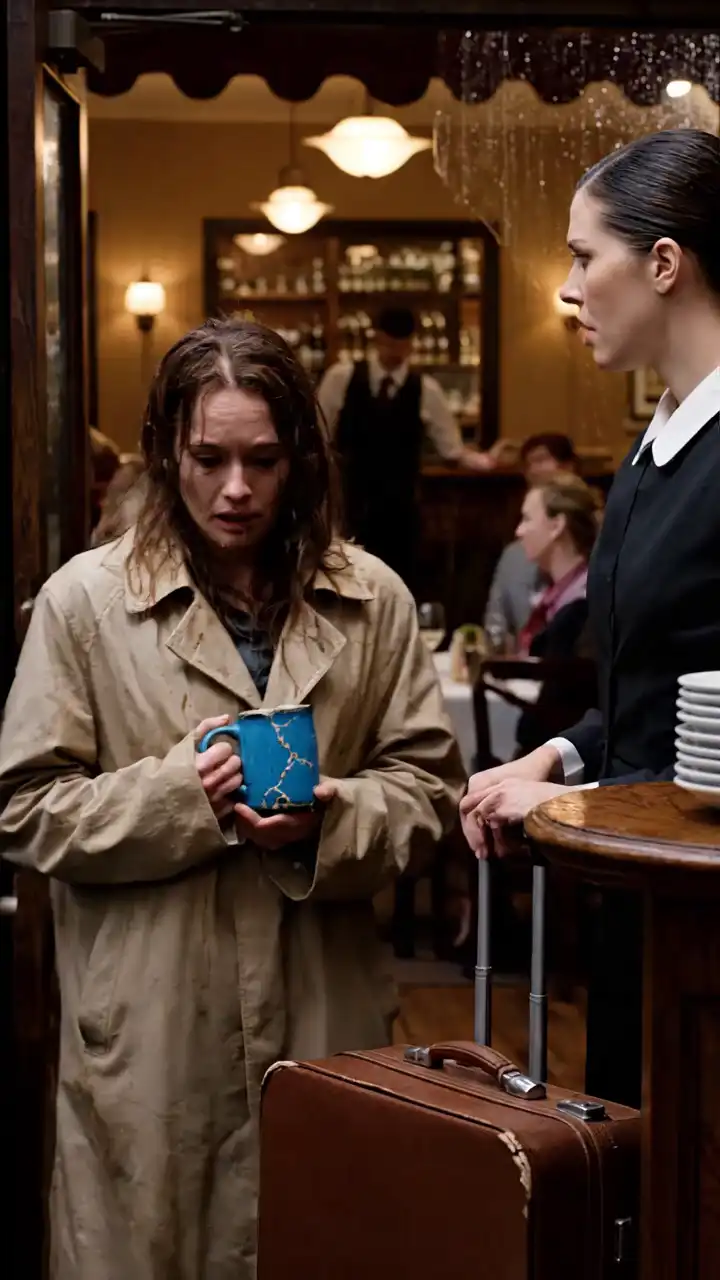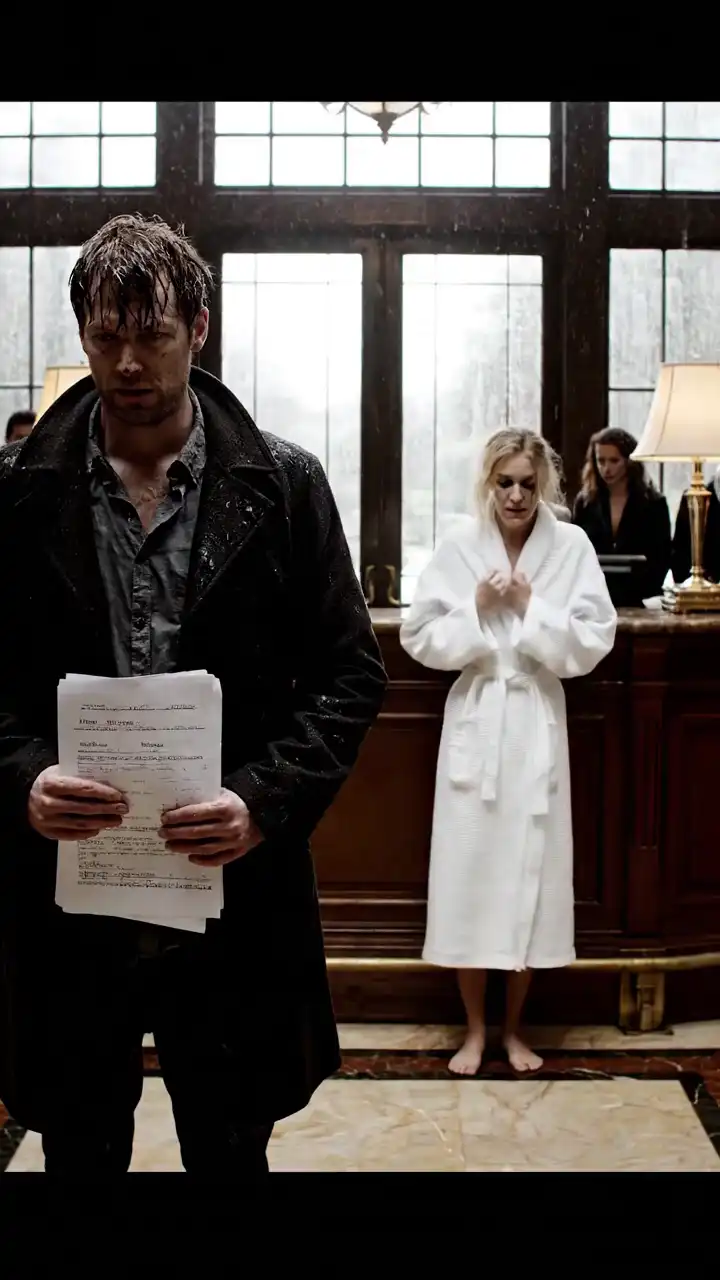
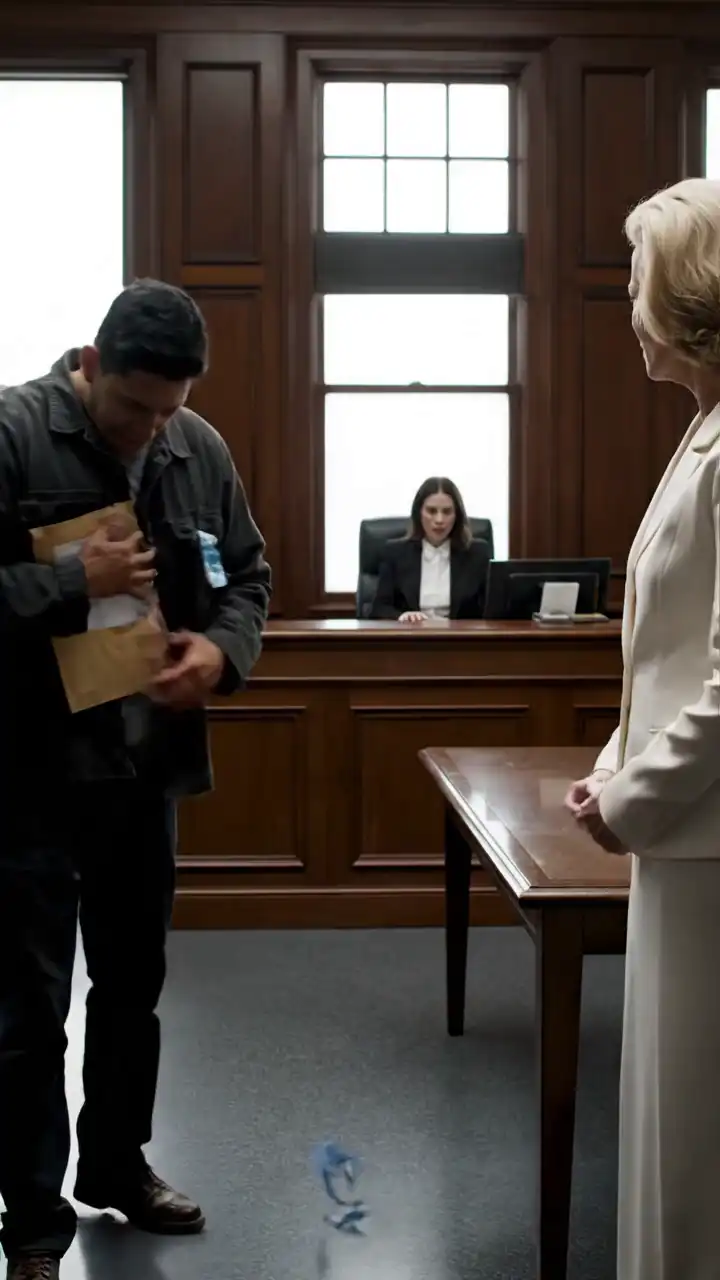
HE WAS ACCUSED OF STEALING FROM HIS DEAD BOSS BUT THE COURT CLERK COULD NOT STOP STARING AT THE LITTLE GIRLS HOSPITAL BRACELET
Chapter 1
The first thing everyone saw was the envelope in Mateo Varela’s hands.
It was thick, bent at one corner, with the logo of St. Brigid Medical Center stamped across the front. He stood alone near the petitioner’s table in Courtroom 4B of the Renshaw County Courthouse, his dark work jacket still on because he had nowhere safe to leave it, and his hands were shaking so badly the papers inside made a dry rattling sound.
Across from him, polished and pale under the courtroom lights, sat Lenora Wexley in a cream suit with a leather portfolio and a grief pin on her collar. Widow of Charles Wexley, owner of Wexley Hardware Supply, donor to three local charities, the kind of woman who never had to ask where to stand because a room always bent around her.
Her attorney, Pierce Haddon, looked at Mateo as if he were mud on a polished floor.
“Your Honor,” Haddon said, loud enough for everyone on the benches to hear, “the respondent took possession of confidential medical files, estate documents, and a key belonging to the deceased without authorization. We are asking for immediate return of all property and an order of no contact with the Wexley family.”
A few people in the gallery leaned forward. A woman near the aisle whispered something to the man beside her. Mateo heard the word immigrant, though she said it low.
Judge Albright looked over his glasses. “Mr. Varela, do you have counsel?”
Mateo swallowed. “No, ma’am.”
“Can you respond to the allegation?”
Mateo’s fingers tightened around the envelope. The edge of a blue plastic hospital bracelet peeked out from his jacket pocket. It was child-sized. Worn smooth. The white label had faded, but one name still showed through where his thumb had protected it over and over.
LUCIA.
The clerk noticed it first. Mateo saw her eyes dip to his pocket and then lift to his face. She was maybe thirty, red hair pinned low, a courthouse badge clipped to her cardigan. Her expression changed for one second—less suspicion, more confusion—then it was gone.
He cleared his throat.
“I didn’t steal anything,” he said.
Haddon lifted a brow. “Then why did you remove these items from the late Mr. Wexley’s office the night he died?”
Mateo looked at Lenora.
She would not look back.
The room smelled like old paper, floor polish, and wet wool coats. Rain tapped against the courthouse windows. Mateo had worked with his hands most of his life—concrete, plaster, drywall, trucks, loading docks—yet he had never felt more helpless than he did under that flat white light, holding an envelope he had once promised not to open.
“I took what he told me to take,” Mateo said quietly.
Lenora finally turned her head. “That is a lie.”
The words landed harder because she spoke them softly.
Judge Albright held up a hand. “One person at a time.”
Haddon stepped closer to his table and removed a ring of keys from a clear evidence bag. One brass key, long and old-fashioned, caught the light.
“This key,” he said, “opened the private file cabinet in Mr. Wexley’s home office. The cabinet also contained his late-in-life treatment records, financial records, and draft amendments to his estate plan. The key was found in Mr. Varela’s possession.”
Mateo stared at the bag.
He remembered Charles pressing that key into his palm in the hospital parking lot while a cold wind blew wrappers across the asphalt.
If anything happens before I get home, you bring it yourself.
He had not wanted this day. He had not wanted to stand in a courtroom with people looking at him like he had climbed in through a window.
Judge Albright said, “Mr. Varela, why were you in possession of the key?”
Mateo opened his mouth.
Nothing came out.
He could hear Lucia’s voice in his memory, thin and fevered, from two months earlier in St. Brigid’s pediatric wing.
Are we getting sent home because we’re poor?
He had learned then what institutional coldness looked like in America. Not yelling. Not a slammed door. Worse. Smiles without time. Apologies with a clipboard in hand. Delays coded as procedures. People who would not say no, but would let a child wait until no became useless.
The Wexleys’ attorney broke the silence for him.
“Because he had access and motive,” Haddon said. “Mr. Varela was employed off and on by Charles Wexley for cash labor. He was not family. He was not named in any known estate document. Yet after Mr. Wexley died, this man entered the property and removed items before the widow even understood they were missing.”
Lenora’s hands were folded perfectly. “My husband was generous to a fault,” she said. “He helped people. Sometimes they confuse kindness with entitlement.”
A low murmur moved through the room.
Mateo felt heat rise into his neck. He wanted to answer. He wanted to say all the things he had swallowed over the last three years. About overtime never recorded. About winter jobs done on promises. About Charles calling him “steady” when no one else would hire a man whose papers were still under review and whose daughter needed specialists he could not afford.
But none of that was the point.
The point was the envelope.
The point was the cabinet.
The point was the one sentence he had promised not to say unless he had no choice.
Judge Albright watched him for a long moment. “Mr. Varela, if you have an explanation, now is the time.”
Mateo’s thumb rubbed over the hospital bracelet in his pocket.
“I was trying to do what he asked,” he said.
Haddon gave a little humorless laugh. “Convenient.”
“I have a note,” Mateo said.
That changed the room. Not much. But enough. The clerk looked up sharply. Lenora’s jaw tightened. Haddon straightened.
“A note from whom?” the judge asked.
“From Mr. Wexley.”
“Then produce it.”
Mateo looked at the envelope, then at Lenora, then down at the floor as if the answer might be hidden in the grain of old wood. His voice came out low and rough.
“He said not to hand it over until someone could promise they’d read the whole thing.”
Haddon spread his hands. “This is absurd.”
Lenora leaned forward for the first time. “You expect this court to believe my husband hid some secret letter with a day laborer?”
Mateo turned to her then. His face was pale, but his eyes held.
“He gave it to me in the hospital lot,” he said. “The night your husband watched my little girl get turned away from the imaging desk.”
The courtroom went still.
Even the whispering stopped.
Lenora blinked as if she had misheard him. “What?”
Mateo did not raise his voice. That made it worse.
“He saw what they did,” Mateo said. “He was there.”
The blue bracelet slipped farther from his pocket. The clerk stared at it again. So did the woman on the front bench. So did the bailiff.
Haddon recovered first. “Your Honor, this is a transparent attempt to inject an unrelated hospital complaint into a property matter.”
Judge Albright’s expression had sharpened. “Maybe. Maybe not. Mr. Varela, sit down. We are going to do this carefully.”
Mateo sat, the envelope still in his hands like something alive.
From the back row, a man in a janitor’s windbreaker stood halfway up, then sat again. Mateo recognized him and felt his stomach drop.
Darnell Keats.
St. Brigid night maintenance. A quiet man with one damaged hand and a habit of hearing things no one realized he heard.
Darnell’s eyes met Mateo’s from across the room.
And in that instant, Mateo knew the sentence that should have been spoken weeks ago was finally coming for him, whether he was ready or not.
Chapter 2
The hearing was supposed to be simple.
That was what a deputy in the hallway had muttered before they called the case. Return the property. Warn the worker. Move on. But after Mateo spoke about the hospital parking lot, the air in the courtroom changed from routine to watchful. People who had been bored were now alert in a hungry way.
Judge Albright asked for a brief recess and kept everyone in the room. No one was allowed to leave except the deputy who went to fetch the case file from chambers.
Mateo sat with the envelope on the table in front of him, both hands resting on it. He could feel eyes on the back of his neck from every direction. He did not turn around.
Lenora Wexley whispered to Haddon with tight, clipped movements of her mouth. Once she glanced at Mateo, but there was no grief in her face now. Only alarm. It was the first thing he had seen in her that felt unguarded.
At the side desk, the clerk typed rapidly, then paused and looked again at the hospital bracelet peeking from Mateo’s pocket.
When the judge returned, she folded her hands and said, “This court is not here to litigate a hospital grievance without notice. However, if the respondent claims the disputed property was transferred under instruction by the deceased, that claim goes directly to the matter before me.”
Haddon nodded stiffly. “Understood, Your Honor. Then we ask for proof, not theater.”
Judge Albright turned to Mateo. “You say Mr. Wexley gave you the envelope and key. Did anyone witness this?”
Mateo hesitated.
Across the room, Darnell rose slowly from the back bench. “Maybe I did.”
Every head turned.
He was a broad man in a faded gray maintenance jacket with ST BRIGID FACILITIES stitched over one chest pocket. One shoelace was untied. He held his cap crushed in his hands.
Haddon looked irritated before the man even spoke. “And you are?”
“Darnell Keats.” He cleared his throat. “Night maintenance at St. Brigid Medical Center.”
Judge Albright studied him. “Step forward.”
Darnell came down the aisle with the uncomfortable walk of someone who was not used to being noticed unless something was broken. He took the witness stand, was sworn in, and kept glancing at Mateo as if apologizing with his eyes.
Haddon got there first.
“Mr. Keats,” he said, “did you in fact witness any transfer of documents from the deceased to Mr. Varela?”
“I saw them in the parking lot,” Darnell said. “I was emptying the side can by the imaging entrance. Mr. Wexley had on a camel coat. Mr. Varela was holding a little girl in pink socks. She was asleep on his shoulder.”
Mateo shut his eyes for a second. Lucia had been burning with fever that night, her head on his collarbone, one hand opening and closing weakly in her sleep.
“And what exactly did you see?” Haddon asked.
“Mr. Wexley handed him something.” Darnell looked toward the envelope. “Looked like that.”
“Did you hear their conversation?”
“Not all of it.”
“Any of it?”
Darnell swallowed. “Some.”
Haddon smiled a little. “This should be interesting.”
Judge Albright cut in. “Just answer what was said.”
Darnell nodded. “I heard Mr. Varela say, ‘I can’t take this.’ Then Mr. Wexley said, ‘If they won’t listen to me now, they’ll have to listen when I’m gone.’”
The room shifted. It was subtle, but Mateo felt it. A bench creaked. Someone exhaled too loudly.
Lenora’s face lost color.
Haddon quickly said, “That could mean anything.”
Darnell went on before he lost his nerve. “Then Mr. Wexley said, ‘The girl comes first.’ I remember that because—” He stopped.
“Because what?” Judge Albright asked.
“Because I’d just watched the desk send them away.”
Silence.
The judge’s voice softened by half a step. “Who sent them away?”
Darnell looked miserable. “Imaging intake. They told him the emergency order hadn’t cleared billing and the charity review would take forty-eight to seventy-two hours. The child had already been waiting all day.”
Mateo heard the same words again in his head, spoken by a woman in navy scrubs without looking up from her screen.
We understand this is difficult.
We just need approval to populate.
A child had been limp in his arms and they had talked like a printer jam.
Haddon objected. “Your Honor, again, this is turning into an accusation against a non-party institution.”
Judge Albright didn’t look at him. “Mr. Keats, did you ever report what you saw?”
“No, ma’am.”
“Why not?”
Darnell looked at Mateo, then at the floor. “Because Mr. Varela asked me not to.”
That hit harder than anything so far.
Haddon pounced. “There we are. Secret-keeping. Coordination.”
“No.” Darnell’s voice rose unexpectedly. “Not like that.”
Judge Albright let him continue.
Darnell gripped the rail. “He said the old man had a wife. Said he didn’t want to shame the family if there was another way. Said he just needed the records looked at and the letter read. He didn’t want a fight.”
Lenora gave a short disbelieving laugh. “How noble.”
Mateo turned his head toward her, but kept his voice even. “I went to your house twice.”
She stilled.
“I left messages with your house manager,” he said. “I asked to speak private. I brought the envelope the first time. The second time too.”
Lenora’s eyes flashed. “That is false.”
A voice came from the gallery.
“It’s not false.”
People twisted around. The speaker was a middle-aged woman in a dark green coat with a grocery tote at her feet. Mateo knew her from the Wexley estate kitchen. Odessa Blum. Cook for holiday dinners, funerals, and the kind of charity luncheons rich people called intimate.
She stood shakily.
“I’m sorry, Mrs. Wexley,” she said. “But it’s not false. He came by. Marta at the gate said you were resting and not to upset you.”
Lenora’s expression hardened. “Odessa, sit down.”
Odessa did not sit. “The second time he was holding that same envelope and he looked sick with worry. I told Marta at least tell Mrs. Wexley the man says it’s urgent. Marta said, and I quote, ‘Not every claim deserves the widow’s ear.’”
The words landed ugly in the room.
Judge Albright made a note. “Who is Marta?”
“House manager,” Lenora said sharply. “And she is not here.”
“No,” the judge said, “but apparently her decisions matter.”
Mateo felt his chest tighten, not with triumph, but with shame. He had not wanted Odessa dragged into this. He had not wanted Darnell on a witness stand. He had wanted one decent meeting in a quiet room, the envelope opened, the matter handled without strangers staring.
That chance was gone now.
Judge Albright looked at the envelope. “Mr. Varela, does the note remain sealed?”
“Yes.”
“Has anyone else seen it?”
“No.”
Haddon stood. “Then we insist it be turned over to the court immediately.”
Mateo’s fingers stayed on the paper. “Will it be read all the way?”
The judge watched him with a new kind of attention. “Why do you keep saying that?”
Mateo looked down.
Because Charles had coughed blood into a handkerchief that night and still stood in that parking lot trying to make one final thing right.
Because he had said, Don’t let them skim it. They skim everything.
Because men like Charles had spent their lives being heard after half a sentence, while men like Mateo could empty their whole hearts and still be treated like background noise.
“My English is good,” Mateo said carefully, “but not always fast when I’m scared. The note says it better.”
No one spoke for a moment.
Then Judge Albright said, “Bring it here.”
Mateo rose, walked to the bench, and handed the envelope to the bailiff. As he did, the hospital bracelet slipped from his pocket and fell to the floor.
The tiny blue band landed in the middle of the aisle.
Lucia Varela. Pediatric Observation. St. Brigid Medical Center.
The clerk covered her mouth with two fingers.
Mateo bent to pick it up, but Judge Albright said, “Leave it.”
He froze.
The judge looked from the bracelet to the sealed envelope with St. Brigid’s logo to Lenora Wexley’s suddenly bloodless face.
For the first time that morning, even Haddon had nothing ready to say.
Chapter 3
They moved the hearing to the larger evidentiary room upstairs because Courtroom 4B was too full.
That was how fast public judgment grew legs in Renshaw County. One whisper in a hallway—dead employer, foreign worker, secret hospital papers—and suddenly there were people pretending they had business on the fourth floor.
Mateo sat alone at one end of a long table under buzzing fluorescent lights. The room had no windows, only cinderblock walls painted a tired beige and a flag in the corner with a bent gold tassel. It reminded him of waiting rooms made by people who believed discomfort was useful.
The envelope had been opened in front of everyone. Inside were three things.
A handwritten letter from Charles Wexley.
A copy of a denied pediatric imaging authorization stamped URGENT.
And a cashier’s check made out to St. Brigid Medical Center in an amount that made the clerk inhale sharply.
Thirty-eight thousand dollars.
Not to Mateo. Not to cash. Directly to the hospital.
That should have changed everything.
Instead, it made everything look worse before it looked better.
Haddon seized on the parts that served him. He argued that the check proved nothing except Charles’s confusion in his final days. He pointed out the letter had not yet been authenticated. He suggested Mateo might have influenced an ill employer. He emphasized, over and over, that the disputed key still gave Mateo access to a private cabinet and that estate materials had still been removed.
Lenora sat with her back straight and one trembling hand hidden beneath the table.
When Judge Albright ordered the full letter read aloud into the record, the room leaned in.
The bailiff read in a flat voice, but Charles’s urgency still came through.
If this letter is being read, I have either failed to speak plainly in life or run out of time. The enclosed hospital records concern Lucia Varela, daughter of Mateo Varela, who has worked for me on and off these last years. On the night of March 3, I witnessed administrative delay at St. Brigid place this child at risk while staff hid behind process. I was recognized by their development office only after the father was dismissed. I was then offered immediate private intervention not because the child’s condition changed, but because my name entered the room. I refused that arrangement unless the same care was extended without condition. It was not.
There was movement in the room. A scrape of a chair. A whisper crushed quickly.
The bailiff continued.
I have spent much of my life benefiting from institutions that become polite when addressed by money and cold when addressed by need. On that night I saw the machinery without its curtain. Mateo Varela did not ask me for help. He asked only if his daughter would be seen before she worsened. He still thanked the receptionist who turned him away. I find that harder to bear than anger.
Mateo lowered his head.
He remembered Charles beside him in the parking lot, too well dressed for the harsh blue light, his face gray with his own hidden illness. Mateo had not known then how sick he already was. Only that he stood longer than he should have, watching Lucia’s chest rise in little hard pulls.
The bailiff kept reading.
I instructed my office to cut a certified check sufficient to clear the child’s pending treatment and further testing. I also instructed that certain charitable funds previously pledged elsewhere be redirected upon my signature. If this was not completed before my death, I authorize Lenora Wexley, if she chooses decency over discomfort, to honor the enclosed commitment.
Lenora made a small sound. Not quite a laugh. Not quite a gasp.
Haddon stood. “Your Honor, this language is inflammatory and personal—”
“Sit down,” Judge Albright said.
He sat.
The bailiff read the last page.
I gave Mateo the cabinet key because I no longer trust my staff to place this matter before the correct eyes. If my wife receives this with anger, let her first ask why a stranger protected my intention more faithfully than my own house. Mateo did not seek advantage. He tried to refuse this envelope twice. If there is any shame in this room, it is not his.
No one spoke when the reading ended.
The sound in the room was fluorescent hum, paper settling, someone coughing in the hall.
It should have ended there.
But public humiliation has momentum, and people do not surrender their assumptions all at once.
Haddon rose slowly, as if approaching something distasteful. “The letter is dramatic. It is also unsupported in material part. We have no physician testimony. No hospital representative. No proof that any delay altered the child’s outcome. My client is under no legal obligation to satisfy every emotional wish set down by a dying man who may have been confused.”
Mateo looked up. “He was not confused.”
Haddon turned. “And you would know?”
“I was there.”
“You were a laborer he paid in cash.”
The room flinched at that. Not because it was new, but because he said it nakedly.
Mateo’s face changed by one degree only. A tiny withdrawal. But the clerk saw it. Judge Albright saw it too.
Haddon continued, pressing his advantage. “A man in financial distress. A man outside the family. A man with a sick child and a deceased employer. This court should be very careful before treating sentiment as evidence.”
Lenora finally spoke. Her voice was controlled but thinner now. “My husband supported many people. He had impulses. He often stepped into matters without understanding the whole story. I do not deny he may have felt sympathy. But sympathy is not the same as entrusting a near stranger with private papers.”
Mateo answered before he could stop himself. “I wasn’t a stranger to him.”
Lenora looked straight at him. “You were staff.”
There it was. Clean and cold.
Not a thief. Not yet. Something lower, somehow. Someone whose grief, fear, and memory had lower standing because he had entered the house through the side gate and been paid from a different account.
Mateo’s ears rang. He thought of all the Saturdays he had repaired shelves in Charles’s garage, all the winter mornings he had salted the Wexley walk before dawn, all the times Charles had asked about Lucia by name while Lenora passed through rooms like weather no one could touch.
Judge Albright asked, “Mr. Varela, why did you not simply take this letter directly to a lawyer after Mr. Wexley’s death?”
Because lawyers cost money. Because his daughter’s scans came first. Because grief had hit the house like a locked gate. Because he still believed if he waited one more day, one more call, one more message, someone decent would open the envelope without making a spectacle of it.
But the truest reason was uglier.
“I knew how it would look,” Mateo said.
The room held still.
“How what would look?” the judge asked.
He glanced at the bracelet still lying in a clear evidence tray beside the opened envelope.
“Like I was using my child to get something,” he said.
That did it.
Even Haddon lost his rhythm for a second.
Mateo went on, not louder, but steadier. “When you don’t belong, every emergency looks suspicious if it follows a rich man home.”
The words sat in the room like a weight.
From the side bench, Odessa Blum lowered her eyes and dabbed at them with a folded napkin she had taken from her tote. Darnell’s jaw worked once as if he wanted to speak again but knew he had said enough.
Judge Albright asked a few clarifying questions about dates, signatures, and chain of custody. The letter would need verification. The check would need tracing. St. Brigid would need to respond. There would be another hearing.
Ordinarily that would have meant delay. Delay was the native language of institutions.
Then the clerk, who had not spoken beyond procedural matters all morning, raised her hand slightly.
Judge Albright looked surprised. “Ms. Hollis?”
The clerk stood. “Your Honor, I apologize if this is improper, but I believe I may have relevant information regarding the child’s hospital intake.”
The room turned toward her.
Her nameplate read ELISE HOLLIS.
She looked suddenly as nervous as Mateo had felt all day. “Before I came to the court, I worked records compliance at St. Brigid for eleven months. I left last summer.”
Haddon objected instantly. “This is highly irregular.”
Judge Albright said, “It is. But I’m listening.”
Elise clasped her hands. “The phrase in the denial form—pending approval to populate—was a known internal hold code. It was used when the system would not assign the patient to an imaging slot until financial clearance was attached, unless an override came from administration.”
Mateo stared at her.
He had heard that phrase and carried it like a stone, never fully understanding what it meant, only how cruelly calm it had sounded.
Elise swallowed. “It was one of the reasons I left.”
Lenora’s attorney looked frustrated now, but also wary. The ground beneath his version of events was no longer solid.
Still, the judge did not rule. She set the next hearing for three days later, ordered preservation of all relevant records, and directed that St. Brigid produce a representative.
When the room emptied, people gave Mateo a wider berth than before. Not because they respected him yet. Because they no longer knew exactly what he was.
That was its own kind of loneliness.
In the hallway outside, Darnell came up beside him.
“I should’ve spoken sooner,” he said.
Mateo kept his eyes on the floor tiles. “I asked you not to.”
“Yeah.” Darnell rubbed the back of his neck. “But that wasn’t the right thing.”
Mateo looked at him then.
Darnell’s voice dropped. “There’s one more thing I didn’t say in there.”
Mateo felt his stomach tighten.
“What thing?”
Darnell looked toward the stairwell before answering. “Your little girl wasn’t the only patient held that week.”
Chapter 4
Renshaw County had a way of making rain look permanent.
By the second hearing, the courthouse steps were slick again, the sky low and gray over the square, and the local reporters had arrived with coffee cups and quick eyes. What began as a private estate matter had grown into something uglier and larger: a wealthy donor, a dead employer, a foreign worker accused of stealing, a child’s delayed care, and a hospital now refusing comment.
Mateo almost didn’t come.
Lucia had woken before dawn coughing hard enough to frighten him, and he sat beside her bed in the small duplex on Fenwick Street counting each breath until her medicine settled in. Her drawing of a yellow house with three impossible suns still hung on the fridge by a magnet from a roofing company that had fired him last winter.
“Do you have to go?” she asked.
She was seven, all elbows and serious dark eyes too old for her face. The bracelet had marked her skin for days after the hospital visit. Mateo had kept it because he did not know what else to do with the fear.
“Yes,” he said.
“Will they be mean again?”
He paused.
“Maybe.”
Lucia looked down at her blanket. “Did I do something wrong at the hospital?”
The question entered him like a blade.
He sat on the edge of the bed and touched her hair. “No, mija. Never that.”
“Then why did they make you ask so many times?”
He had no answer she should have to carry. So he said the only true thing simple enough for a child.
“Because some places forget how to see people.”
She considered that. Then she nodded, as if filing it beside other adult sadnesses children should not understand but always do.
When he got to court, Darnell was already there with a man in a navy suit and cheap shoes carrying a bankers box full of folders.
“This is Reuben Pike,” Darnell said. “My cousin’s pastor knows him. He does legal aid intake with the South Valley Community Clinic.”
Reuben offered a hand. “I’m not your attorney in the full sense yet. But I did not like what I read in the preliminary file.”
Mateo shook his hand awkwardly. “Thank you for coming.”
“Thank Darnell for not shutting up.”
Darnell gave a small shrug. “I got tired of mopping under bad news.”
Inside the courtroom, the balance had shifted again. Lenora still came dressed for victory, but her movements were tighter, and there was a second attorney now, a woman named Sheila Marr, brought in for estate and institutional exposure. St. Brigid had sent counsel too, along with a vice president for patient access named Corinne Bell, who wore pearls and looked offended by the whole county.
Elise Hollis, the clerk, was not at her desk this time. She sat on the witness bench under subpoena.
The hearing opened with authentication. Charles’s handwriting was verified by his longtime accountant. The cashier’s check was traced to a Wexley charitable account approved two days before his death. The key was confirmed to belong to the file cabinet in Charles’s home office.
Then came the thing Darnell had hinted at.
Reuben called Elise first.
Her voice shook at the start, but steadied as she went. She described the intake coding system at St. Brigid, the internal language that transformed urgent children into administrative tasks, the silent distinction between patients who brought insurance confidence into a room and patients who brought uncertainty.
“Was Lucia Varela medically ineligible for imaging that night?” Reuben asked.
“No,” Elise said.
“Then why was she not scheduled?”
“Because the system showed no active financial clearance and no administrator override.”
“Was an override available?”
“Yes.”
“To whom?”
“Department supervisors, patient access administration, and donor relations if a protected contributor intervened.”
A murmur moved through the room.
Reuben let that settle. “So if the right powerful person had pushed the right button, the child could have been seen?”
“Yes.”
“Was that done?”
“No.”
St. Brigid’s attorney objected, then tried to soften the language. Protocol. Limited slots. triage complexity. But the cold shape of the thing was visible now. Not overt cruelty. Selective urgency.
Then Darnell testified again.
He described not only seeing Charles and Mateo in the parking lot, but what happened twenty minutes earlier. He had been changing a filter near the side corridor when he overheard a donor services representative tell intake that “Mr. Wexley is upset” and ask if “we can pull one discretionary slot to calm this down.”
Calm this down.
Not help the child. Calm this down.
The judge wrote that phrase down herself.
Corinne Bell from St. Brigid took the stand next. She had the polished caution of someone trained to apologize without admitting. The hospital deeply regretted distress. The institution sought fairness for all patients. Individual anecdotes could misrepresent systemic realities.
Reuben asked, “Did anyone from your administration call Mr. Wexley after his complaint?”
“Yes.”
“And offer to assist?”
“We offered to review the matter.”
“For the child or for the donor?”
She hesitated.
“For both.”
The room heard the gap.
Reuben opened a folder and held up an internal email produced under court order that morning. “Would reviewing the highlighted line refresh your memory?”
Corinne read it, and a flush climbed her neck.
He read it aloud anyway.
If donor insists on immediate accommodation for non-cleared pediatric case please route through executive exception so normal precedents are not discoverable at desk level.
Even people who knew nothing about hospital billing understood that sentence was poison.
Lenora’s attorneys looked annoyed now, not superior. The institution they had likely expected to keep things vague had just handed the court a loaded document.
Still, the final turn had not come.
That arrived when Reuben called Odessa Blum.
She took the stand holding her purse in both hands like a church lady about to confess to breaking stained glass. She explained she had worked functions at the Wexley home for twelve years. She saw more than she said. She remembered the two times Mateo came to the house with the envelope. She remembered Marta the house manager refusing to interrupt the widow. She remembered something else too.
“On the first day,” Odessa said, glancing at Lenora with sad courage, “Mrs. Wexley was in the breakfast room with Mr. Haddon.”
Haddon straightened. “I object.”
Judge Albright said, “On what basis?”
“Privilege concerns.”
Odessa looked near tears. “I was serving coffee. I wasn’t trying to listen.”
Reuben kept his voice gentle. “What did you hear?”
Odessa licked dry lips. “Mrs. Wexley said, ‘If Charles promised another dying cause on his way out, I will not have the estate bled by sentiment.’ Then Mr. Haddon asked if there was anything in writing. She said she didn’t think so because Charles had become too weak to organize papers.”
The courtroom went very still.
Lenora’s face had become almost rigid with fury. “That is a grotesous distortion.”
Odessa turned toward her, hands trembling. “I wish it was.”
Reuben asked one last question. “Did anyone in that house know Mr. Varela was trying to deliver a sealed envelope?”
Odessa’s answer came out soft.
“Yes.”
That was the change no one could explain away.
Not confusion. Not a widow unaware. Not an outsider barging into grief with fabricated urgency.
They had known.
They had decided not to hear him.
Judge Albright recessed for lunch before closing arguments, but no one relaxed. The hallway outside filled with the electric discomfort of people realizing they had chosen the wrong villain.
Mateo stood by a vending machine he could not have used even if he wanted to. His chest felt tight, not relieved. Truth did not arrive clean. It dragged humiliation behind it.
Elise came over first.
“I’m sorry,” she said.
“For what?”
“For being part of that place. For not speaking when I worked there.”
Mateo looked at her. “You spoke now.”
She shook her head once. “Too late for a lot of people.”
Then she did something small that nearly broke him. She held out a photocopy she had made from the records packet.
It was Lucia’s original intake note. At the bottom, in a tiny field no parent would ever see, one line had been entered and then removed in the system audit trail.
Donor concern attached.
Mateo stared at the words until they blurred.
His daughter had become visible to the hospital only when linked to a rich man’s irritation.
Not a child in pain. A donor concern.
Reuben found him there and spoke quietly. “There’s one more witness on rebuttal. House manager Marta Kessler was served this morning.”
Mateo looked up. “She came?”
“She’s here.”
Through the glass of the courtroom door, Mateo saw Marta for the first time since Charles’s funeral. Navy suit, severe bun, posture like a locked cabinet. She did not glance his way.
Darnell came to stand on Mateo’s other side.
“You okay?” he asked.
Mateo let out a breath that felt years old. “No.”
Darnell nodded. “Yeah. Me neither.”
When they were called back in, Marta took the stand with offended dignity. She denied blocking Mateo intentionally. She said she managed many demands during a period of bereavement. She did not recall specific messages.
Then Reuben produced the visitor log from the Wexley gatehouse.
Two entries. Mateo Varela. Urgent envelope for Mrs. W.
Marta’s initials beside both.
Her mouth tightened.
“Did you write these?” Reuben asked.
“Yes.”
“Did you inform Mrs. Wexley?”
“I may have informed staff.”
“That’s not my question.”
“No.”
“Why not?”
Marta looked at Lenora once. It lasted half a second, but everyone saw it.
“Because the household was under strain,” she said.
Reuben’s reply was almost gentle. “Or because you were told not to.”
She said nothing.
He didn’t need more.
The truth had begun to land with a weight no polished explanation could hold back.
Chapter 5
By the fifth day, Renshaw County had turned the case into a public mirror.
People came not because they cared about estate law but because something deeper had surfaced. They wanted to see whether the courthouse would do what the hospital had not: treat a quiet man and his sick child as fully real.
Lucia stayed with Mrs. Alvarez from next door, who sent Mateo to court with a clean thermos of sweet coffee and a small saint card tucked into his jacket pocket. “For standing,” she said. “Not winning. Standing.”
The final hearing filled both sides of the gallery. Reporters sat with their knees pressed to benches. Court staff moved with that strained briskness people use when they know the room may become history for all the wrong reasons.
Lenora Wexley did not look at Mateo when she entered. Neither did St. Brigid’s vice president. Institutions, Mateo thought, had a way of pulling their faces inward when forced to stand near what they had done.
Judge Albright began without flourish.
“This court is not a forum for moral theater,” she said. “But where intent, possession, and credibility are disputed, moral choices often leave legal footprints.”
No one shifted after that.
Reuben spoke first. He did not make Mateo into a saint. Mateo would have hated that. He simply laid out the chain.
Charles Wexley witnessed a child’s care delayed by hospital bureaucracy tied to financial clearance. He tried to intervene and found the institution willing to move only when donor status entered the equation. Disgusted, he prepared a check and a letter. Distrusting his own household’s willingness to honor that choice, he gave both to the one person who had the most to lose from appearing improper: the child’s father. That father tried twice to deliver the envelope privately. He was blocked. After Charles’s death, instead of being heard, he was accused.
Then Reuben held up the blue bracelet in its clear evidence sleeve.
“This,” he said, “should never have become a clue object in a courtroom. It exists because a child was processed as a billing event before she was seen as a patient. Mr. Varela did not come here to ask for pity. He came here because every other door trained him to expect he would not be believed.”
Haddon answered with technical arguments, but the room had moved beyond technique. He said Charles’s letter was not a formal codicil. True. He said grief and illness could distort judgment. Sometimes true. He said private generosity did not erase improper possession. Also true in a narrow way.
But the narrow way was dying in that room.
Then came the final piece.
Reuben called a witness no one expected: Dr. Naomi Serrit, pediatric pulmonology fellow at St. Brigid.
She looked exhausted and determined in equal measure.
St. Brigid’s counsel objected furiously, but the judge allowed limited testimony based on newly produced records. Dr. Serrit explained that Lucia’s imaging had been delayed seventy-one hours. During that delay, a progressing lung complication was not confirmed as quickly as it should have been. She did not say the hospital had caused all of Lucia’s suffering. She said something more devastating because it was so measured.
“Earlier imaging would likely have reduced risk and shortened distress.”
Likely. Reduced risk. Shortened distress.
Institutional harm often lived inside words like that—precise enough to survive challenge, human enough to hurt.
Reuben asked, “Did you raise concerns at the time?”
“Yes.”
“What happened?”
“I was told scheduling was constrained and the case lacked financial activation.”
“Did anyone mention donor exception?”
A pause.
“Yes.”
The room held its breath.
“Who?”
Dr. Serrit looked toward Corinne Bell, then down at her own hands. “Patient access administration said an exception had been discussed but not approved because it would create precedent.”
There it was. The sentence underneath all the others.
Not because the child did not need care. Because care for her might imply others also deserved it.
Lenora’s attorney tried to redirect, but the damage was done. St. Brigid had exposed its own soul.
Then Judge Albright did something unusual. She addressed Lenora directly.
“Mrs. Wexley, you may answer or decline. When Mr. Varela came to your property, did you know he claimed to carry a sealed letter from your husband?”
Lenora sat motionless for a long time.
At first Mateo thought she would refuse.
When she finally spoke, her voice was low and scraped thin.
“Yes.”
The gallery stirred.
“Why did you not meet with him?” the judge asked.
Lenora’s hands tightened together. “Because I was tired of cleaning up my husband’s emotional impulses.”
The honesty of it stunned the room.
She heard it too late. Her eyes flickered, but the words were already out.
Judge Albright asked, “And now?”
For the first time, Lenora looked at Mateo fully.
There was anger there. Pride. Shame. Something almost like grief finally breaking through the lacquer.
“Now,” she said, “I think Charles knew exactly what he was doing.”
No one moved.
The judge nodded once, as if some internal scale had found its level.
She ruled from the bench.
Mateo Varela had not unlawfully converted estate property. His possession of the envelope and key was credible, corroborated, and consistent with Charles Wexley’s written intent. All claims implying theft or bad-faith retention were dismissed. The court ordered the disputed charitable check honored by the estate pending administrative transfer and directed immediate preservation and release of all records relevant to Lucia Varela’s delayed care. The court further referred the hospital documentation to the state health oversight office for review.
Then she looked at Mateo.
“Mr. Varela, you were doubted here because systems train people to doubt the wrong person first. This court cannot undo that fully. But the record will.”
Mateo did not feel victorious.
He felt emptied.
As people stood, reporters rushed for the hallway. St. Brigid’s counsel gathered papers with the clipped movements of retreat. Corinne Bell left without speaking. Haddon whispered fiercely to Lenora, but she did not seem to hear him.
Mateo remained seated.
The room blurred at the edges. Reuben put a hand on his shoulder and said something he could not catch. Darnell grinned once, sudden and tired. Odessa was crying openly now, wiping tears with the same napkin she had been carrying for days.
And then Lenora Wexley crossed the room.
Everyone noticed.
She stopped on the other side of the table, close enough now that Mateo could see how badly her right hand trembled.
“I was wrong,” she said.
He looked at her, waiting.
She swallowed. “He spoke of your daughter once. I didn’t listen.”
Mateo said nothing.
There are apologies that ask to be forgiven and apologies that merely admit a fact. This was the second kind.
Lenora glanced at the bracelet in the evidence sleeve. “Did she get the treatment?”
“Yes.”
“Is she—”
“She is here,” Mateo said. “That is what I have.”
The answer seemed to land in her harder than accusation would have.
She nodded once. “Charles would have hated this.”
Mateo almost laughed from the pain of it. “Yes.”
Then, after all the noise and papers and legal language, the sentence that should have been said at the beginning finally arrived from the least powerful lips in the room.
It was Darnell, standing by the aisle with his cap in his hands, speaking not loudly, but clearly enough for everyone nearby to hear.
“He wasn’t taking from your house,” Darnell said. “He was carrying your husband’s last decent act.”
No one argued with him.
Chapter 6
Three months later, the rain finally broke over Renshaw.
Summer came hard and bright. The square outside the courthouse filled with hanging baskets and sweating people and teenagers cutting across the lawn instead of using the sidewalk. News vans had long since left. Reporters had found fresher damage elsewhere. Institutions were still institutions. They did not grow souls overnight because a judge wrote sharp words into the record.
But some things changed.
St. Brigid settled with several families after the state investigation widened. The phrase donor concern attached showed up in more files than anyone expected, and no amount of polished language could survive that. Corinne Bell resigned. Intake procedures were rewritten under public pressure. It was not justice in a pure form. It was paperwork forced into decency. Sometimes that was the only kind available.
The Wexley estate honored the check and then, after a second letter was found among Charles’s desk drafts, established a pediatric access fund in a name Lenora did not choose and could not comfortably stand beside at first.
The Lucia Fund.
Mateo had resisted it. He did not want his daughter turned into a memorial for institutional shame. But Dr. Serrit told him quietly, “Let the name open doors she once found closed.”
So he let it stand.
Lucia’s breathing was better by July. Not perfect, but steadier. She drew pictures at the kitchen table while a fan pushed warm air around the duplex. In one picture, there was a courthouse with giant flowers outside and a man holding a tiny blue bracelet like a ring of light. In another, there was a hospital with all its doors open.
“Which one is real?” Mateo asked.
She kept coloring the sun orange. “The second one is the one I’m making.”
On a Friday afternoon, Mateo went back to the courthouse to sign one last release form with Reuben Pike. He wore a clean button-down borrowed from Darnell and still felt strange walking through those doors without dread.
Elise Hollis met him in the hall by the clerk’s office.
“I’m leaving,” she said.
“For where?”
“A patient rights group in Cedar Vale.” She smiled faintly. “Turns out I was done typing other people’s damage.”
“That sounds good.”
“It feels scary.”
He nodded. “That too.”
She glanced toward the courtroom where it had all begun. “I still remember the sound that bracelet made when it hit the floor.”
Mateo did too. A tiny sound. Plastic on old tile. Small enough to miss if no one cared to hear it.
But once heard, impossible to forget.
Before he left, he passed Courtroom 4B. The door was open. Empty benches. Clean counsel tables. Sunlight on the dull rail where he had once stood being measured and doubted by strangers. The room looked harmless now, almost ordinary.
He stepped inside for only a moment.
He thought of the first day. The envelope in his hands. Lenora’s soft accusation. The lawyer’s polished contempt. The clerk’s stare at Lucia’s bracelet. All those eyes deciding who he was before he could finish one sentence.
Then he thought of what had followed.
A maintenance worker who finally spoke. A cook who refused to lie. A clerk who named the code. A doctor who told the narrow truth anyway. A neighbor who watched his child. A legal aid man who showed up in cheap shoes. A dead employer whose final act was not clean, not grand, but stubbornly human.
Hidden kindness, he had learned, was rarely elegant. It arrived late. It stammered. It came through side doors. It often looked weak beside money, titles, and smooth confidence.
And still, sometimes, it changed the direction of a life.
When Mateo got home, Lucia ran to the door in mismatched socks and threw her arms around his waist.
“Did you finish the paper place?” she asked.
“Yes.”
She leaned back to study his face. “Are they nice now?”
He looked past her at the little kitchen, the fridge drawings, the evening light on the worn floor, the life that had almost been handled like an inconvenience and was still here anyway.
“Some are trying,” he said.
She seemed satisfied with that.
That night, after she fell asleep, Mateo opened the top drawer where he kept the hospital bracelet in a small white box. Not because he wanted to stay in that pain. Because forgetting was how places like that stayed powerful.
He held the bracelet in his palm for a long time.
Then he placed it beside a copy of the court order and the first flyer for the Lucia Fund clinic day at St. Brigid, where uninsured children would be seen without pre-clearance every first Monday of the month.
It was a small thing against a large world.
But it existed.
Mateo turned off the kitchen light and stood in the dark a moment, listening to his daughter breathe from the next room.
Once, in a cold parking lot, a dying man had said, The girl comes first.
At the time, it had sounded like a plea.
Now, at last, it sounded like a rule.
Disclaimer: Mention of any brand or trademark is for identification only and does not imply partnership or endorsement
MY HUSBAND USED MY MONEY, GOT ENGAGED TO HIS MISTRESS, AND STOOD THERE WHILE SHE SLAPPED ME

THE MAID OF HONOR POURED WINE ON ME AT MY BRIDAL SHOWER AFTER STEALING MY FIANCÉ. SHE DIDN'T KNOW THE ROOM WAS ABOUT TO HEAR WHAT HE'D BEEN SAYING TO BOTH OF US.

THE MAID OF HONOR POURED WINE ON ME AT MY WEDDING AND CALLED ME CRAZY. SHE FORGOT I STILL HAD THE VOICE NOTE SHE SENT MY FIANCÉ.